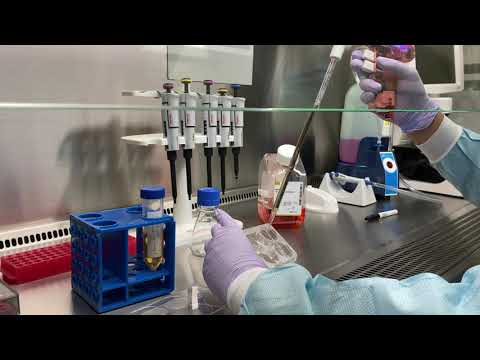
So, picture this: you’re hanging out with friends, and someone casually mentions they can grow new organs in a lab. Sounds like a movie plot, right? But it’s actually happening! Yup, stem cells are like those magical building blocks for our bodies. They can turn into nearly any cell type.
Imagine the possibilities! What if we could regenerate damaged tissues or even grow organs on demand? It’s mind-blowing stuff!
Science has come a long way in figuring out how to culture these little wonders. And trust me, it’s not just some high-tech fantasy; it’s real life now. Let’s chat about the latest techniques and what they mean for the future of medicine. You’ll want to stick around for this one!
Comprehensive Overview of Stem Cell Research: Downloadable PDF Resource for Scientific Study
Stem cell research is one of the coolest fields in science today. So, if you’re curious about it, you’re in for a treat! Stem cells are like the blank slates of our bodies. They can turn into different types of cells and help us heal from injuries or diseases. Isn’t that amazing?
Let’s dig into what’s been happening lately in this field. There have been some serious advancements in stem cell culture techniques. What that means is scientists are getting better at growing these cells in the lab so they can study them more easily or even use them for therapies.
- Improved Methods: Some new methods allow researchers to grow stem cells more efficiently. They can now create conditions that better mimic the human body, which helps stem cells thrive.
- 3D Culturing: The thing with traditional 2D cultures is they don’t replicate how cells behave in our bodies. But with 3D cultures, scientists can see how stem cells interact with one another and their environment. It’s kind of like building a mini-organ!
- Bioprinting: You might have heard of 3D printing—well, bioprinting is similar but involves living tissues. It allows scientists to create complex structures using stem cells and other materials.
- Gene Editing: Techniques like CRISPR are being used alongside stem cell research to tweak genes directly within these cells. This could lead to treatments for genetic disorders.
Anecdote time! There was this one scientist I read about who spent years trying to get a certain type of stem cell to grow properly. After countless tries and failures, they finally cracked it! They were able to develop a method that not only worked but opened up doors for studying diseases like Alzheimer’s. It’s inspiring how perseverance pays off.
The applications of all this research are huge—think regenerative medicine, where you could potentially replace damaged tissues or organs! How cool would it be if we could help people recover from injuries by simply using their own stem cells?
You might also hear about ethical debates surrounding stem cell research, especially when it comes to embryonic stem cells versus adult ones. Researchers are figuring out ways to use adult stems or induced pluripotent stem (iPS) cells—which are adult cells turned back into a youthful state—making it less controversial while still doing groundbreaking work.
If you want a deeper dive into specifics or recent studies, downloading a PDF resource on this topic can be really helpful. Just search for articles and reports from reliable scientific journals—those usually give you the most accurate info without any fluff!
The bottom line here? Stem cell research is advancing at an astonishing pace! With each breakthrough, researchers get closer to understanding how we can harness these remarkable cells for healing and innovation in medicine.
Comprehensive Guide to Stem Cell Culture Techniques: Essential PDF Resources for Scientific Research
So, let’s chat about stem cell culture techniques. It’s a pretty hot topic in scientific research these days. To put it simply, stem cells are like the body’s little superheroes—capable of turning into different types of cells, which makes them super valuable for medicine and research.
When talking about **stem cell culture**, we’re basically discussing how to grow these cells in a controlled environment. Why is that important? Well, if you’re trying to study how stem cells behave, you need them to grow effectively, right? This process involves various techniques that ensure the cells stay alive, divide properly and maintain their unique properties.
First off, you’ve got what’s known as adherent cultures. This is where the stem cells attach themselves to a surface in a dish. They’re kind of like kids making new friends at school—they need the right environment to thrive! You usually use special coatings on those dishes to help them stick and grow well.
Then there are suspension cultures. Here, the cells float freely in liquid. Think of it as a pool party where they don’t have any attachments holding them back—you know? This technique is useful for growing large amounts of undifferentiated stem cells quickly.
**Another essential technique** is the use of serum-free media. Traditional methods often used fetal bovine serum (FBS) for nutrients but switching to serum-free media can give better control over the cell growth conditions. It’s like switching from junk food to a balanced diet—your cells can perform better!
A crucial step in all these processes is passaging. This means transferring some of your growing cells into new dishes or flasks so they don’t get too crowded. It helps maintain healthy growth rates. Imagine cramming ten people into a tiny elevator; eventually, someone needs to step out!
Now, what about resources? There are tons of **PDFs and online articles** available that dig deeper into these techniques. Scientific journals often publish guidelines that researchers can follow for standardized practices—basically rulebooks for playing this complex game.
And let’s not forget about quality control. Keeping track of how your cultures behave is super important. Testing for things like contamination or ensuring they’re actually maintaining their stem-cell properties will save you headaches down the line.
Lastly, advancements in technology—yes! Newer methods like 3D cultures or bioreactors are shaking things up too. They allow scientists to mimic the natural environment more closely than just flat dishes can offer.
In summary, mastering stem cell culture techniques is an ongoing journey filled with learning and improvisation. And while there’s no single guide that covers everything perfectly—for instance—you’ll want to keep an eye out on recent studies and discussions among peers because science evolves at lightning speed!
Exploring Recent Advances in Stem Cell Research: Innovations and Implications in Modern Science
So, stem cells, right? They’re like those awesome building blocks of our bodies. You know, the cells that can turn into pretty much any other type. Recently, there’s been a bunch of exciting stuff happening in stem cell research, especially when it comes to how we grow and use these cells.
First off, let’s talk about advancements in culture techniques. In the past, scientists faced a real challenge trying to keep these cells alive and happy outside of the body. But now—with new culture methods—they’ve gotten way better at mimicking the natural environment stem cells like to thrive in. This is super important because if they feel right at home, they behave more like they do inside your body.
Another cool thing? Researchers are starting to use 3D scaffolding techniques. Imagine trying to build a Lego tower on a flat table versus using a multi-level platform. Those 3D scaffolds allow stem cells to grow in ways that are more similar to how they would in actual tissues. This means better results for studies on how different tissues develop or even how diseases occur.
Then there’s the whole area of induced pluripotent stem cells (iPSCs). These bad boys are game-changers! Basically, scientists can take regular skin or blood cells and reprogram them back into a stem cell state. It’s like hitting the reset button! This opens up amazing possibilities for personalized medicine where treatments can be tailored just for you.
What’s even crazier is how these advancements lead us to potential therapies for conditions we once thought were impossible to tackle. Think about things like Parkinson’s disease or spinal cord injuries. Using advanced stem cell techniques might allow researchers to create new neurons or repair damaged ones—like fixing a broken wire.
Let’s not forget about ethical considerations. With great power comes great responsibility! As scientists push boundaries with stem cell research, they have to handle ethical concerns carefully—especially when it comes from where these cells come from and how they’re used.
All these innovations don’t just stay in labs either! They have real implications on modern science and healthcare. The hope is that as we refine these techniques even further, we could see breakthroughs in treatments that change lives for millions out there.
In summary:
- Stem cell culture techniques:Improved methods for growing healthy, happy stem cells.
- 3D scaffolding:Creating environments that mimic real tissues.
- Induced pluripotent stem cells (iPSCs):Reprogramming ordinary cells into versatile stems.
- Therapeutic potential:Targets diseases once considered untouchable.
- Ethics matter!:Navigating responsibilities as science advances.
So yeah, it seems like we’re really just scratching the surface of what stem cell research can do for us! It’s wild how far we’ve come—and who knows what else is around the corner?
So, stem cells, huh? They’re those super cool cells with the ability to turn into just about any type of cell in your body. Think of them as the ultimate shape-shifters. Over the years, there’s been some serious innovation in how we grow and use these fascinating cells, and honestly, it’s pretty mind-blowing.
I remember reading a story about a researcher who was trying to cultivate heart cells from stem cells. He’d spent countless nights in the lab, tweaking conditions and trying different cultures. One day, after what seemed like a million failed attempts, he finally got it right! Those little heart cells started beating away in his petri dish like tiny drummers. It was such an emotional moment for him—it was like watching a dream come to life right before his eyes.
Anyway, advancements in stem cell culture techniques have opened up new doors for medicine. For starters, scientists have gotten better at creating these cultures that mimic the environment inside our bodies. It’s called “3D culture,” and it’s way more realistic than just growing them flat on a dish like pancakes! This lets researchers study how these cells behave more accurately and helps with drug testing and disease modeling.
Another cool thing is how we’re learning to steer stem cells down specific paths—like pushing them to become nerve cells or insulin-producing pancreatic cells. It’s sort of like being a conductor of an orchestra; you guide these little cellular musicians to play the right notes. So now we’ve got exciting possibilities for treating diseases like Parkinson’s or diabetes.
And then there’s the ethical side of things. Stem cell research has always danced around this tricky topic. But improvements in techniques that use adult stem cells or induced pluripotent stem cells (those are adult cells reprogrammed back into that magical stem cell state) have eased some concerns while still offering hope for tackling various health issues.
In short, these advancements aren’t just scientific achievements; they carry real potential for making lives better. Who knows? One day you might hear about someone getting cured thanks to that same heart cell research I mentioned earlier. It gives me goosebumps thinking about how far we’ve come—and how much farther we could go!