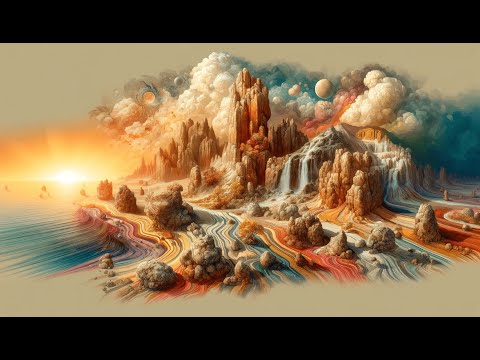
Okay, picture this: you’re out hiking, cruising through the woods. Suddenly, you trip over a rock. Classic, right? But then you think, “Wait, how did this thing even end up here?”
Rocks are like Earth’s history books—each one tells a story. Seriously! From the tiniest pebble to massive boulders, they’ve witnessed everything. Wars, dinosaurs, ice ages—you name it.
And guess what? They’re not just boring old stones sitting around. Some of them can literally glow in the dark! Ever heard of that?
So let’s kick off this journey into the wild world of rocks and see what they’ve been hiding all along. You ready for some seriously cool tales from beneath our feet?
Unveiling Greenland’s Geological Wonders: The Unique Characteristics of Its Rocks and Their Scientific Significance
Greenland is like an open book of Earth’s history, written in a language of rocks and ice. You know, there’s something incredibly special about its geological features. Let’s break down some of the unique characteristics of its rocks and why they matter.
Firstly, Greenland is home to some ancient rocks, with ages reaching over 3 billion years! These rocks are mostly made up of gneisses, which are high-grade metamorphic rocks. Gneisses form under intense heat and pressure deep within the Earth. Imagine this: you have a pizza in the oven (the Earth), and if you crank up the heat too high for too long, it transforms into a burnt mess instead of just a tasty treat. That’s sort of how gneisses come about!
Then there are granites. These guys are like the reliable friends in your life; strong and sturdy, often forming from cooled magma beneath the surface. In Greenland, you’ll find granite in areas such as the Nuussuaq Peninsula. When I visited there once, I could feel how solid everything was—it’s like standing on a giant rock that had been napping for millions of years.
The next area worth highlighting is the Greenland Ice Sheet. You might think ice is just frozen water, but it holds massive geological significance. Beneath it all lie layers of sedimentary rocks that tell stories about ancient climates and environments. It’s like having a time capsule! Scientists study these layers to understand past climate changes and predict future ones.
And speaking of sediments, let’s look at those fascinating siltstones. Found along the coastlines, these soft sediments can reveal so much about what kind of life was around millions of years ago—from fossils to ancient plant material. They’re like little treasure chests waiting to share their secrets.
- Unique mineral composition: Greenland’s rocks contain rare minerals like rubies and sapphires—seriously! These minerals form under unique conditions that aren’t found everywhere else.
- Tectonic activity: The northern region has undergone significant tectonic shifts. This makes it not only exciting for geologists but also vital for studying plate tectonics—how continents drift apart or smash together.
- Climate change studies: With ice melting rapidly in Greenland due to climate change, scientists have a front-row seat to observe how geological processes might shift as temperatures rise.
This interplay between its ancient rocks and changing environment gives us clues about our planet’s past and future places—we’re talking about understanding everything from natural resources to climate resilience!
The thing is, each time researchers dig into these geological wonders, they’re piecing together Earth’s story one rock at a time. So next time someone mentions Greenland’s geology, you can impress them with all this cool info! Seriously though, isn’t it amazing how much we can learn by just paying attention to what lies beneath our feet?
Exploring the Latest Discoveries in Geology: Understanding New Rock Types and Their Significance in Earth Science
So, geology, huh? It’s this awesome field that helps us take a peek into the Earth’s past. You might think rocks are just… well, rocks. But there’s so much more to them than meets the eye! Lately, researchers have been uncovering some super cool stuff about new rock types and what they mean for our understanding of the planet. Let’s break it down.
First off, you should know that rocks are classified into three main types: igneous, sedimentary, and metamorphic. Each type tells a different story about how it was formed. For example, igneous rocks are born from molten magma that cools down and solidifies. But recent discoveries have led to the identification of some intriguing new subtypes.
One of these is volcanic rock, which comes from explosive volcanic eruptions. Recently, scientists found a new type of volcanic rock in the Pacific Northwest that has unique mineral compositions. This specific rock provides insights into past volcanic activity and helps predict future eruptions, which is crucial for keeping people safe.
Then there are sedimentary rocks. They form from particles or organic material that build up over time—think of layers like a delicious cake! But here’s where it gets interesting: new studies have revealed “biogenic” sedimentary rocks formed primarily from biological activity. These rocks can give us clues about ancient ecosystems and how life has evolved on Earth.
Now let’s switch gears to metamorphic rocks. These guys start as one rock type but get transformed under extreme heat and pressure—kind of like when you leave a pizza in the oven too long! Scientists are now identifying previously unknown metamorphic formations deep within mountain ranges. For example, new discoveries in the Himalayas show how tectonic plate movements have created unique conditions for these formations.
So why does any of this matter? Well, understanding these new rock types helps scientists piece together Earth’s history—you know, like a puzzle! They can trace climate changes over millennia or spot shifts in tectonic plates that could lead to earthquakes or other geological events.
Also worth mentioning is how these discoveries influence industries like construction or environmental sciences. If we can predict areas prone to landslides based on newly identified rock features, we’ll be so much better at planning safe buildings and roads!
In summary:
- New volcanic rocks help predict eruptions.
- Biogenic sedimentary rocks reveal ancient life.
- Unknown metamorphic formations give insights into tectonic activity.
Rocks might seem like simple materials but seriously—they’re storytellers! And every discovery adds another chapter to our planet’s epic tale. So next time you stumble upon a rock while hiking or just strolling around your neighborhood park, remember there’s so much history right beneath your feet!
The Geological Transformation of Rocks Under Deep Earth Conditions: A Comprehensive Study
The Earth is like a giant, ever-changing puzzle, made up of different kinds of rocks. These rocks are not just sitting around; they’re busy undergoing transformation, especially down deep where it’s super hot and really intense. Basically, we’re talking about metamorphic processes that happen when rocks get buried under layers of other materials.
So, here’s the scoop: When rocks are pushed deep underground, the pressure and heat really start to mess with them. You might think of it like cooking food—at high temperatures, things change. In the case of rocks, **temperature** increases by about 25 to 30 degrees Celsius for every kilometer you go down. Imagine baking a cake that’s way too deep—if you leave it in too long or at too high a temperature, it can turn into something completely different!
Let’s break this down into some key points:
- Pressure and Heat: These two factors are crucial for any geological transformation. They can change both the texture and structure of rocks.
- Parent Rock: The original rock before transformation is called the parent rock or protolith. For instance, limestone can transform into marble under high pressure and temperature.
- Metamorphic Rocks: These new formations don’t just pop up out of nowhere. They have specific names based on their characteristics, like schist or gneiss. Can you believe how cool that sounds?
- Fluid Role: Water or other fluids often hang out in these depths too! They can help speed up chemical reactions that lead to metamorphism.
It’s also super interesting how different types of metamorphism happen! For example, there’s **regional metamorphism**, which occurs over large areas typically due to tectonic forces during mountain building. Then there’s **contact metamorphism**, where local heating happens because magma intrudes colder rock layers.
Now, if I could share a little story here: I once visited a rocky outcrop during a hike—just an ordinary place—when I learned that these stones had been transformed over eons. Each layer told me stories from millions of years ago! Standing there felt surreal; I was staring at a piece of Earth’s journey through time.
You’ve got to think about how this stuff affects our environment today! The rocks we see now weren’t always there—they have undergone changes through natural processes over countless years. This geological transformation shapes landscapes and affects everything from soil composition to where we can find resources like minerals.
So yeah, next time you’re walking on a trail or checking out some cliffs, remember those hidden stories beneath your feet! Rocks aren’t just solid objects; they’re living histories waiting to be revealed through the forces of nature deep within our planet.
You know, when you think about rocks, what comes to mind? Maybe a dull gray stone or that one cool crystal you saw at a store? But, oh man, if you dig a little deeper—literally and figuratively—you’ll find that rocks are like Earth’s history books. Seriously!
I remember this one time on a hiking trip. We stumbled upon this massive cliff face made of all sorts of colors and textures. It was so beautiful! I started poking around and realized each layer told a different story. The darker bits were from ancient volcanic eruptions, while lighter layers seemed to be from calmer sea sediments. It was like nature’s own scrapbook!
So here’s the scoop: rocks come in three main types—igneous, sedimentary, and metamorphic. Igneous rocks are born from magma cooling down. Imagine hot lava that turns into solid rock—pretty epic, right? Then you’ve got sedimentary rocks which form from tiny bits of everything piling up over time—think sand and mud that harden into stone. Crazy how something as simple as dirt can create mountains!
And metamorphic rocks? They’re like the cool kids in the rock world who have gone through some serious changes due to heat and pressure. They start off as something else but come out transformed and often more stunning than ever.
The thing is, these rocks don’t just sit there looking pretty; they play roles in everything around us—from the soil for our plants to even the materials we use for buildings! You’d be amazed at how interconnected all this is.
So next time you’re out and about, take a closer look at those stones beneath your feet or those cliffs rising high above you. Each one has seen eons go by; they carry tales of long-lost worlds and shifts in landscapes that we can barely fathom today.
And honestly? It’s a journey worth taking—not just through Earth’s foundations but also through our own understanding of it all. So next hike, don’t forget to stop and really “see” those rocks—they’ve got stories just waiting to be told!