Okay, so picture this: you’re scrolling through your social media and suddenly, an ad pops up for that funky pair of sneakers you were just eyeing. Creepy, right? But then again, it’s kind of impressive! That’s some next-level magic going on, and it’s all thanks to supervised machine learning.
You know, this tech stuff isn’t just for Silicon Valley geeks. It’s like having a super-smart friend who knows exactly what you want before you do! Seriously though, supervised machine learning is everywhere. And it’s shaping the way we live, work, and even play.
So grab a coffee or whatever floats your boat. Let’s chat about how this amazing tech works in the real world. Trust me, it’ll be a fun ride!
Exploring Real-World Applications of Supervised Machine Learning in Scientific Research
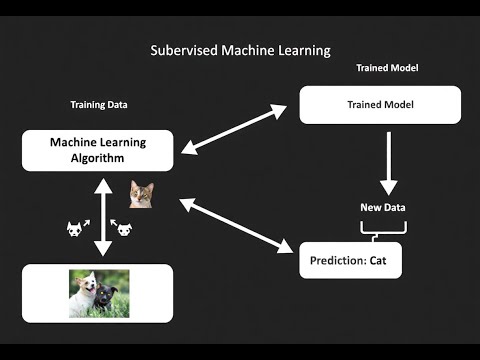
Well, let’s chat about supervised machine learning and how it’s shaking things up in scientific research. Supervised machine learning is this nifty technique where we teach a computer using a set of labeled data—think of it like teaching a kid to recognize animals by showing them pictures with names. It learns from the examples, and then, boom! It can identify new stuff based on what it learned.
One of the coolest applications is in **healthcare**. Researchers are using supervised learning to analyze medical images—like X-rays or MRIs. By training algorithms on thousands of images labeled with conditions like tumors, the models can spot abnormalities that even doctors might miss sometimes! Imagine being able to catch diseases early just because a computer saw patterns we didn’t!
Another great area is **environmental science**. Data on weather patterns and pollution levels can be overwhelming, right? With supervised machine learning, scientists can predict events such as floods or air quality issues. For instance, by training models on historical data about rainfall and river levels, they can estimate the likelihood of flooding in real time.
In **astronomy**, this approach shines too! Researchers gather loads of data from telescopes—like light patterns from stars—and train models to classify what they see. By doing this, they’ve discovered new celestial bodies that were previously overlooked. These discoveries help us understand the universe better.
Let’s not forget about **social sciences**! Here, supervised learning helps analyze survey data or social media trends to find correlations between different factors. For example, if you’re trying to figure out how education impacts job satisfaction across various demographics, algorithms can sift through all that info and highlight significant connections quickly.
But there are challenges too. Like any tech, these systems need high-quality data; garbage in means garbage out! If the labels are incorrect or biased, the model’s predictions will reflect those flaws. Plus, interpreting what these algorithms find can be tricky; sometimes they’re complex black boxes where you don’t really know how decisions are made.
So basically, hope lies in combining human insight with these powerful tools! Humans guide machine learning by providing context that computers need to understand our world better—the collaboration is key.
By understanding more about these real-world applications of supervised machine learning in scientific research, we can appreciate how technology propels us forward while still needing our good old human intuition along for the ride!
Exploring 6 Key Examples of Supervised Learning in Scientific Research
So, supervised learning, huh? It’s like teaching a kid to recognize animals by saying, “This is a dog,” and showing them a bunch of pictures. In scientific research, it’s applied everywhere! Here are some real-world applications that are pretty cool.
1. Healthcare Diagnostics: Picture doctors trying to spot cancers in medical images. With supervised learning, algorithms are trained on labeled data—like images of tumors and healthy tissues—to help detect cancer early. They get better with more examples, kind of like when you learn to identify different breeds of dogs.
2. Drug Discovery: Finding new drugs can feel like searching for a needle in a haystack. Researchers use supervised learning models to predict how different compounds will affect biological systems. By training on past data—think successful and failed drug candidates—they can identify promising leads faster, which is super helpful!
3. Genomics: Here’s the thing: understanding genes is complex! Supervised learning helps in classifying genetic sequences based on known outcomes or diseases connected to those sequences. Imagine being able to predict genetic disorders simply by analyzing DNA patterns.
4. Climate Modeling: Weather forecasting has come a long way, thanks to these techniques! Scientists gather historical weather data (temperature, humidity) and model it with supervised learning to predict future climate conditions or extreme events like hurricanes. It’s crucial for preparation and safety.
5. Image Classification in Astronomy: Astronomers use supervised learning to classify celestial bodies based on images taken from telescopes. By feeding the system countless labeled images of stars, galaxies, and nebulae, they train it to pick out features that distinguish one from another—making star-gazing more scientific.
6. Predictive Maintenance in Engineering: In industries where machines run nonstop, predicting when equipment will fail is key! Supervised learning analyzes labeled maintenance records (like when repairs occurred) and real-time sensor data from machines to forecast failures before they happen—that’s saving time and money!
So yeah, these examples show how powerful supervised learning can be in various fields of science! It’s like having an extra pair of sharp eyes helping researchers make sense of all the complex information out there!
Exploring Real-World Applications of Machine Learning in Scientific Research and Innovation
Machine learning is, like, the cool kid on the block right now. Seriously! It’s transforming how we tackle problems in science and innovation. Let me break it down for you, especially focusing on supervised machine learning. This type of machine learning gets its training from labeled data—think of it as being guided by a mentor.
So, what’s with the real-world magic? Well, here are some neat areas where supervised machine learning is making a splash:
- Healthcare: Doctors are using algorithms to predict patient outcomes based on historical data. Like, imagine a model that can assess whether a patient is likely to develop a condition like diabetes by analyzing things such as age, weight, and medical history. It’s like having an extra pair of eyes!
- Agriculture: Farmers are leveraging machine learning to optimize crop yields. A model can analyze weather patterns and soil conditions to recommend the best planting times or even which seeds might thrive best in particular climates.
- Finance: Think about credit scoring! Algorithms evaluate numerous factors—like spending habits and borrowing history—to assign credit scores. This helps banks decide whether to lend money and at what interest rates.
- Environmental Science: Machine learning helps track climate change effects by analyzing massive datasets related to atmospheric conditions. For instance, predicting when icebergs might melt or understanding patterns in animal migrations based on changing temperatures.
Let’s keep going! The cool thing about supervised machine learning is its ability to improve over time. The more data it ingests, the smarter it becomes. So if scientists feed it more accurate data over time, the predictions get way better.
Now, imagine you’re working in a lab studying proteins (it can get pretty complex). You could use supervised learning algorithms to classify protein structures based on previous examples. You feed them labeled data about various structures—like what they look like and their functions—and bam! Your algorithm gets better at predicting how new proteins act without needing tons of trial-and-error experiments in the lab.
But wait—there’s also this emotional side! I once heard about researchers who worked tirelessly on finding early signs of Alzheimer’s disease through machine learning models. The ability to predict health issues before they escalate means bringing hope into patients’ lives and potentially saving families from heartbreak.
Just think about that for a second; your research could directly affect someone’s future!
In essence, supervised machine learning is paving pathways for groundbreaking discoveries across various fields of study. Whether it’s saving lives or helping us understand our environment better, its real-world applications are as exciting as they come. It’s not just tech jargon; it’s reshaping our world for the better!
So, let’s talk about supervised machine learning. I mean, it sounds all high-tech and fancy, but honestly, it’s kind of incredible how much it pops up in our daily lives. Just picture your favorite streaming service recommending movies you might like based on what you’ve watched before. That’s supervised machine learning at work!
You know, a while back, I was chatting with a friend who just started working in tech. He was totally amazed when he told me that his company used supervised machine learning to predict what products customers might want next. Like, they analyze previous purchases and figure out patterns to help decide what to stock up on. It made me think about all those ads we see online—yep, they’re using similar methods!
And seriously, it gets even cooler when you look at healthcare. Imagine a doctor using software that can identify diseases from images of X-rays or MRIs way faster than any human ever could. They train these algorithms on thousands of images – some with labels telling them what they’re looking for – so the system learns to recognize conditions like pneumonia or tumors over time. Pretty wild, huh?
Another real-world application is in financial services. Banks are always looking for ways to detect fraud in transactions. Supervised machine learning helps them analyze huge amounts of transaction data where past fraud cases have been labeled. This way, the system learns to spot unusual patterns that scream “hey, something’s off here!” It’s like having a digital watchdog keeping an eye out for your money.
But here’s the thing: while all this is super exciting and offers tons of benefits, there are real concerns too—like bias in data or issues with privacy that come into play when we’re training these systems. It’s a tricky balance between tech advancements and ethical implications.
It makes you wonder just how intertwined our lives have become with this technology. Next time you’re binge-watching a series or getting your groceries delivered through an app recommendation, just know there’s some clever machine learning magic behind it all! Maybe that makes us feel more connected to this ever-evolving tech landscape—or maybe it just gives us a reason to appreciate how far we’ve come and where we’re headed!