You know that feeling when you walk into a crowded room, and everyone just seems to be speaking their own language? That’s kind of what it’s like in the world of data sometimes!
Enter Support Vector Machines, or SVMs, as the cool kids call them. Imagine having a buddy who can sift through all that noise and help you pick out exactly what you need. Sounds pretty sweet, right?
These nifty tools have been making waves in scientific research lately. Picture them like little detectives, sorting through mountains of data to find those hidden gems. Seriously, SVMs can help us understand everything from what makes a good cup of coffee to predicting disease outbreaks.
So if you’re curious about how this tech is shaping our understanding of the world around us, stick around! We’re diving into the latest and greatest advances in SVMs that are transforming scientific research as we know it.
Recent Advances in Support Vector Machines: Enhancing Scientific Research Methodologies
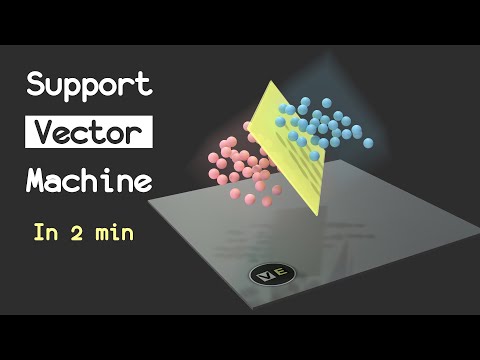
Support Vector Machines (SVM) are, like, super cool tools in the world of data analysis. Imagine you’re trying to sort oranges from apples. SVM helps you draw a line (or a hyperplane, if you’re feeling fancy) that separates these two fruits based on their characteristics. It’s a powerful way to classify data and has seen some pretty neat advances recently.
So, the thing is, SVMs work by finding the best boundary between different categories in your data. But lately, researchers have been improving how we use these machines by tweaking algorithms and models to make them even better at handling complex datasets.
One recent advancement is in handling non-linear data. Traditionally, SVMs struggled with this type because they work best with linearly separable data. To solve this problem, scientists started using kernel functions. These functions help map your input data into higher dimensions where it’s easier to separate the classes. Imagine lifting those apples and oranges into a 3D space where you can just toss them around until they land on opposite sides!
Another exciting development is automatically selecting features for classification. You see, not all data points are equally important when predicting outcomes. Recent methods have introduced techniques for feature selection that actually pick out the most relevant pieces of information while discarding the noise. This means your SVM can focus on what really matters without getting confused by irrelevant junk.
Moreover, the integration of deep learning techniques has also made waves in enhancing SVM capabilities. By combining neural networks with SVMs, researchers can tackle more complex features in big datasets without sacrificing accuracy or speed. Let’s say you’re analyzing photos—using both deep learning and SVMs together means you can classify images more effectively.
You might be wondering about real-world applications! Well, scientists are using these improved SVM methods across various fields like genomics and climate science. For instance, in **genomic research**, they help classify gene expressions linked to diseases or drug responses, making discoveries quicker than ever.
In **climate science**, enhanced SVM models assist in predicting weather patterns or assessing environmental impacts based on multiple factors at once—like temperature changes or ocean currents—and let’s be honest; who doesn’t want better weather predictions?
To wrap it up nicely: Support Vector Machines have come a long way thanks to recent innovations that make them more flexible and powerful for scientific research methodologies. Whether it’s through non-linear separation techniques or clever feature selections—these advancements are paving the way for new discoveries across many disciplines! And hey, doesn’t it just feel good knowing how much thought goes into making sense of all that data out there?
Enhancing Scientific Research Through Innovations in Support Vector Machine Techniques
Support Vector Machines, or SVMs, are these super cool tools in the world of machine learning. Basically, they help us figure out patterns and make decisions based on data. Imagine you’re trying to sort your old photos into categories like “family,” “friends,” or “vacations.” SVMs do something similar but with complex data.
So, what’s the big deal about enhancing these techniques? Well, it’s all about making them even better at solving problems in scientific research. You see, traditional SVMs can struggle when there’s a ton of data involved or when that data is really messy. That’s where innovations come into play!
1. Kernel Tricks
Kernel functions are like magic glasses that allow SVMs to see complex relationships in data. A simple linear boundary might not work for a dataset that’s spiraled or clustered weirdly. By using different kernels (like polynomial or radial basis functions), we can create more flexible boundaries for classification.
2. Handling Big Data
With the explosion of information these days, scientists often deal with massive datasets. Innovations in SVM techniques now include approaches that speed up computation without losing accuracy. Techniques like **mini-batch training** let us process data in chunks instead of trying to swallow it whole.
3. Robustness to Noise
Real-world data isn’t perfect; it’s often noisy and messy! Enhancements like **robust optimization** make SVMs less sensitive to outliers that could throw off results. It’s like having auto-correct for your scientific findings.
4. Multi-Class Classification
Traditional SVMs shine when dealing with two classes, but many real-world problems involve multiple categories at once. New strategies allow us to extend SVMs to handle multi-class scenarios through pairwise classification or one-vs-all approaches.
So why does this matter? Let me tell you a bit about an experience I had while working on a project analyzing environmental data from different regions for climate change research—talk about chaotic info! Traditional methods struggled to find patterns among various factors like temperature fluctuations and CO2 levels.
When we switched gears and applied enhanced SVM techniques, things started clicking into place! Suddenly we were able to classify regions by their vulnerability levels much more accurately—totally eye-opening!
To wrap it up, innovations in Support Vector Machine techniques are opening doors for researchers everywhere—from ecology studies to medical diagnostics. With better classification methods and stronger handling of real-world complexities, who knows what breakthroughs might be just around the corner? Keep your eyes peeled; science is always evolving!
Exploring Breakthrough Advances in Support Vector Machines for Scientific Research in 2022
So, let’s chat about Support Vector Machines, or SVMs for short. These little gems are a type of machine learning model that helps us classify data into different categories. Think of it like a really smart separator that helps to draw the line between two groups based on their features. Pretty cool, huh?
In 2022, there were some neat advances in SVMs that made them even more useful for scientific research. One key improvement was in the way they handle complex and high-dimensional data. Imagine trying to sort through a jigsaw puzzle with a million pieces—overwhelming! But researchers found new techniques to make these puzzles easier to solve.
Here are some developments worth noting:
Let me tell you an interesting story about how these advancements are making waves in real scientific research. A group of scientists applied advanced SVMs in battling climate change by predicting plant responses to varying weather conditions based on historical data. They were able to classify different environmental factors affecting plant growth efficiently! Maybe one day we won’t just have predictive models but real-time insights into how our planet is doing.
But there’s always room for improvement! Researchers are continually exploring ways to make these machines smarter and more robust against noisy data—that’s where the real challenge lies.
So yeah, as we roll into this exciting era of technology, those Support Vector Machines aren’t just sitting around—they’re evolving and pushing boundaries in scientific research every day! It’s like having an ever-evolving toolbox at your disposal! And who knows what wonders they’ll help us achieve next?
So, let’s talk about Support Vector Machines, or SVMs. I remember my first encounter with them during a late-night study session—coffee in one hand, textbook in the other. I was trying to wrap my head around how these algorithms work and their role in scientific research. It felt a bit like learning a new language at first, you know? But as I dug deeper, things started to click.
Basically, SVMs are like those really good listeners who help you figure out problems by finding the best possible boundary between different classes of data points. Imagine you’re at a party trying to find your friends among a bunch of strangers—an SVM will help you establish who belongs with whom based on their characteristics. For scientists, this is super handy when it comes to classifying data sets in areas like bioinformatics or astronomy.
Lately, though, there’s been some exciting stuff happening with SVMs. Thanks to advances in computational power and new techniques, researchers are pushing these algorithms even further. They’re not just stuck doing basic tasks anymore; they are tackling complex problems that involve massive amounts of data and even helping with predictive modeling. It’s like giving a toolbox to someone who’s always been using just one tool—it opens up endless possibilities!
One of the cool things is how researchers are blending SVMs with other methods—like deep learning—to create hybrid models that can learn from data more effectively. Think about it: combining the precision of an SVM with the flexibility of neural networks is kind of like having your cake and eating it too! This means better accuracy and more insights for research projects across various fields.
But here’s where it gets real for me: imagine scientists using these advanced SVM techniques to uncover patterns in diseases that have puzzled us for years! That moment when they discover that one small detail might change everything is thrilling. It reminds me why science is so cool—it’s all about connecting dots no one else has seen yet.
So yeah, while it might have started out as just another algorithm in a textbook for me, Support Vector Machines have turned into something way more significant than I ever expected. They’re transforming scientific research into something dynamic and ever-evolving—proof that sometimes all you need is the right perspective (and maybe a bit of coffee).