So, picture this: You’re at a party, mingling with friends, right? Suddenly, someone starts talking about how we’re all related to bananas. I mean, seriously? Bananas? That’s just wild! But guess what? It’s true!
Yeah, you heard me. Every living thing on Earth is part of a huge family tree. That tree of life is like the ultimate genealogy chart for everything from you and me to those funky little mushrooms sprouting in the backyard.
Isn’t that kind of mind-blowing? You’ve got plants and animals all hanging out together in one big taxonomy party. And trust me, it gets even crazier when you dig into how these connections work.
So come along for the ride! We’ll explore this incredible web of life and find out exactly how we’re all intertwined. Spoiler alert: it’s gonna be a fun journey!
Understanding the Tree of Life in Taxonomy: A Comprehensive Overview in Biological Classification
The Tree of Life is a super cool concept in biology that helps us understand how all living things are connected. It’s kind of like a giant family tree, but not just for us humans—it’s for every organism on Earth! The structure of this tree is determined by taxonomy, which is the science of classifying living things. So, let’s break it down a bit!
First off, taxonomy categorizes organisms based on shared characteristics. These can be morphological traits (like shape and size), genetic information, or even behavioral patterns. Imagine you’re sorting your friends into different groups at a party based on their favorite music styles. You’d have your rockers, pop fans, and maybe some classical lovers all in separate cliques! Taxonomists do something similar but with species.
Now, within the Tree of Life, life is divided into several main groups called domains. There are three primary domains:
- Bacteria: These are single-celled organisms that lack a nucleus. Think tiny microbes that exist everywhere—from the soil to your gut!
- Archaea: Another group of single-celled organisms, but they thrive in extreme environments like hot springs or salt lakes. They’re like the adventurers of the microbial world.
- Eukarya: This domain includes all organisms with cells that have nuclei—basically everything from plants and animals to fungi and protists!
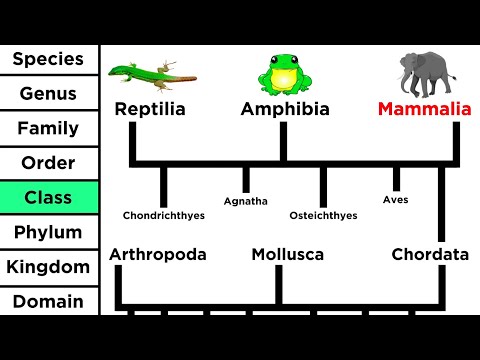
After domains comes the hierarchy of classification that goes down from broad categories to more specific ones. You’ve got kingdoms (like Animalia for animals and Plantae for plants), phyla (groups within kingdoms), classes, orders, families, genera (plural of genus), and finally species. It’s kind of like a nested doll set—where you keep opening up smaller versions until you get to the smallest one.
For example, let’s take humans:
- The domain is Eukarya.
- The kingdom is Animalia.
- The phylum is Chordata (because we have backbones).
- The class is Mammalia (we’re warm-blooded and feed our young milk).
- The order is Primates.
- The family is Hominidae (great apes).
- The genus is Homo.
- And finally, our species name? Homo sapiens!
Pretty neat how each layer tells you more about what makes us unique!
One important thing to know about this Tree of Life concept is that it reflects our understanding through evolutionary history. Charles Darwin really shook things up when he introduced natural selection as a key mechanism driving evolution. He suggested that all living organisms share common ancestors—a revolutionary idea back then! So when we look at how traits evolve over time due to environmental pressures, we see why certain species might be closely related even if they look totally different now.
Also, consider how new technologies are changing taxonomy. DNA sequencing has opened up new doors! Scientists can dive deeper than just physical characteristics now by looking at genetic ties between species. This helps refine classifications further or even discover new species lurking out there!
In conclusion—or more like an invitation to keep wondering—understanding the Tree of Life gives us insight into our own place in nature’s puzzle. It can also spark curiosity about relationships between different organisms and their environments! So next time you see a squirrel or a flower blooming in your backyard, maybe think about its family tree—you’ll be surprised at how far it might stretch!
Exploring the Tree of Life: A Key Analogy for Understanding Earth’s Biological History
The Tree of Life is like this giant family tree, but instead of just showing your relatives, it connects all living things on Earth. Seriously, can you imagine? Every creature, plant, and microbe is part of this massive network of relationships. The concept helps us understand how life evolved over millions of years.
So, let’s break it down a bit. The tree has branches that represent different groups of organisms. At the base, you’ve got simple life forms like bacteria and archaea. As you move up the trunk and into the branches, you find more complex life—plants, fungi, and animals. It’s a map that shows how everything is connected.
Think about it like this: if we pluck a leaf from the tree—say a dog—it traces back through its ancestry to earlier species. A dog’s ancestors would include wolves and other mammals. Isn’t that wild? This connection means we share common traits and even some DNA with creatures that seem totally different from us!
When we look at the branches more closely, we see smaller divisions based on shared characteristics—like a group of birds or flowering plants. Each branch splits further into twigs as new species emerge over time through evolution. Evolution is key here: it’s all about how life adapts to changing environments through natural selection.
Now, let’s talk about why this matters. Understanding the Tree of Life helps scientists track how species have changed and adapted over eons. It gives us insights into biodiversity and conservation efforts too! For instance, when we realize that certain species are critically endangered, we can work to protect them because they play unique roles in their ecosystems.
And speaking of ecosystems—imagine a rainforest full of trees! Each tree forms part of its own little ecosystem with insects, birds, and fungi living in harmony (most times). If one tree dies out due to disease or deforestation, it could ripple through those connected organisms like falling dominoes.
Just thinking about the whole picture really hits home for me. A while ago at a local park, I saw kids marveling at worms squirming in the dirt while butterflies fluttered above them. That moment reminded me: those worms are playing an essential role in breaking down organic matter—helping plants thrive—which feeds all kinds of animals up the chain! Pretty cool stuff!
In summary, the Tree of Life isn’t just an academic concept; it’s a way for us to appreciate our place within nature’s grand design. By learning about these connections on this vast tree—from microbes under our feet to towering trees above—we not only deepen our understanding but also cultivate respect for all forms of life around us.
Next time you take a walk outside or even look at your pet cat lounging around, think about how they fit into this incredible web called life!
Exploring the Tree of Life: Its Significance in Understanding Evolutionary Science
The Tree of Life is like nature’s family tree, showing us how all living things are related. Seriously, it’s fascinating! Imagine a giant, leafy tree where each branch represents a different group of organisms. At the bottom, you’ve got the common ancestors—tiny microbes that lived billions of years ago. And as you climb up, you see how these ancestral species have branched out into the incredible variety of life we see today.
Why does this matter? Well, understanding the Tree of Life helps us grasp evolution. When you think about it, evolution is basically nature’s way of experimenting with life. Some species adapt to their surroundings and thrive, while others might struggle and eventually become extinct. The branches on our tree show us these paths of adaptation over time.
When scientists study the Tree of Life, they’re looking at the relationships between different species, which is key for lots of reasons:
- Evolutionary Relationships: It helps us see who shares common ancestors. For example, humans and chimpanzees share a recent ancestor that lived about 6 to 7 million years ago.
- Diversity: The more we know about these connections, the better we appreciate biodiversity. There are around 8.7 million known species on Earth!
- Conservation Efforts: By understanding evolutionary relationships, we can prioritize which species to conserve. Protecting one species can sometimes help protect entire ecosystems.
- Medical Research: Many modern medicines come from examining plants or animals in relation to humans. Studying evolutionary connections guides researchers in exploring new treatments.
One time I was hiking with friends in a beautiful forest filled with diverse plants and animals. I suddenly realized that every creature around me—from the tiniest ant to the tallest tree—was part of this intricate story stretching back millions of years! It gave me goosebumps thinking about how we’re all linked through this grand evolutionary history.
Moreover, taxonomy, or the science of classifying organisms, plays a big part in mapping out our Tree of Life. Taxonomists group living things based on shared characteristics and evolutionary relationships. This is like putting similar types of furniture together in a room—couches with couches and chairs with chairs—so everything makes sense visually and logically.
Today’s technology lets scientists create detailed diagrams that represent these relationships mathematically and graphically. They use DNA analysis to get deeper insights into how closely related different organisms really are—a tool revolutionizing our understanding!
And here’s another thing: knowing where we fit into this grand framework often sparks curiosity about our place on Earth! It reminds us that we’re not just isolated beings; we’re part of something much bigger than ourselves—an interconnected web woven through time.
So next time you’re out in nature or even just hanging out at home looking at pets or plants around you—remember: they all have their spot on this amazing Tree of Life!
You know, when you start thinking about the “Tree of Life,” it’s like opening a window to a whole new world. It’s wild to realize how all living things on this planet are connected in this intricate web of life. I mean, just imagine a giant tree with countless branches and leaves—each representing different species and their relationships. It’s kind of poetic, if you think about it.
I remember walking through a forest once, feeling the rough bark of the trees beneath my fingers and breathing in that earthy scent after rain. It hit me then—each tree is just one part of a much larger ecosystem. In fact, these majestic giants share more than you’d think with tiny mushrooms or even the critters scurrying around underfoot. The beauty of taxonomy is that it helps us understand these connections, like placing every living thing in its rightful spot on this sprawling tree.
Now, taxonomy might sound like some dry academic stuff at first glance. But really, it’s all about naming and classifying organisms based on their similarities and differences. This classification helps scientists make sense of biodiversity while revealing relationships among species—how they evolved from common ancestors or adapted to different environments over time.
Have you ever heard about cladistics? It’s pretty cool! This method groups organisms based on shared traits derived from common ancestors. So instead of focusing solely on physical similarities, it digs deeper into genetics and evolutionary history. You could say it gets to the root of who we really are as living beings.
But here’s where it gets interesting: taxonomic classifications aren’t set in stone! As new discoveries are made—thanks to advancements like DNA sequencing—we find out that some species we thought were separate might actually share more DNA than we realized. It’s like finding out your long-lost cousins at a family reunion!
So why does this matter? Well, understanding our place in the Tree of Life can inspire us to protect our planet better. Realizing we’re all connected creates empathy for other creatures and sparks curiosity about their roles in ecosystems.
As I think back to that day in the forest, I feel grateful for these connections—to trees whispering ancient secrets and tiny insects working tirelessly beneath our feet. Recognizing those links makes me appreciate every living thing around us a bit more deeply—even the ones we often overlook.
Isn’t that what life is all about? Just finding connections everywhere—and cherishing them?