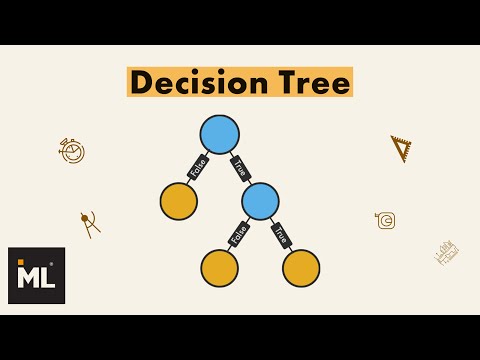
Imagine standing at a crossroads, like in one of those choose-your-own-adventure books from childhood. You know, the ones where you get to make the coolest decisions? Well, decision trees are kind of like that—but for scientists.
Picture this: you’re a researcher trying to figure out which method works best for your experiment. One path leads to success, while another might end up with a whole lot of confusion and maybe even some big oops moments—like when you accidentally mix up your samples.
Decision trees help you visualize those choices in a way that even your cat could understand! Seriously, they break down complex decisions into simple branches and leaves. It’s like having a map in the wild world of research; it keeps you from wandering off into the unknown.
So let’s dig into some practical examples that show just how handy these trees can be in scientific research. You ready?
Exploring the Practical Applications of Decision Trees in Scientific Research and Data Analysis
Decision trees are a pretty neat concept in data analysis and scientific research. They’re like flowcharts that help you make decisions based on data. Imagine trying to figure out what to cook for dinner. You start with a question, like “Do I have chicken?” If yes, you branch out into other options, right? That’s how decision trees work!
So, what exactly are they used for in science? Well, they help researchers visualize decisions based on various factors. Whether it’s predicting disease outcomes or choosing the best materials for an experiment, decision trees can make complex data more digestible.
- Medical Research: Picture a scenario where doctors want to predict whether a patient will respond well to a particular treatment. They can set up a decision tree that considers factors like age, previous health conditions, and genetic markers. This way, they can tailor treatments more effectively.
- Environmental Studies: Say scientists are looking at the impact of pollutants on local wildlife. A decision tree might help them analyze data from different sources—like water quality reports and animal behavior observations—to understand which pollutants are causing harm.
- Agriculture: Farmers use these models to decide what crops to plant based on weather patterns and soil conditions. For example, if it’s likely to be dry this season, the tree might suggest drought-resistant crops.
- Market Research: Businesses also jump on the decision tree bandwagon! By analyzing customer preferences and purchasing habits, companies can better understand which products will likely succeed in the market.
Now, here’s where it gets cool. Decision trees aren’t just about making straightforward choices; they also allow for some pretty sophisticated analysis! You can actually evaluate how certain branches perform over time or under different conditions. This aspect really shines in fields like machine learning where algorithms learn from previous data and improve over time.
An emotional element? Think about a researcher pouring their heart into understanding cancer treatment options; by using decision trees, they not only simplify their process but potentially save lives too! It’s not just data on a screen—it’s real-world impact.
And here’s another thing: while decision trees offer clarity, there are pitfalls too! They can easily become overly complex—like adding so many branches that it becomes hard to make any decisions at all. So keeping things simple is key.
To sum it up, using decision trees in scientific research and data analysis is super practical. They simplify complex decisions into clear pathways while allowing scientists to extract meaningful insights from their data sets. It’s a tool that bridges creativity with systematic thinking—pretty cool if you ask me!
Understanding Scientific Decision-Making: Key Examples and Applications in Research
So, let’s chat about something that can feel a bit like a maze sometimes—scientific decision-making. You know, how scientists go from a question to finding out an answer? The process is actually pretty structured, often involving something called **decision trees**. These are like flowcharts that help researchers visualize their choices step by step. Pretty neat, right?
A decision tree starts with a **question** or problem at the top. From there, it branches out based on possible answers or actions. Each branch leads to more questions or decisions until you reach a conclusion. It’s like playing one of those “choose your own adventure” books but with data and experiments!
Key points to remember about decision trees in scientific research:
- Visual Structure: They make complex decisions less overwhelming by laying everything out clearly.
- Data-Driven: Decisions are based on data and probabilities rather than just gut feelings.
- Iterative Process: Researchers can revise their trees as new data comes in. It’s not set in stone!
Now, let’s go through a couple of examples to paint the picture even clearer. Imagine you’re researching the effects of a new medication for headaches. Your first question might be: “Does this medication work better than a placebo?”
From there, your decision tree could branch into:
1. Conducting clinical trials.
2. Analyzing previous studies.
3. Looking into patient feedback.
Each option has its own path leading to different outcomes based on what you find.
Another example could be if you’re studying climate change impacts on local species. Your initial question might start with: “How is temperature affecting this butterfly species?” This could lead you down branches like:
1. Tracking temperature changes over time.
2. Observing butterfly migration patterns.
3. Collecting data on food sources available to them.
These branches help narrow down which factors are most relevant and how they interact with one another.
The beauty of decision trees lies in their flexibility and adaptability! As scientists gather more information or discover new variables, they can tweak their trees accordingly—like designing an experiment that feels personal and tailored to the situation at hand.
In practice, fields as diverse as medicine, ecology, and even technology employ these strategies all the time! Researchers see various paths before them and choose one based on evidence they have gathered so far.
What really stands out about decision-making in science is how it mirrors life itself! We all make choices daily based on available information—even if our paths get twisted along the way.
So next time you hear some fancy scientific jargon about decision-making or research methods, remember that at its core is this simple yet powerful concept of decision trees guiding researchers through their discoveries!
Exploring the Capabilities of ChatGPT in Generating Scientific Decision Trees
Alright, let’s get into the world of decision trees and how ChatGPT can help generate them for scientific research. You might be thinking, “What even is a decision tree?” Well, it’s basically a flowchart that helps make decisions based on certain criteria. You start from a question or decision point and branch out based on various answers or possibilities. Think of it as a map for your choices!
ChatGPT can really step up in this area. It’s not just about spitting out text; it can help analyze data and suggest branches for those trees. For example, if you’re studying plant growth under different light conditions, you could ask ChatGPT to help outline the factors like soil type, watering schedule, and light intensity. From there, it could help you create a decision tree that looks something like this:
- Start: What is the plant species?
- If species A:
- What is the soil type?
- If sandy: Increase watering.
- If clay: Reduce watering.
- If species B:
- What is the light condition?
- If low light: Use grow lights.
- If bright light: Monitor for wilting.
But here’s where it gets interesting: ChatGPT can respond to new information you provide and adjust the decision tree accordingly! Imagine getting results from an experiment where plants start wilting under certain conditions. Just feed that back into your conversation with ChatGPT, and voilà! You’ve got an updated tree.
Now, let’s talk about some practical examples where decision trees can shine in scientific research:
- Disease Diagnosis:
- Ecosystem Management:
- Chemical Reactions:
Doctors often have to sift through symptoms to figure out what’s going on with patients. A decision tree can guide them based on factors like age, symptoms present, and medical history.
If you’re looking at wildlife conservation, a decision tree can help determine which species need protection based on their population sizes and environmental threats.
You might want to understand how different substances react under varying temperatures or pressures. A decision tree helps predict outcomes based on initial conditions.
So basically, using ChatGPT, researchers can engage in this collaborative brainstorming process where they flesh out all possible scenarios quickly and efficiently. The cool part? It frees you up to focus more on analysis rather than getting stuck in the nitty-gritty of organizing data.
The accuracy of these trees largely depends on how well they’re constructed initially—garbage in means garbage out! But with statistical backing or expert knowledge fed into ChatGPT’s framework, a well-rounded decision tree can be created with fewer headaches.
In essence, leveraging tools like ChatGPT makes building scientific decision trees less daunting. It enhances your ability to visualize complex choices and allows those choices to evolve as new data comes in. So whether you’re tackling plant biology or disease management, having an AI buddy by your side could totally change the game!
You know, decision trees can be a bit like those maps you see in a mall, where you’re trying to figure out whether to go left or right depending on what store you wanna hit. It’s all about making choices—decisions that lead you down one path or another. In scientific research, though, these aren’t just simple decisions; they have serious implications.
Let’s say you’re working on a project about climate change and you need to decide on the best method to collect data. You might start with whether you’re looking at air quality or ocean temperatures. From there, each yes or no branches off into more questions: “Should I use satellites?” “Or maybe ground sensors?” Each choice can open up new possibilities but also narrow down your focus significantly.
I remember when I was part of a research team during my undergrad. We had to pick the best way to test a new type of biofuel. At one point, we were staring at this complicated flowchart trying to visualize our options. Some folks suggested going for the most high-tech equipment available, while others thought simpler methods might yield more reliable results. It was like being on a rollercoaster! The tension built up as we debated and refined our decision tree until it was clear which path would give us the data we needed without running us into the ground financially or time-wise.
So why are practical decision trees valuable? Well, they help clarify your thought process! You break down complex decisions into bite-sized pieces and visualize how different components connect. It’s kind of like assembling a puzzle—you can see how each piece fits into the big picture over time.
And here’s something neat: they’re not just for academic research; they work in real-world applications too! Anyone involved in healthcare—like deciding treatment pathways—or even businesses analyzing market strategies can benefit from using these trees.
As researchers, especially if you’re in academia or any science field really, honing your ability to create and utilize decision trees can significantly improve how you tackle problems. It’s empowering because it allows for structured thinking while still keeping room for creativity as new paths emerge.
Anyway, putting it all together is what makes science feel less daunting and much more like an exciting adventure into the unknown, full of twists and turns but with some solid guidance along the way!