So, picture this: you’re sitting in a science class, and the teacher starts talking about atoms. But instead of paying attention, you glance out the window and see a bird doing some weird acrobatics. Totally gets you thinking about how tiny things like atoms make up everything—even that bird! Crazy, right?
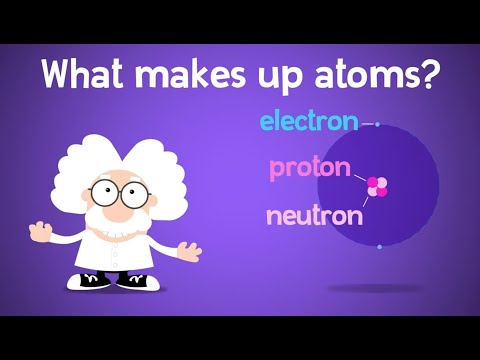
But seriously, have you ever stopped to think about what’s actually going on inside that tiny nucleus of an atom? I mean, it’s wild in there! You’ve got protons and neutrons hanging out together while electrons are zipping around outside like hyperactive kids at a birthday party.
The thing is, understanding what lies within that nucleus can totally change how we see the world around us. It’s like opening a treasure chest filled with secrets just waiting to be uncovered. So let’s break it down and see what makes up this mysterious part of atoms. You with me?
Exploring the Nucleus of an Atom: Key Components and Their Role in Atomic Structure
The nucleus of an atom is like the heart of a tiny universe. It’s small, really dense, and packed with particles that play crucial roles in defining what an atom is. You see, atoms are the building blocks of everything around us—your body, the air you breathe, even that delicious pizza you had last night! But what exactly lies within this little powerhouse?
Components of the Nucleus
First up, we have protons. These are positively charged particles that help determine the atomic number of an element. For example, if you have 6 protons in your nucleus, congratulations! You’ve got yourself a carbon atom. It’s wild to think that just by changing the number of protons, you can transform one element into another.
Then there are neutrons. Unlike their proton buddies, neutrons have no charge—they’re neutral. But don’t let that fool you; they’re just as important! Neutrons help stabilize the nucleus. The thing is, too many or too few neutrons can make an atom unstable, leading it to decay over time. That’s why isotopes exist—different versions of an element with varying numbers of neutrons.
So here’s a quick summary:
- Protons: Positively charged; define the element.
- Neutrons: Neutral; stabilize the nucleus.
The Role They Play
Together, these particles create what’s known as strong nuclear force—a powerful force that holds them tightly together despite their electromagnetic charges wanting to push each other apart. This force is so strong that it beats gravity any day when it comes to keeping particles together at such tiny scales.
Now here’s something interesting: when atoms split apart or come together during nuclear reactions (like in stars or reactors), they release a ton of energy! That energy comes from changes in the nucleus itself and shows how vital these components are not only for holding atoms together but also for fueling things like stars or helping generate electricity.
The Size Factor
You might find it surprising that most of an atom’s volume doesn’t actually come from its nucleus—it’s mostly empty space! The electrons zip around this empty space and give atoms their size and shape. Can you imagine if we could somehow shrink ourselves down to atomic size? It’d be like exploring a vast universe with tiny planets whizzing around!
So yeah, understanding what lies within the nucleus helps scientists grasp how matter behaves on both grand and tiny scales—from building everything we know to unlocking new technologies.
In short, protons and neutrons are essential for making up atoms and determining their properties while working together through powerful forces. And that’s a super simplified glimpse into what’s going on at the heart of everything around us—pretty cool stuff if you ask me!
Exploring the Nucleus: The Three Key Components That Define Cellular Function
Sure! Let’s chat about the nucleus, which is like the command center of a cell. You know how every superhero has a headquarters where they plan their next moves? Well, that’s basically what the nucleus does for the cell. Inside this tiny, yet super important structure, we find three main components that really make things tick.
1. DNA: This is probably the most famous part of the nucleus. Think of DNA as the instruction manual for building and operating a living thing. It’s made up of two long strands twisted around each other, like a spiral staircase. Each step on that staircase represents different instructions called genes, which tell your cells how to function and grow. You inherit your DNA from your parents—kind of like getting a family recipe passed down through generations!
2. Nucleolus: Now, here’s something interesting: within the nucleus lies another structure called the nucleolus. If you ever made cookies with someone who keeps nagging you about gathering all the ingredients first—yeah, that’s kind of its vibe! The nucleolus is responsible for making ribosomes, which are essential for protein production in cells. Without ribosomes, your cells wouldn’t be able to create proteins needed for anything from muscle repair to fighting off infections!
3. Nuclear Envelope: This is a fancy term for what we could think of as a protective barrier around our superhero headquarters… you know? The nuclear envelope consists of two layers and has tiny openings called nuclear pores. These pores act like security guards, controlling what enters and exits the nucleus—like important messages or materials needed to make proteins.
So basically, these components work together in harmony to ensure everything runs smoothly inside the cell. They protect vital information (DNA), create important materials (nucleolus), and control access (nuclear envelope). Without them functioning properly, cells could mess up big time!
To illustrate this further: imagine you’re trying to bake something delicious at home without knowing if you have all your ingredients (DNA problem), while someone keeps distracting you from gathering them (nucleolus issue), and finally your kitchen door is locked so no one can help (nuclear envelope fail). Yikes! That would surely lead to disaster!
In summary, understanding these three key components helps us appreciate how life functions at a cellular level—pretty mind-blowing when you think about it!
Exploring the Discovery of the Nucleus: Robert Brown’s Impact on Cellular Biology
So, let’s talk about something cool in the world of science! We’re digging into the discovery of the nucleus, and oh boy, does it have an interesting backstory. You might’ve heard about a guy named Robert Brown. He’s not just any scientist; he made a game-changing contribution to our understanding of cells.
Now, Robert Brown was an English botanist in the early 1800s. One day, while peeking at plant cells through his microscope—imagine being that curious!—he noticed something fascinating inside those cells. He saw what he called the nucleus, which basically means “kernel” in Latin. This tiny structure is super important because it houses all the genetic material—the DNA—of a cell.
You might be wondering why this is such a big deal. Well, before Brown, scientists weren’t really sure what was going on inside cells. They were just kinda guessing! But Brown’s discovery helped clarify that there was indeed organization within cells, which paved the way for cellular biology as we know it today.
Let’s break down some key points about Brown’s impact:
- Advancement of Microscopy: His work relied heavily on improving microscopy techniques. It wasn’t just about peeking through lenses; it was about seeing things clearly!
- Naming the Nucleus: He didn’t just find it; he named it too! That term “nucleus” stuck around and is now fundamental in biology.
- Foundation for Future Research: His observations inspired others to explore further, leading to discoveries about cell division and heredity.
The nucleus isn’t only crucial for plants either; it’s present in all eukaryotic cells—those are the more complex ones with lots of internal structures. Think of ourselves: our cells have nuclei full of DNA that guide everything from hair color to how tall we’ll be!
A while back, I remember reading about how DNA in our nuclei can tell stories from generations past. It’s like a treasure chest packed with history! When scientists studied ancient remains using techniques derived from what Brown’s discovery kicked off, they could trace lineages and understand how species have evolved over time.
Brown didn’t work alone though; his findings were part of a broader wave of scientific inquiry happening at that time—a bit like a band coming together to create an unforgettable song. Others built on his discoveries and eventually led us to understand more complex ideas like genetics and evolution.
And it’s not just historical significance—we still study nuclei today! Whether it’s researching diseases or figuring out how genes influence traits, the nucleus is still at play.
Robert Brown’s impact wasn’t just limited to botany or even biology; he opened up entire fields by emphasizing that tiny structures could hold immense information. Without him peeking through his microscope years ago, who knows where we’d be now? So next time you hear or read something related to cellular biology or genetics, remember that one guy who had his eyes wide open and discovered something pretty darn monumental: the nucleus!
Alright, so let’s talk about the nucleus of an atom. Seriously, it’s one of those things that, when you think about it, just blows your mind a little. I mean, there we are, going about our lives, and everything around us is made up of atoms—literally every single thing. But what’s actually going on in that tiny core at the center of each atom?
So the nucleus is like the beating heart of an atom. It contains protons and neutrons—these little guys are packed in there tightly. Protons have a positive charge, while neutrons are neutral. And here’s where it gets even cooler: the number of protons in a nucleus determines what element you’re dealing with! For example, if you’ve got one proton, you’ve got hydrogen. Two? That’s helium. It’s wild to think about how such tiny bits can create everything from a drop of water to an entire planet!
I remember my high school science teacher trying to explain this concept with this great visual: he used a grape and a watermelon to represent an atom! The grape was the nucleus and the watermelon was the whole atom itself—massive compared to that little grape tucked inside. It really hit home how small those particles are compared to everything else.
And then there’s something called strong nuclear force which is like this super glue holding those protons and neutrons together despite them having different charges. I mean, can you imagine trying to keep all those positively charged protons from repelling each other? It’s like trying to keep cats in a box! But somehow nature makes it work.
You know what’s kind of funny though? The nucleus is so small yet so powerful—it holds all that energy within it! That’s where nuclear energy comes from; when we split apart or combine these nuclei, bam—massive amounts of energy can be released! Which is both fascinating and kinda scary at the same time.
So yeah, next time you look at something around you—your coffee cup or your phone—just take a moment to appreciate all that stuff happening within those atomic nuclei. It’s like a universe inside each one of us… just waiting to be explored!