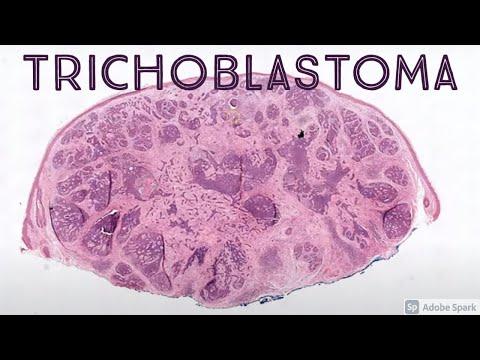
Alright, picture this: you’re chilling at a family gathering, and someone starts talking about skin tumors. Yep, that’s the kind of party I want to be at, right? Seriously though, trichoepithelioma might not be the hottest topic in your circle, but it’s pretty intriguing once you get into it.
So what are we talking about? Well, trichoepithelioma is this rare little gem of a skin tumor. It’s linked to hair follicles—like the ones sprouting out of your head or maybe just that one stubborn one on your chin. Crazy how something so small can have such a big name!
And hey, research around it is evolving all the time. New insights are popping up like mushrooms after rain. So let’s unravel this together and see what makes trichoepithelioma tick!
Understanding the Pathology of Trichoepithelioma: Insights into Dermatological Science
Trichoepithelioma is one of those skin conditions that people don’t talk about much, but it can be pretty interesting once you start digging into it. Basically, it’s a benign tumor that usually pops up in areas like the face, especially around the nose. These little guys can look like small bumps and are sometimes mistaken for other types of skin issues.
What causes trichoepithelioma? Well, the exact cause isn’t completely understood yet. It seems to be linked to abnormalities in hair follicle cells. There’s a genetic component too; some folks have a hereditary condition called multiple trichoepitheliomas, which means they get more than one of these tumors. It could be passed down through families because of mutations in certain genes.
When you look at the pathology under a microscope, critical features become clear. The tumors generally arise from hair follicle structures called epithelial nests. These nests go through hyperplasia—basically an increase in cell numbers—leading to those characteristic lumps we see on the skin. It’s kind of wild how something so small can have these complex processes going on inside, right?
Symptoms and diagnosis are typically straightforward. Most people don’t experience any pain or discomfort with them; they’re just there as little growths. Doctors usually rely on visual examinations for diagnosis but might take a biopsy if there’s uncertainty.
In terms of treatment options, many patients opt for surgical removal if they find the lesions bothersome or unsightly. The good news? Surgical excision tends to have great outcomes! Once removed, these pesky bumps often don’t come back.
Now let’s chat about advancements in research. Scientists are always looking for better ways to understand and treat trichoepithelioma. Recent studies are diving into genetic testing and molecular pathways involved in tumor development. By doing this, researchers hope to find targeted therapies that could make treatments even more effective.
The thing is: Even though it sounds daunting, staying informed about conditions like trichoepithelioma can empower you or someone you know dealing with it. If you ever spot any unusual bumps on your skin or notice changes over time, just remember: getting checked out by a dermatologist is key! Keeping an open dialogue with healthcare providers helps ensure proper care and peace of mind.
So there you have it—a peek into trichoepithelioma and what it all means within dermatological science! Pretty cool stuff if you’re into skin health and all that jazz!
Exploring Treatment Options: Is There a Cure for Trichoepithelioma in Scientific Research?
Trichoepithelioma might sound like a mouthful, but it’s actually quite interesting! It’s a type of benign skin tumor that tends to show up mostly on the face. If you’ve ever seen a small bump that looks like it belongs in another world, you might have come across one of these little guys. But when it comes to treatment options, things can get a bit hazy.
And here’s the kicker—there isn’t a definitive cure for trichoepithelioma yet. You know, it’s one of those conditions where research is still ongoing. Scientists are diving into understanding its pathology and figuring out what makes these tumors tick.
So what exactly do we know about treatment options?
Here are some key points:
- Observation: For many folks, especially if the tumor isn’t causing any issues or discomfort, doctors might recommend just keeping an eye on it. Sounds simple, right? Sometimes, they don’t even need to do anything at all!
- Surgical removal: If the trichoepithelioma is bothersome or if someone wants it gone for cosmetic reasons, surgery is often the go-to option. This can be done through several techniques including excision or curettage.
- Radiation therapy: Although not super common for this kind of tumor, some research suggests that low-dose radiation may help with really stubborn cases.
- Cryotherapy and laser treatments: These methods use extreme cold or focused light to destroy the growths. They might not work for everyone though.
A neat fact: trichoepitheliomas often pop up in familial clusters! That means if someone in your family has one, there’s a good chance you could too. It’s like an unwelcome family reunion—nobody wants it!
You see, researchers are still working hard to crack the code on why these tumors occur and how to treat them effectively. Some studies have even linked genetic factors to their development—like tiny clues left behind that scientists are eager to follow.
Beyond just basic treatments, advanced research into targeted therapies is underway. These therapies aim for specific pathways involved in tumor growth—think of them as tiny ninjas seeking out only the bad guys!
The fight against trichoepithelioma isn’t over yet; scientists worldwide are committed to understanding more about this condition every day. While we might not have that magic cure just yet, awareness and knowledge continue to grow—and who knows what breakthroughs await us?
Understanding the Genetic Syndrome Linked to Trichoepithelioma: Insights into Cutaneous Conditions
Trichoepithelioma is one of those genetic syndromes that can really catch you off guard if you’re not familiar with it. It’s a benign skin tumor, but there’s more to it than just that. What happens is, it forms small bumps on the skin, mainly on the face, scalp, and neck. These bumps can look a bit like little cysts or pimples but trust me, they’re not your usual acne.
So, what’s going on genetically? Well, trichoepithelioma is often linked to mutations in a specific gene called TP53. This gene plays a crucial role in regulating cell growth and division. When there’s a mutation, cells can grow uncontrollably. Imagine your skin trying to do its thing but getting confused; that’s essentially what’s happening here.
One of the fascinating aspects of this condition is its connection to other syndromes. People who have Birt-Hogg-Dubé syndrome, for instance, often develop trichoepitheliomas alongside other issues like lung cysts and kidney tumors. It’s like having a package deal with different gifts inside—some useful and some not so much.
When we talk about symptoms, trichoepitheliomas usually show up during adolescence or early adulthood. They might appear as tiny flesh-colored lumps that can sometimes be itchy or tender—not exactly fun! The good news? These tumors are generally harmless and may even go away on their own after a while. But that doesn’t mean you shouldn’t keep an eye on them.
Now let’s take a detour into treatment options for those bumps if they become bothersome. Doctors typically recommend surgical removal if someone wants to get rid of them for cosmetic reasons or because they’re causing discomfort. It’s usually straightforward—you go in, have them removed, and life goes on!
But here’s where it gets even more interesting: researchers are continuously finding new insights into how these genetic conditions work at a molecular level. The study of trichoepitheliomas helps scientists learn more about skin development and the complex world of genetics in general.
It can sometimes feel overwhelming if you or someone close to you is dealing with trichoepithelioma or related conditions. I remember talking to a friend whose sister had some bumps removed years ago—they were just little things but caused quite the emotional stress because people kept asking questions about them. It goes to show how our appearance can impact us socially and emotionally.
In short:
- Trichoepithelioma is linked to mutations in the TP53 gene.
- It’s often tied to other syndromes like Birt-Hogg-Dubé syndrome.
- Tumors typically appear as small lumps during adolescence.
- Surgical removal is common for bothersome cases.
- The condition provides insights into genetics and skin development.
Understanding genetic syndromes like trichoepithelioma really shines a light on how complex human biology is while reminding us how important awareness and compassion are when it comes to skin conditions!
Trichoepithelioma might sound like something out of a medical textbook, but it’s actually a pretty interesting topic in dermatology. It’s a benign tumor that usually pops up on the face or scalp, and even though it’s not harmful, it can definitely make you feel self-conscious if it shows up on your skin. I remember this one friend who had one right at the corner of her eye. She was always worried about what people thought, and she’d often joke about how it made her look like she had a little extra bling.
So, what exactly is this thing? Trichoepithelioma arises from hair follicles and can be associated with some rare genetic conditions. Benign as they are, they still come with some mystery because they can resemble other skin lesions. That’s where researchers have their work cut out for them. They’re digging deeper into the pathology—basically trying to figure out what makes these tumors tick—and they’ve made some cool advances recently.
They’ve started using advanced imaging techniques and genetic studies to better understand how these tumors develop. For instance, researchers are discovering specific mutations that can lead to their formation. This kind of information might not just help in identifying them but could also shed light on better treatments down the line, should anyone need more than just a cosmetic fix.
And here’s where it gets really intriguing: As scientists unravel more secrets about trichoepitheliomas, they’re also looking into other skin tumors that behave similarly. You see? What starts as just understanding one type of tumor can actually lead to breakthroughs in related areas.
It’s kind of heartening when you think about it—every little (or big) discovery connects to something broader in medicine. And for those living with trichoepitheliomas or similar conditions, knowing that there’s ongoing research gives hope for better outcomes and treatments eventually!
So yeah, while trichoepithelioma might not be a household name yet or spark casual conversations over coffee, it’s got its own story that’s unfolding slowly but surely in the medical field! And sometimes those stories are just as important as the flashy breakthroughs everyone talks about.