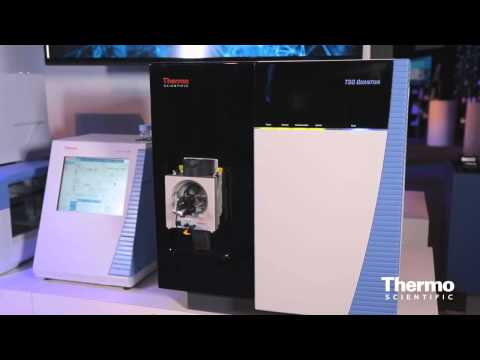
You know, I once thought mass spectrometry was just one of those fancy lab things you hear about in movies, like secret spy tech or something. But then I stumbled into a conversation about triple quadrupole mass spectrometry, and wow, it’s like discovering there’s a whole universe behind those science-y words!
Imagine being able to pinpoint molecules more precisely than finding your keys in a messy room. Seriously! With all the advancements happening in this field, it’s like scientists are gearing up for their own superhero movie.
So, if you’ve ever been curious about how we analyze everything from food safety to drug testing with these amazing gadgets, let me share what I’ve learned. Buckle up—it’s going to be a cool ride into the world of triple quadrupole mass spectrometry!
Exploring Recent Advancements in Triple Quadrupole Mass Spectrometry Techniques: A Comprehensive Overview
So, let’s chat a bit about triple quadrupole mass spectrometry, or TQMS for short. You might be wondering what the heck all that means. Basically, it’s a super cool technique used in chemistry and biology to analyze substances at really tiny levels. Imagine being able to see the tiniest details of a molecule, like how it’s structured or its mass. That’s what this technology does.
Now, TQMS involves three quadrupoles working together. To break it down: a quadrupole is a kind of device that can filter ions based on their mass-to-charge ratio. The first quadrupole selects ions from your sample. The second one can fragment those ions into smaller pieces, which is super handy for figuring out what they are. Finally, the third quadrupole analyzes these fragments to get even more detailed information. It sounds complicated—and it kinda is—but that’s where all the magic happens.
Recently, there have been some advancements in TQMS that are worth talking about! Like, seriously exciting stuff! For starters:
- Improved Sensitivity: New detector technologies have made TQMS even more sensitive than before. This means you can detect smaller amounts of substances in your samples.
- Faster Analysis Times: Recent innovations allow for quicker analysis without losing accuracy. Researchers can now get results way faster than they could a few years ago.
- Enhanced Selectivity: With better software and hardware integration, scientists can hone in on specific compounds in complex mixtures with less interference from other substances.
- Real-time Monitoring: Some systems now allow for real-time analysis of samples during experiments, which is mind-blowing when you think about how traditional methods worked.
You know what’s super interesting? This tech has been applied in various fields! For example:
– In *pharmaceuticals*, researchers use TQMS to ensure drug purity and monitor metabolites.
– In *environmental science*, detecting pollutants at very low levels has become much easier using upgraded techniques.
– Even in *food safety*, ensuring no harmful substances sneak into our meals relies heavily on advances in this area.
It reminds me of the time I helped my friend check for contaminants in her homemade skincare products—those little machines were lifesavers! We found everything from unexpected fragrances to heavy metals that shouldn’t be there at all.
But with all this new tech comes challenges too. Researchers need training to keep up with these rapid advancements and ensure accurate interpretations of data. Plus, there’s always the balance between sensitivity and specificity; sometimes improving one could compromise the other if you’re not careful.
In summary (not sure if I’m summarizing correctly), recent advancements in triple quadrupole mass spectrometry are opening doors to making scientific discoveries faster and more precise than ever before. It’s like getting an upgrade on your favorite app—you just want the best features possible, right? And who knows what else we might discover with this nifty tool as it continues evolving?
Advancements in Triple Quadrupole Mass Spectrometry: Key Applications and Techniques in Modern Scientific Research
Triple Quadrupole Mass Spectrometry (TQMS) is, like, a super cool tool in the world of analytical chemistry. It’s basically a fancy way to measure the mass of ions, which are particles that are charged and can move around. The thing that makes TQMS really impressive is how it helps scientists identify and quantify different substances, especially in complex samples. Let’s break this down a bit.
What’s with the name? So, “triple quadrupole” refers to three quadrupole filters used in tandem. Imagine it like a security checkpoint with three layers; only the right substances get through each time. This setup allows for super precise measurements.
Key Applications:
- Environmental Analysis: Researchers use TQMS to check for pollutants in water or air samples. For example, measuring pesticide residues can show how safe our food really is.
- Drug Development: In pharmaceuticals, this tech is crucial for understanding drug metabolism. Knowing how drugs break down helps scientists create better medications.
- Clinical Diagnostics: It’s also big in hospitals for monitoring biomarkers in blood or urine samples. This can help catch diseases early on.
The Techniques Behind TQMS
So, let’s chat about some cool techniques that make this all happen.
First off, there’s Multiple Reaction Monitoring (MRM). This technique is like having a smart filter that focuses on specific reactions of target analytes while ignoring everything else. Picture trying to focus on one song at a concert—you want just that tune without all the background noise!
Then there’s Tandem Mass Tagging (TMT). This one is nifty for protein analysis. Basically, it tags different proteins with chemical labels so they can be quantified simultaneously. It’s like putting name tags on everyone at a party so you know who’s who!
Another technique worth mentioning is SURFACE ENHANCED LASER DESORPTION IONIZATION (SELDI). Yeah, it’s a mouthful! But what it does is enhance signals from specific proteins or peptides by using surfaces that help ionization. Imagine shining a laser pointer on your favorite band—everyone notices them instantly.
Let me share a little story about why these advancements are important: A friend of mine had health issues for years and couldn’t figure out what was wrong until doctors used TQMS to examine his blood for specific biomarkers related to his condition. It led them right to the answer! Isn’t it amazing how science directly impacts lives like that?
The Future Looks Bright!
The advancements don’t stop here! As technology improves, TQMS will keep getting better too—think faster processing times and higher sensitivity levels! Researchers and scientists are excited because these improvements could lead to even more groundbreaking discoveries.
In summary, Triple Quadrupole Mass Spectrometry isn’t just some lab tech; it’s an incredible tool that’s helping us understand our world better every day—from keeping our environment safe to developing life-saving medicines. Who knows what else we’ll find out as we dive deeper into this fascinating field?
Comprehensive Guide to Triple Quadrupole Mass Spectrometry: Downloadable PDF Resources and Applications in Scientific Research
Triple Quadrupole Mass Spectrometry (TQMS) is a powerful analytical technique used in various scientific fields for measuring the mass-to-charge ratio of ions. It’s particularly valued for its sensitivity and specificity, making it great for analyzing complex mixtures like biological samples, environmental pollutants, or food contaminants.
So, how does it work? Imagine you’re at a crowded party trying to find your friend. You have to filter out all the noise and distractions to spot them. TQMS does something similar with ions. It uses three quadrupoles—essentially oscillating electric fields—that help select and detect ions based on their mass-to-charge ratio.
Here’s how the process typically goes:
- The first quadrupole acts as a mass filter. It selects ions of a specific mass that you want to study.
- The selected ions then go through a collision cell where they might break apart into smaller fragments.
- The second quadrupole filters these fragments based on their mass, allowing only certain ones to pass through.
- Finally, the third quadrupole detects the remaining ions and produces a spectrum that tells you their quantities.
It’s like sifting through sand to find diamonds! This system allows researchers to quantify even low-abundance compounds in complex samples, which is super important in studies like drug development or toxicology.
Now you might be wondering about its applications. Triple Quadrupole Mass Spectrometry is used in many areas:
- Bioanalytical Chemistry: It’s crucial for drug testing and understanding metabolic processes.
- Environmental Science: Helps detect trace pollutants in water or soil.
- Food Safety: Monitors pesticide residues or contaminants in food products.
Real-life examples include labs using TQMS for checking pharmaceuticals for impurities. In one instance, researchers found unexpected toxic compounds in common medications—definitely a big deal!
For those looking to dive deeper into TQMS techniques or applications, there are downloadable PDF resources available online. Many universities and research institutions share valuable materials that explain the fundamentals and advanced aspects of this technology. Just search around; there’s tons out there!
In terms of advancements, new techniques are always emerging, focusing on improving sensitivity and reducing background noise. These include integrating TQMS with other methods like gas chromatography—a combo that’s proving super helpful in various analyses.
You see? Triple Quadrupole Mass Spectrometry is not just some fancy term; it’s at the heart of many scientific breakthroughs today! And who knows what new discoveries await us as this field continues evolving?
Okay, so let’s chat about something that might sound a bit technical but is actually really cool: Triple Quadrupole Mass Spectrometry, or TQMS for short. If you’re like me, you might think, “Wow, that’s a mouthful!” But don’t worry; I’m here to break it down for you.
First off, mass spectrometry is this amazing analytical technique used to measure the mass-to-charge ratio of ions. You know how when you were a kid and you’d crush a soda can and then try to make it fly? Well, mass spectrometry is kinda like the scientific version of that—it sorts through all those tiny particles with precision. Triple quadrupole systems take it up a notch by having three quadrupoles in series. It’s essentially a fancy way to filter out ions before they get detected. Think of it as a high-tech bouncer at an exclusive club deciding who gets in and who doesn’t.
Now, what’s really exciting is how advancements in TQMS have transformed the field of chemistry and biology. For example, I remember chatting with a friend who works in environmental science. She told me how they can now detect pollutants in the environment at incredibly low concentrations, even parts per trillion! That’s like finding a drop of water in an Olympic-sized pool! Knowing we can track down contaminants helps us protect our planet and health.
And it’s not just about environmental applications. In pharmaceuticals, TQMS has made drug development way more efficient by allowing scientists to analyze complex mixtures quickly. It’s like having super-powered glasses that help researchers see exactly what they need to in samples without getting overwhelmed by irrelevant info.
One neat aspect of these advancements is how they’ve become more user-friendly over time. Seriously! They used to be these giant machines only found in fancy labs but are now more accessible thanks to better software and automation tools. Imagine someone who was intimidated by their high school science class suddenly being able to handle sophisticated lab equipment—how empowering is that?
But it’s not all rainbows and butterflies; with great power comes great responsibility (thanks for that wisdom, Uncle Ben). As we harness these advanced techniques for good—like improving medical diagnostics or protecting the environment—we must also consider ethical implications around data accuracy and transparency.
So there you have it! Triple Quadrupole Mass Spectrometry isn’t just some jargon thrown around by scientists; it’s shaping our world in ways we might not even be aware of yet. Who knows what breakthroughs will come next? Just keep your eyes peeled—science always has something exciting up its sleeve!