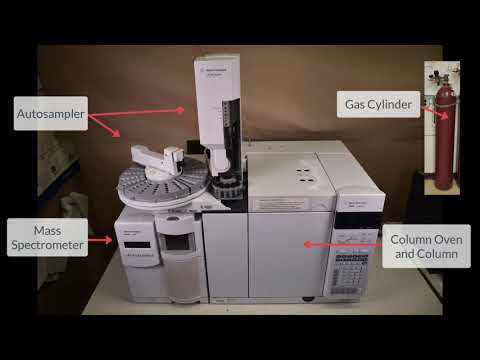
Did you know that the smell of a freshly baked pie can actually tell you a lot about its chemistry? Seriously! That’s where gas chromatography comes in, helping us break down those delicious aromas into their chemical parts. It’s like giving a pie a science makeover!
And then there’s mass spectrometry, which is basically like a detective for molecules. It helps scientists identify what’s in that pie once and for all.
When you mix these two techniques, you get this powerful combo that’s changing the game in labs everywhere. So stick with me; we’re going to dig into how these advancements are reshaping everything from food quality to medicine. You don’t want to miss this!
Exploring Recent Advancements in Gas Chromatography and Mass Spectrometry: A Comprehensive PDF Guide for Scientific Research
Gas chromatography and mass spectrometry, or GC-MS for short, are like the dynamic duo of the scientific world. They work hand in hand to separate and identify different compounds in a mixture. And guess what? There have been some pretty exciting advancements recently that are making this tech even better.
First off, let’s talk about **speed**. Newer models of gas chromatographs can analyze samples way faster than before. This is huge! Imagine being able to get results at lightning speed when you’re in the lab late at night and just want to see if your experiment worked out. Enhanced detectors are now capable of detecting smaller amounts of substances, which means you can spot even trace levels of components in your samples.
Another cool thing is the development of miniaturized systems. Now, you might be thinking, “What’s a miniaturized system?” Well, they’re basically smaller versions of traditional GC-MS setups. These tiny machines are portable and can be used in remote locations—even on-site! That means researchers can analyze samples right where they’re collected instead of hauling everything back to a lab miles away.
Then there’s the aspect of automation. Recent advancements have led to more automated processes. This isn’t just about saving time (though it definitely does that). Automation also reduces human error because machines tend to be more consistent than us mere mortals. Every scientist knows that one little slip can throw off an entire experiment.
And if we talk about **data analysis**, things have really stepped up too! With improved software, interpreting data from GC-MS has become way easier. Complex algorithms can help identify compounds quicker and more accurately than before. Imagine having your own assistant that sorts through mountains of data to find what you need; it makes everything much smoother!
Let’s not forget about **sensitivity** improvements as well. New ionization methods are allowing scientists to detect even lower concentrations of substances. This is particularly exciting for fields like environmental science or forensic analysis where detecting harmful pollutants or tiny traces of evidence can make all the difference.
Most importantly, these advancements make scientific research more reliable and straightforward overall. For researchers tackling pressing issues like pollution or drug development, having efficient tools means faster results that could lead to real-world solutions.
In a nutshell, here’s what’s going on with recent advancements in gas chromatography and mass spectrometry:
- Speed: Faster analyses allow for quicker results.
- Miniaturization: Portable systems enable fieldwork.
- Automation: More consistent processes reduce errors.
- Advanced Data Analysis: Improved software speeds up interpretation.
- Sensitivity Enhancements: Better detection at lower concentrations.
So yeah, it’s an exciting time for anyone working with GC-MS! These developments not only push forward scientific research but also open up new possibilities across various fields—from environmental monitoring to food safety.
Understanding the GC-MS Principle: A Comprehensive Guide to Gas Chromatography-Mass Spectrometry in Scientific Analysis
Gas Chromatography-Mass Spectrometry, or GC-MS, is like the dynamic duo of the analysis world. Imagine you’ve got a whole bunch of different substances mixed together, and you want to figure out what each one is. That’s where GC-MS comes in. It helps scientists separate, identify, and quantify those substances in a super efficient way. So, let’s break this down.
First off, what’s gas chromatography all about? Well, gas chromatography is a technique used to separate components in a mixture based on their volatility. Think of it like a race: lighter (or more volatile) compounds zoom ahead faster through the column than heavier ones. The separation happens inside a long tube called a column that’s packed with a special material.
Then comes the mass spectrometry part. Just when those substances come out of the column all separated, mass spectrometry takes over! It breaks down each substance into ions by giving them an electric shock. This ionization process lets us measure their mass-to-charge ratios. Basically, it helps us figure out what kind of molecule we’re dealing with.
Now let’s connect the dots between these two! The beauty of GC-MS lies in how they work together:
- Separation: First things first—gas chromatography separates the compounds based on how they interact with the column.
- Identification: Once separated, each compound enters the mass spectrometer for identification.
- Quantification: The amount of each compound can also be measured based on how strong their signals are in the mass spectrum.
Think about it like going to a party with mixed drinks; you want to know which drink has which ingredients and how much of those ingredients are there! With GC-MS, scientists can do just that but with chemicals in samples from food, environmental studies, or even forensic investigations.
There’s this amazing story I once heard about using GC-MS in food testing. A group discovered illegal food additives using this technique—even things that could have been potentially harmful! Just goes to show how powerful this combo can be for public safety.
So yeah, what really sets GC-MS apart from other methods? Well, its sensitivity and specificity are top-notch! It can detect trace amounts (like parts per billion!) of compounds amid complex mixtures and at high speeds.
To sum up, understanding GC-MS means appreciating its role as a reliable analytical tool in various fields like chemistry, biology and forensics. The combination of gas chromatography’s separating prowess with mass spectrometry’s identifying power makes it indispensable for any scientist wanting to crack open those complex mixtures!
So next time you hear about some cool findings from gas chromatography-mass spectrometry analysis, just remember: it’s all about teamwork between two heavyweights working together to get right down to business!
Exploring the Advantages and Disadvantages of Gas Chromatography-Mass Spectrometry (GC-MS) in Scientific Research
Gas chromatography-mass spectrometry, or GC-MS, is like the dynamic duo of the scientific analysis world. It’s used to separate and identify compounds in a mixture. You mix things up, let them travel through a column, and then zap them with a mass spectrometer to figure out what you’re dealing with. Sounds simple, right? Well, there’s a bit more to it than that. Let’s break down the good and not-so-good bits.
One major advantage of GC-MS is its high sensitivity. Seriously, it can detect substances at incredibly low concentrations. Imagine you’re hunting for a needle in a haystack—a pretty big haystack! GC-MS can find that needle without breaking a sweat.
Then there’s the accuracy. Researchers often measure substances in complex environments, like pollution studies or food safety testing. GC-MS doesn’t just give you data; it gives you reliable data that you can actually count on!
It’s also worth mentioning how versatile it is. From environmental monitoring to forensic science, GC-MS can be applied across different fields. One moment it’s sniffing out pesticides on fruits; the next, it’s helping determine what went wrong at a crime scene.
However, it’s not all rainbows and butterflies. There are some downsides too, so here we go:
First off, there’s the issue of sample preparation. Sometimes preparing samples for GC-MS can be quite tedious and time-consuming. You’ve gotta make sure everything is perfect before running your tests—otherwise your results might just go haywire.
Another drawback is that not all compounds are amenable to gas chromatography. If something doesn’t easily evaporate, well, then you’re kind of stuck! That means certain polar compounds or large biomolecules might slip through the cracks—ouch!
And we can’t ignore that GC-MS equipment tends to be quite expensive. The upfront costs along with maintenance can put a dent in budgets—especially for smaller labs or institutions trying to make ends meet.
So yeah, while GC-MS has some incredible advantages like high sensitivity and accuracy along with versatility across different research fields, it does come with its fair share of challenges—like tough sample prep requirements and pretty steep costs.
In summary: if you’re diving into research where you need detailed chemical analysis? Consider grabbing that gas chromatography-mass spectrometry tool but keep those limitations close in mind too!
So, let’s talk about gas chromatography and mass spectrometry—or GC-MS, as the cool kids call it. Honestly, these techniques are like best buddies in the lab. They’ve been around for a while and have really evolved over time. I mean, think about it: how many times have you wished to know exactly what something is made of? Like, just a few months ago, I was trying to identify this weird smell coming from my fridge. Turns out, it was just some old cheese. But if I had GC-MS back then, I could’ve pinpointed every single compound in that stinky delight!
Anyway, gas chromatography helps scientists separate different components of a mixture. You can imagine it like a race where each substance has its own speed—some zoom past while others take their sweet time. The result? You get clean-cut layers of substances instead of one big messy soup.
Now add mass spectrometry into the mix. This part is all about figuring out what those separated substances actually are by measuring their mass. It’s like taking a really detailed snapshot of each racer after they finish the race. “Oh hey, you there with the strange peak! You’re not cheese; you’re an organic solvent!”
Over the years, advancements in these technologies have made them faster and more sensitive. Like, remember when you had to wait ages just to get the results? Nowadays, we can have real-time data flowing right out of those machines! If only my microwave worked that fast.
And let’s not forget about how accessible these tools have become for various fields beyond chemistry labs—think forensics or even space exploration! Recently read an article where they used GC-MS on Mars to analyze soil samples…how exciting is that?
In some ways, advancements in GC-MS reflect our growing curiosity as humans—we want to uncover secrets hidden in everything around us. Plus, with better technology comes more accurate results which means we can make smarter decisions based on solid evidence.
But here’s the thing: while all these advancements are amazing and make life easier for scientists everywhere, they also bring up questions about ethics and access to technology. It’s essential that we think carefully about who gets to use this incredible power.
So yeah, whether you’re trying to figure out that funky smell in your kitchen or exploring distant planets—you gotta love the role that gas chromatography and mass spectrometry play in helping us understand our world just a little bit better! Isn’t science just so cool?