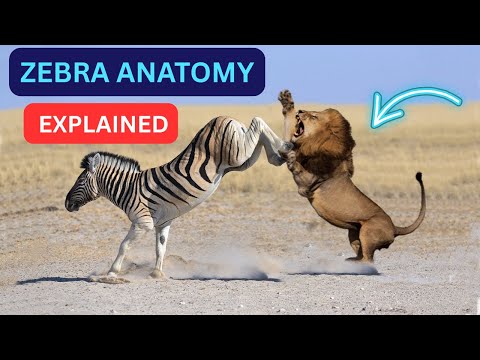
Did you know that zebras are basically the fashionistas of the animal kingdom? Seriously! Those black and white stripes aren’t just for show. They’ve got some wild tricks up their sleeves—or, well, their legs.
Picture this: a zebra running across the savanna, looking all sharp and striking. But there’s more to these beautiful creatures than just a killer wardrobe. Their anatomy plays a big role in how they survive in the harsh African landscape.
So, what makes zebras tick? Why are their bodies built the way they are? It’s not all about style; it’s about staying alive! Let’s unfold this stripey tale of adaptation and survival together. You ready?
Zebra Adaptations: Understanding Their Purpose and Impact in Evolutionary Biology
Zebras are such fascinating creatures, right? Their black and white stripes aren’t just for show; they have some pretty cool purposes that help them survive in the wild. Think about it: if you were a zebra, you’d want all the tricks up your sleeve to stay safe from predators.
Camouflage and Disruption
One of the main adaptations in zebras is their striped coat. At first glance, it might look like a fashion statement, but those stripes actually help them blend into their environment. When zebras are in a group, the stripes can confuse predators like lions and hyenas. As you can imagine, swirling patterns can mess with an attacker’s focus!
Thermoregulation
Another interesting thing about zebras is how their stripes help with temperature control. The black parts absorb heat while the white parts reflect it. This creates little air currents around their bodies which could help them stay cool on hot savannah days. So basically, those stripes are like built-in air conditioning!
Sociability and Communication
Now let’s talk about social interactions. Zebras live in herds and have unique patterns of loud whinnies and snorts to communicate with each other. Their anatomy plays a role here too. With big ears that can swivel around, they can pick up sounds from all directions! It’s crucial for staying connected with the group, especially when there’s danger lurking.
Dietary Adaptations
In terms of feeding habits, zebras have evolved to eat tough grasses that many other animals find unappetizing. Their strong teeth and digestive systems are tailored for grinding up fibrous plant material. This adaptation lets them thrive where there might not be much food available compared to other herbivores.
Mating Displays
When it comes to love life, those striking stripes also serve another purpose during mating rituals. Males will often show off their bright coats as part of courtship behaviors. It’s like saying “Hey lady, check out my awesome style!”
Each adaptation plays a significant role in zebra life—survival is all about being well-equipped for challenges in nature! The story of zebras isn’t just about looking good; it’s really about how these amazing adaptations come together to ensure they thrive through generations.
In evolutionary biology, studying these adaptations helps us understand how species evolve traits over time based on environmental pressures and social structures. By learning about zebras—those striped wonders—we get a closer look at the incredible dance between form and function that shapes life on Earth.
So next time you see a zebra trotting along or grazing peacefully under the sun, just remember: every stripe tells a story!
Exploring the Role of Zebra Stripes in Survival: Insights from Evolutionary Biology
The thing is, when you see zebras, the first thing that hits you is their stripes. They’re seriously eye-catching! But those black and white patterns aren’t just for show. They actually play a pretty cool role in survival, and it all comes down to evolutionary biology.
So, let’s break it down. One of the main ideas is that zebra stripes help them avoid predators. When a group of zebras runs together, their stripes can confuse predators like lions. It’s like nature’s own version of “Now you see me, now you don’t!” This phenomenon is known as the motion dazzle effect. Basically, when they move in a herd, it becomes tricky for predators to focus on one zebra because of all the shifting patterns.
But wait, there’s more! Another fascinating aspect is how stripes might help with temperature regulation. You know how black absorbs heat and white reflects it? Well, researchers think that these contrasting colors could create tiny air currents around the zebras’ bodies. This could help keep them cooler in hot weather. So stripes might not only look cool but also keep the zebras from overheating while they chill under the African sun.
Zebras also have to deal with pesky insects, especially tsetse flies and horseflies. These insects are more attracted to solid colors than striped ones. When zebras are in their striped pajamas (so to speak), they’re not as appealing to these annoying bugs. This helps reduce biting and disease transmission—definitely a win for our stripey friends!
You might think about where these traits come from. Evolutionarily speaking, those who had beneficial traits lived longer and passed those traits to their offspring. Over time, thanks to natural selection, being striped became a pretty solid advantage for survival.
- Predator confusion: Stripes make it hard for predators to focus on one zebra.
- Temperature control: The contrasting colors may aid in keeping them cool.
- Pest repellent: Stripes help reduce bug bites!
In a way, if you think about all this while watching zebras roam around on an African plain or at your local zoo—it really brings home the beauty of nature’s designs! Their stripes aren’t just pretty; they’re a matter of life and death out there in the wild.
Evolving with these advantages shows just how remarkable adaptation can be. It reminds us that every creature has its own unique story rooted deep within nature’s intricate web of life.
Survival Strategies of Zebras: Insights from Behavioral Ecology
Zebras are not just beautiful creatures with cool stripes. Their survival strategies are deeply rooted in their behavior and anatomy. Behavioral ecology helps us understand how zebras adapt to their environment to stay alive.
First off, those iconic stripes? They’re not just for show. They play a big role in survival. Research suggests that the stripes can confuse predators. When zebras run together in a herd, the patterns can create an optical illusion, making it hard for lions or hyenas to focus on individual animals. It’s like they become a moving wave of black and white! Imagine being a predator trying to spot lunch amidst all that chaos.
Another interesting thing is how zebras are very social creatures. They form strong bonds within their herds. This social structure provides safety in numbers, which is key when danger lurks around. A lone zebra is more vulnerable, while a group can work together to keep an eye out for threats. Think of it like hanging out with friends at school; you feel safer together, right?
Now, let’s talk about communication. Zebras have a whole language of sounds and body movements. This is crucial for alerting each other about predators. You wouldn’t believe the range of vocalizations they use! From barks to whinnies, they know how to convey danger without causing panic.
Their anatomy also plays a role in survival strategy. Zebras are built for endurance with strong legs and efficient lungs that allow them to run fast when needed. Imagine being chased by something hungry; you’d want strong legs too! Plus, their eyesight is excellent; they can spot danger from quite a distance.
Food sources also dictate zebra behavior. These animals graze on grasses but will adapt their eating habits based on what’s available during different seasons or locations. When grass is scarce, they’ll move towards areas where food is plentiful, showing flexibility that’s vital for survival.
Lastly, there’s the hydration aspect. Zebras often travel long distances looking for water sources—staying hydrated is crucial! They can go without drinking water longer than you might expect but know where those watering holes are located helps them thrive in arid landscapes.
In summary, zebras use a combination of social behavior, communication skills, physical adaptations like stripes and body structure to enhance their chances of survival against predators and environmental challenges. So next time you see one of these amazing animals on TV or at the zoo, remember: there’s so much more going on than meets the eye!
Zebras are such cool creatures, right? When you look at them, the first thing that probably jumps out is those striking black-and-white stripes. But there’s more to these animals than just their unique fashion sense— let’s dig into their anatomy and how it plays a role in their survival.
So, what’s the deal with those stripes? Well, researchers think the pattern actually helps zebras adapt to their environment. You see, when they’re in a herd, all those stripes can make it super tough for predators to single out one zebra. It creates a kind of optical illusion—a swirling mass that confuses lions or hyenas trying to pick off an easy meal. How clever is that?
But it doesn’t stop there! Their strong legs and hooves are built for running. Zebras can sprint like the wind when a predator is on the hunt. I remember reading about a story where a young zebra narrowly escaped a pack of hungry lions by zigzagging through tall grass—seriously impressive! Their muscles are specially adapted for quick bursts of speed which makes them agile and slippery targets.
Then there’s their teeth— designed to chew tough grasses and plants, since they’re mostly grazers. This means they can thrive in areas where other animals might struggle to find food. The big molars help break down fibrous plants efficiently, allowing them to extract maximum nutrients.
Their skin also deserves some attention; it’s not just for show! The skin contains layers that provide protection from sunburn and irritants while also helping regulate body temperature. Plus, those stripes may even play a role in deterring pesky biting flies! Talk about multitasking!
And let’s not forget about social behavior! Zebras often form strong bonds within their herds. They take care of each other, alerting one another to danger with loud barks or snorts. That social aspect ties back into survival too—because when you’re part of a group, your chances of dodging predators increase dramatically.
So yeah, zebra anatomy isn’t just fascinating; it’s like this incredible toolkit shaped by evolution for survival in the wild. Nature really does know how to equip its creatures for life’s challenges! Isn’t it awe-inspiring how everything has its place in the grand scheme? You start with something as seemingly simple as stripes and end up seeing a complex web of adaptation and resilience woven through these beautiful animals’ lives.