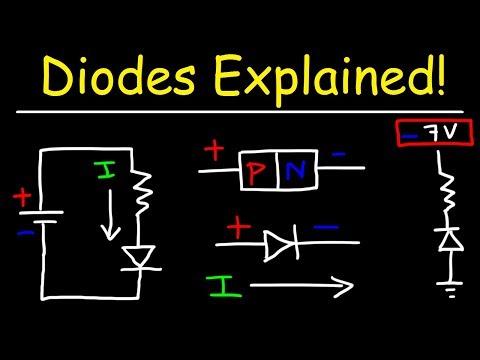
You know, when I was a kid, I thought diodes were some kind of newfangled gadget straight outta a sci-fi movie. But really, they’re like the unsung heroes of electronics! Seriously, they do some pretty cool stuff behind the scenes.
Take the 4007 diode, for example. It sounds super technical, right? But it’s just a tiny piece that helps things run smoother in circuit design. Like the little glue that keeps everything together.
But what makes this diode so special anyway? You’re about to find out. It’s not just about how it looks—it’s all about what it can do!
Exploring the Applications of Diodes in Circuit Design: A Comprehensive Overview
Alright, let’s talk about diodes, particularly the 4007 diode. This little component might not get the spotlight often, but it plays a huge role in circuit design. So, if you’re keen on knowing how it works and where it fits in, stick around!
First off, what’s a diode anyway? You can think of a diode as a one-way street for electricity. It allows current to flow in one direction while blocking it from going the other way. Pretty neat, huh? The 4007 diode is an example of a silicon rectifier diode. It’s versatile and widely used in various applications.
Now, let’s break down some cool ways these diodes are used:
- Rectification: This is probably the most common use for the 4007 diode. When you convert alternating current (AC) to direct current (DC), you need diodes that can do this job efficiently. Think about it like changing waves into steady flow—it’s super important for powering up electronic devices.
- Voltage Clamping: Ever heard of protecting circuits from voltage spikes? Diodes like the 4007 can help with that! They act as clamps that prevent excessive voltage from damaging sensitive components. Imagine a bouncer at a club keeping troublemakers out; that’s what these diodes do!
- Signal Demodulation: This one gets a bit techy! In radio applications, diodes help demodulate signals, which is basically pulling out the audio info from an incoming radio wave. So next time you’re listening to your favorite tunes on the radio, remember there’s a diode helping make that happen!
- Protection Circuits: Using a 4007 diode can also safeguard circuits from reverse polarity connections—like when someone accidentally plugs in power back-to-front. The diode blocks any harmful currents that could fry your circuit.
Let me share an anecdote here: I once had this old guitar amp that wouldn’t turn on. Turns out there was just a blown diode inside! After replacing it with a new 4007, bam! It roared back to life like an eager rock star ready to jam.
Next up are some important properties of this trusty component:
- Voltage Rating: The 4007 has a peak reverse voltage rating of around 1000 volts—talk about tough!
- Current Rating: Its maximum forward current is typically around one ampere. That means it handles pretty decent loads without breaking a sweat.
- Saturation Voltage: When the diode is conducting electricity fully (forward-biased), its saturation voltage is quite low—usually under one volt—which helps make circuits more efficient.
You might be thinking: “Why not use other diodes?” Well, each type has its quirks and advantages depending on what you’re building or fixing up.
In conclusion—hey wait, I’m not supposed to wrap things up formally—but you get what I mean! If you’re into circuit design or even just tinkering with electronics at home, understanding how diodes work is key. The humble but mighty **4007 diode** opens doors (or maybe just those one-way streets) for all sorts of electrical adventures!
Exploring the Applications and Importance of the 1N4007 Diode in Electronics
Alright, let’s chat about the 1N4007 diode. You might not think much about a tiny component like this, but it’s actually pretty important in the world of electronics. Basically, it’s a little gate that controls how electricity flows in a circuit. If you’ve ever used a power supply or built a simple electronic project, there’s a good chance you’ve run into one of these guys.
The 1N4007 diode is part of the 1N400x family, which means they share some common features but differ in certain specifications. The 1N4007 can handle up to 1000 volts and has a maximum current rating of 1 ampere. This makes it really versatile for different applications. It’s like that friend who can fit in with any group—and you love having them around!
You might be wondering why we even need diodes. Well, here are some key reasons:
- Rectification: The most common use is to convert alternating current (AC) to direct current (DC). Without diodes, charging batteries or powering devices would be way trickier.
- Voltage Regulation: Diodes can help protect circuits by regulating voltage levels. They prevent excess voltage from frying components, kind of like having a safety net under a tightrope walker.
- Signal Demodulation: In radio receivers, these diodes help decode signals so you can listen to your favorite tunes without static interference.
- A Reverse Polarity Protection: By putting the diode in reverse direction at the start of your circuit, you ensure that if someone messes up and connects the power supply backwards, nothing gets damaged. Pretty smart move!
A while back I was building a small audio amplifier for my guitar and forgot to include diodes for protection. You’d think I’d know better! Anyway, when I powered it on without those safety guards? Poof! A bunch of smoke and silence—it was not my finest hour. That taught me just how critical those little components are!
The 1N4007 also holds up well over time due to its durability. You won’t have to worry too much about wear and tear compared to other components because it can handle quite a bit before giving up on you. That’s super important when you’re working with devices that need reliability—like your phone charger or even larger industrial machines.
If you’re thinking about where you could see this diode being put to use beyond just hobby projects—think about supply circuits, batteries, or even basic switch-mode power supplies! The world of electronics runs smoother thanks to these little guys doing their job behind the scenes.
So yeah, next time you’re involved in any electronic project or just fiddling with circuits at home, remember the role different components play. The 1N4007 might be small and often overlooked but trust me—it packs quite the punch in its performance! Just think about all the gadgets around you running smoothly thanks to something so simple yet crucial!
Understanding the Primary Applications of the 1N4148 Diode in Electronics and Circuit Design
The 1N4148 diode is one of those little heroes in electronics that you might not notice but seriously packs a punch. It’s a small signal diode, meaning it’s primarily used in low-power applications. You don’t need to be a rocket scientist to understand it; just think of it like a one-way street for electrical current. So, let’s break down what this nifty component does and where it’s put to use.
Rectification is where the 1N4148 shines. In simpler terms, it converts alternating current (AC) into direct current (DC). Imagine trying to charge your phone; you wanna make sure the energy only flows one way—into the battery! The 1N4148 handles that with grace, making it super useful in power supplies and adapters.
When you start looking into switching applications, this diode becomes even more interesting. It can turn on and off quickly, which is essential for circuits that need to manage signals rapidly, like in digital logic gates or amplifiers. Think of it as traffic lights for electrical signals—controlling when they stop and go without causing jams.
Another key area is signal clamping. The 1N4148 can protect sensitive components from voltage spikes by limiting how high the voltage can go. Imagine if there’s a thunderstorm and your circuit gets hit with extra energy; this diode acts like an umbrella, shielding the delicate parts from getting fried.
Then there’s snubber circuits. In simple terms, these are used to suppress voltage transients when inductive loads are switched off—like when you turn off a motor or relay. The quick response of the 1N4148 helps maintain stability in these situations by absorbing those sudden spikes that could cause chaos in your circuit.
It’s also worth mentioning its role in logic circuits. When you’re working with digital electronics, you need components that can help maintain signal integrity while processing information at lightning speed. The 1N4148 fits right into this picture as an efficient switch for logic functions because it minimizes delay and power loss.
And what about those nifty little features? This diode works well up to about 100 volts and can handle currents up to 1 ampere. So it’s pretty versatile too! You might find it in various projects ranging from audio equipment to simple gadgetry where space is tight but demands high performance.
So yeah, whether you’re designing an audio amplifier or just tinkering away on a weekend project, keeping some 1N4148 diodes around could be a total game changer for your builds! In short, this tiny component does a big job in keeping our electronic devices running smoothly and efficiently.
So, let’s talk about the 4007 diode, shall we? It’s one of those components that might not grab your attention at first glance, but trust me, it plays a pretty big role in electronics. Imagine you’re trying to build a simple circuit. The 4007 is like that reliable friend who always shows up when you need them.
What’s so cool about it? Well, the 4007 is a dual-gate Schmitt trigger device, which basically means it can help control signals in circuits really effectively. It has this neat property of being able to switch on and off quickly, making it perfect for those circuits where timing is everything. For example, if you’re designing something like an oscillator or a flip-flop circuit—did I mention how fun flip-flops are?—this little guy steps up to the plate and keeps things running smoothly.
I remember this one time when I was playing around with some electronics in my buddy’s garage. We were trying to get this LED strip to blink in sync with the beat of some music we were blasting (a total DIY rave moment!). We had all sorts of components scattered everywhere, but once we incorporated the 4007 diode into our circuit to handle the signal processing, everything just clicked! It was like magic when those lights started pulsing perfectly.
But back to business. The fact that the 4007 can handle both positive and negative voltages makes it super versatile too. You could use it for tasks like rectification—which is just a fancy term for converting AC to DC—or even in protection circuits where you want to prevent reverse polarity from frying your precious components.
Now here’s something interesting: diodes tend to be pretty sensitive to temperature changes. The 4007 isn’t immune either; as temperatures fluctuate, its performance can shift too. That’s something you gotta keep in mind if you’re designing circuits that operate under different environmental conditions.
So yeah, while you might not think much of diodes at first—especially ones like the 4007—they’re kind of like a good pair of shoes: essential for moving forward without tripping over yourself! Whether it’s ensuring signals are clean or protecting your circuit from mishaps, they are true unsung heroes in the world of electronics design. Just next time you tinker with circuits, give a little nod toward these tiny devices doing their thing behind the scenes!