So, picture this: you’re lying in your backyard one night, staring up at the stars. Suddenly, you see something that looks like a UFO. But turns out it’s just a satellite cruising by! Still pretty cool, right?
That’s the kind of magic you can catch with a 6-inch telescope. Seriously, it’s like having superpowers! You could see craters on the moon or even rings around Saturn. Like, how awesome is that?
Telescopes aren’t just for scientists in lab coats. They’re gateways to the universe for anyone curious about what’s out there. And trust me, once you look through one of those lenses, it’s hard not to get hooked! So buckle up; we’re about to explore how this little tube can open up a world of wonders.
Exploring the Cosmos: Discover What a 6-Inch Telescope Reveals in Astronomy
Exploring the cosmos can feel like stepping into a dream. With just a 6-inch telescope, you can unlock a treasure trove of celestial wonders right from your backyard. You might be wondering what makes this size so special? Well, let’s dive into that!
First off, the 6-inch primary mirror allows you to gather more light than your eyes could on their own. This means fainter objects become visible. Imagine seeing distant galaxies, nebulae, and star clusters that would otherwise be hidden in the night sky!
When you set up that telescope and point it toward the stars, here are some cool things you might see:
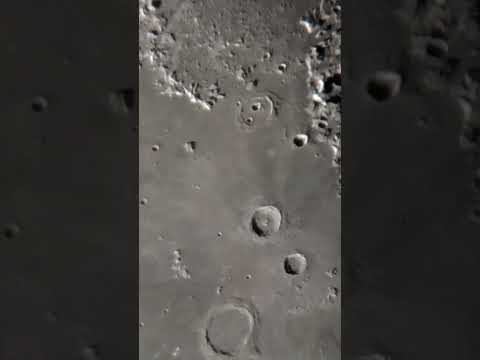
- The Moon: Seriously, a 6-inch telescope shows incredible detail on the lunar surface. Craters pop out like crazy, and you can even spot mountain ranges! It’s like taking a trip to our nearest neighbor.
- Jupiter: With its many moons and swirling cloud bands, Jupiter becomes a whole new world through your telescope. On clear nights, you might catch sight of its famous Great Red Spot!
- Saturn: Oh man, those rings! They’re even more stunning when viewed through a telescope. It’s like seeing something out of science fiction right in front of you!
- Star Clusters: M13 in Hercules is one of the most famous clusters and looks amazing through a 6-inch scope. It’s like looking at millions of tiny jewels scattered across the sky.
- Distant Galaxies: You can even spot some galaxies! The Andromeda Galaxy isn’t too far away and becomes visible as a faint smudge with this level of equipment.
Now imagine being on your back porch on a clear night—stars twinkling above while you’re peering through your eyepiece—it’s exhilarating! I still remember the first time I saw Saturn’s rings; it felt surreal to witness something so beautiful that I’d only ever seen in pictures.
But wait, there’s more to exploring with this telescope than just viewing these incredible sights! The experience teaches patience too. Sometimes you’ll sit there for ages waiting for clouds to pass or trying to get everything perfectly aligned. But that struggle makes it all worth it when an amazing view finally appears.
In addition to these highlights, using a 6-inch telescope also opens doors into astrophotography. Even if you’re not an expert photographer, capturing images of celestial objects becomes possible thanks to this type of gear. You might find yourself snapping pics of stunning landscapes with stars streaking across them or capturing images of distant nebulae!
So overall, using a 6-inch telescope isn’t just about looking up at space; it’s about feeling connected to it all—the thrill of discovery always keeps us coming back for more gazing at those countless dots in our sky.
The cosmos is vast and full of stories waiting for you; all you’ve got to do is look up!
Exploring Saturn: Observing the Gas Giant Through a 6-Inch Telescope
So, you’ve got a 6-inch telescope and you’re eager to see Saturn? That’s super exciting! With a bit of patience and the right conditions, you can definitely catch a glimpse of this amazing gas giant.
First off, when’s the best time to look? Well, Saturn is usually at its best on certain nights when it’s high in the sky. It helps if you check online for its position. You want a night that’s clear, like those perfect summer evenings where the stars just seem to pop out.
What should you expect to see? When you finally point your telescope at Saturn, oh man, it’ll blow your mind! You might spot the famous rings. They look like they’re made of ice and rock particles, reflecting light in such a cool way. You might even see some of Saturn’s moons if you’re lucky!
- The Rings: They are actually made up of billions of tiny chunks that range from dust-sized particles to massive boulders.
- The Colors: Depending on how much light is hitting them, the rings can show off shades from creamy whites to deep browns.
- The Moons: Titan is the biggest one and has an atmosphere! It’s like a mini-world all on its own.
If you’ve never observed planets before, it might take some getting used to. Maybe you’ll set up your telescope and think: “This is it?” But hold on! The beauty becomes clearer with each moment as your eyes adjust.
Once you’ve set everything up—make sure it’s stable—it helps to practice focusing your telescope first. It’s kind of like trying to find that sweet spot when you’re taking a photo for Instagram; sometimes it takes a few tries before you nail it!
Another tip: be patient! You’ll want to spend some time letting your eyes adjust while keeping an eye on details. You should also keep in mind that humidity and heat can distort what you see—so if it’s super muggy out or hot, maybe wait for another night.
If you feel adventurous enough, get yourself some good filters for your telescope; they can enhance visibility quite a bit. Just imagine being able to see shadows cast by rings or even banding in Saturn’s atmosphere!
This whole experience isn’t just about seeing stuff; it’s kinda magical too. Like when I first spotted Saturn through my small scope—it felt surreal! The way our solar system comes alive right before your eyes? It gives you chills thinking about how far away those planets really are yet so accessible through just glass and mirrors!
Conclusion? Observing Saturn with your 6-inch telescope is totally doable—and it’s pretty thrilling too! Embrace those little moments of awe whenever you catch sight of this beautiful gas giant floating among countless stars. Don’t rush things; enjoy every second under that vast sky!
The Transformative Impact of the Telescope on Scientific Discovery and Understanding
The telescope, you know, was like a game-changer for how we understand the universe. Suddenly, instead of just gazing up at the stars and wondering, people could actually see them much closer. It’s wild to think that something so simple—a tube with lenses—could open up a whole new world of discovery.
First off, let’s talk about what a telescope does. Basically, it gathers light from distant objects and makes them appear larger and clearer. A **6 inch telescope** might not sound huge compared to professional observatories, but it can still reveal some incredible details. Think of craters on the moon or rings around Saturn—things you’d never catch with just your eyes.
One amazing thing is how telescopes have helped us understand our place in the cosmos. Before we had these nifty tools, most folks thought Earth was the center of everything—like we were on a cosmic throne! With telescopes, astronomers like Galileo showed that Jupiter had moons orbiting it, and that Earth wasn’t so special after all. Can you imagine? It must’ve shaken people’s beliefs back then!
And then there’s the impact on our grasp of distance in space. Telescopes allow us to measure how far away stars and galaxies are. They’ve led to discoveries about how galaxies move apart from each other! This paved the way for theories like **the Big Bang**, which explains how our universe started expanding billions of years ago.
Another exciting part is how telescopes have pushed boundaries in discovering new things beyond our solar system. There are thousands of exoplanets out there now—worlds around other stars—and many were discovered using telescopic technology! The prospect that we might not be alone adds an extra layer to our cosmic story.
Of course, it’s not all about looking outward. Telescopes help us learn more about phenomena right here at home too! Take supernovae, for example; when a massive star blows up at the end of its life cycle, these explosions send shockwaves through space that can be seen with telescopes. Each new observation adds more pieces to our understanding puzzle.
Let’s not forget about light pollution either; it’s like putting blinders on when stargazing! More people are encouraged to use small telescopes like a 6 inch model since they can still spot some cool stuff even in cities where bright lights wash out fainter stars.
In essence, telescopes keep evolving too—different types now allow for radio waves or infrared light detection. Each advancement means better ways of seeing things previously hidden or distorted by distance or dust in space.
So there you have it: the telescope hasn’t just transformed astronomy; it’s fundamentally changed how humanity thinks about existence itself! Just think back to those early astronomers squinting through their crude instruments—they laid down foundations that would lead us all the way here today with sophisticated gear that continues unveiling secrets far beyond what they could have imagined!
So, let’s talk about that little world of wonders a 6-inch telescope can open up, okay? You wouldn’t think something so small could pack such a punch in the realm of science. But it really does. Picture this: you’re nestled in your backyard under a blanket of stars, and with just the right equipment, you can peek into the secrets of the universe. It’s like holding a tiny key that opens up vast doors to the cosmos.
I remember the first time I looked through a telescope. I was maybe twelve or thirteen, and my dad helped me set it up on our porch. I was nervous; I mean, it seemed like such a big deal! But when I finally took that first look at Jupiter, with its swirling clouds and those little moons dancing around it—I swear my heart almost skipped a beat. It felt like connecting to something so much bigger than myself. That rush of awe is honestly one of those moments that sticks with you forever.
Now, what’s cool about a 6-inch telescope? Well, for starters, it’s not gargantuan. You don’t need an observatory or a special spot on top of a mountain to use one effectively. It’s just about accessible enough for anyone interested in astronomy to take out on clear nights and see things like craters on the moon or Saturn’s rings in pretty lovely detail.
And here’s where it gets even better—this telescope connects you to science in real-time! You’re not just reading about stars and planets; you’re actively engaging with them. You’re tracking their movements and learning how they interact. Seriously! Imagine hunting down comets as they streak across the sky or even spotting nebulae that are light-years away but totally within reach through your eyepiece.
Of course, everything has its challenges too! The learning curve can be steep if you’re new to all this celestial stuff—figuring out how to align your scope properly or even just interpreting what you see can sometimes feel overwhelming. But hey, isn’t that part of the adventure? Like life itself—a beautiful mix of frustration and joy!
In essence, using a 6-inch telescope is kind of like having your own personal spaceship for exploring space at home. It sparks curiosity and encourages questions—like “What else is out there?” And every time you step outside with it for some stargazing? You’re reminded of how small we are but also how connected we can feel to everything beyond our little blue planet.
So if you ever get your hands on one—take it out under dark skies! Become an explorer in your own right; who knows what wonders await just outside your window?