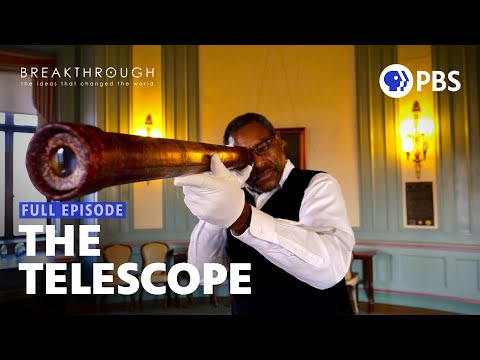
So, picture this: as a kid, I thought the stars were just tiny holes poked in a black blanket. My grandpa, wide-eyed and full of wonder, would chuckle and say, “Nope! They’re suns, just like ours.” Mind blown!
Fast forward to today, and hey, I’ve got to admit—telescope technology is like a magic wand for discovering the universe. Seriously!
Imagine peering through one of these bad boys and seeing Saturn’s rings or distant galaxies swirling around. It’s wild!
So let’s chat about telescopes—those incredible tools that take our curiosity about the cosmos and crank it up to eleven. You ready?
Unveiling the Unknown: The Most Terrifying Discoveries of the James Webb Telescope in Modern Astronomy
The James Webb Space Telescope (JWST) is, like, seriously a game-changer in the world of astronomy. Launched at the end of 2021, this magnificent piece of machinery has been peering into the far reaches of the universe, uncovering things we never thought we’d see. And some of these discoveries? Well, they can be downright terrifying.
First off, let’s talk about deep space. The JWST can spot exoplanets, which are planets outside our solar system. Some of these worlds could be hostile environments with extreme weather or even violent atmospheres. Imagine a planet where it rains glass sideways or has winds that slice right through you! Crazy, right?
Then there are the black holes. You know those cosmic monsters that gobble everything up around them? JWST has been keeping an eye on distant galaxies and their supermassive black holes. What’s terrifying is how fast some black holes grow and how much they consume.
This is super unusual and raises questions about how black holes can form so quickly.
Another mind-boggling revelation is the sheer amount of dark matter and dark energy out there. These mysterious components make up most of the universe but remain largely unknown to us. JWST’s observations suggest that dark matter interacts with regular matter in ways we’ve never fully grasped.
And let’s not forget about star formation! Some regions in space are bursting with star creation while others seem like cosmic graveyards. With JWST’s ability to look further back in time than ever before, astronomers are beginning to piece together why some areas are thriving while others are devoid of activity.
There’s also this unsettling thought: if we’ve discovered such strange things already, what else is out there? Think about it—maybe ancient civilizations on distant planets have already faced similar existential dilemmas or conflicts. The possibilities send chills down your spine!
In short, while JWST is helping us unveil the wonders beyond our close-knit solar system, it also brings to light some pretty terrifying concepts about existence—black holes devouring everything they touch, unfathomable dark energy twisting space-time itself, and harsh conditions on distant planets reminding us just how delicate life really is.
So yeah! The more we explore through JWST’s eyes, the more we realize that space isn’t just beautiful; it’s also filled with mysteries and dangers waiting to be understood—or avoided! How wild is that?
Exploring the Three Key Powers of Telescopes in Modern Astronomy
You know, telescopes are like the ultimate sneak peeks into the universe. They have three key powers that make them indispensable in modern astronomy. Let’s break these down a bit.
1. Light Gathering Power
This is all about how much light a telescope can capture. Basically, the more light it gathers, the fainter objects it can see. Imagine you’re in a dark room trying to find your favorite book and someone turns on a flashlight. That’s what light gathering power does for astronomers—illuminates the cosmos! Bigger telescopes have larger mirrors or lenses, which means they can collect more light.
2. Resolving Power
This one’s pretty neat! Resolving power refers to a telescope’s ability to distinguish between two close objects in space. Let’s say you see two stars really close together through a small scope; they might just look like one blurry dot. But with a powerful telescope, you’d see them as two distinct stars! It’s like upgrading from a fuzzy old TV to super high-definition—you get clarity!
3. Magnifying Power
You’ve probably heard of magnification when looking through binoculars or your phone camera, right? Well, in telescopes, magnifying power is crucial for seeing distant galaxies or planets up close. But here’s the twist: just cranking up magnification doesn’t always mean better images. Sometimes, if the atmosphere is all wobbly with heat waves or clouds (you know how that goes!), too much magnification can make things look even blurrier.
The balance between these three powers is essential for astronomers to make sense of what they’re observing out there. For instance, when the Hubble Space Telescope was launched into orbit in 1990, it showcased these powers beautifully—gathering faint light from deep space while providing stunningly clear images!
So next time you think about telescopes, remember these three key powers: light gathering, resolving, and magnifying! They allow us to explore galaxies far away and understand our universe better than we ever imagined.
Exploring the Future of Astronomy: Is There a Telescope More Powerful Than the James Webb?
Let’s chat about the future of astronomy and whether there’s a telescope that could outshine the James Webb Space Telescope (JWST). You know, JWST is already blowing our minds with its incredible capabilities. It’s like the ultimate cosmic detective, peering into the universe’s past and revealing things we’ve never seen before. But what if I told you there are some ambitious projects on the horizon?
First off, it helps to understand what makes JWST so special. Its infrared capabilities let it see through dust clouds, allowing it to spot stars forming in distant galaxies. Plus, it’s parked at a sweet spot called L2, where Earth’s and Sun’s gravity balance out perfectly, making its observations even more stable. So, what could possibly be more powerful?
Well, there are a few contenders out there. Let’s break down a couple of them:
So here’s where it gets interesting: while these telescopes might surpass JWST in size or certain technical aspects, they operate differently. JWST specializes in observing infrared light; ELT and GMT will focus more on visible wavelengths primarily. This means we still need each type for different kinds of cosmic sleuthing.
And let’s not forget about technology innovations leading to future telescopes! There’s buzz around ideas like space-based observatories with even larger mirrors or those using advanced technologies to enhance their capabilities further. Imagine combining multiple smaller telescopes working together like a team! They could rival anything we have now.
But you know what? The true magic often lies in collaboration among all these telescopes and their diverse strengths rather than chasing after one “superior” telescope alone. Each has its role to play—like members of a band making sweet music together.
In my mind, thinking ahead is part of what makes astronomy thrilling! With every new telescope launched or developed comes fresh perspectives that bring us closer to understanding our universe’s mysteries—and who wouldn’t be excited about that? As astronomers look through their lenses toward infinity, they remind us how much there still is to discover beyond our little blue planet.
So yeah, while something might beat JWST technically someday, it’s all gonna add up to an even greater understanding of our cosmos! And isn’t that ultimately what we’re aiming for?
So, you know, telescopes have this magical ability to transform our understanding of the universe. Imagine staring up at a night sky filled with stars and realizing that those tiny points of light could be entire worlds, galaxies, or even black holes! It’s mind-blowing, right? I remember as a kid getting my first little telescope; it was like opening a window to another realm. I couldn’t believe I was looking at the moons of Jupiter.
Now, seriously, let’s talk about powerful telescopes, like the Hubble Space Telescope. This beauty has been orbiting Earth for decades and has given us some jaw-dropping images of far-off galaxies and nebulae. Just think about it—light from some of those galaxies has been traveling for millions or even billions of years to reach us! It’s like peeking into time itself.
What’s kind of cool is that these telescopes don’t just show us pretty pictures; they reveal a lot about how our universe works. They help scientists understand things like dark matter and the expansion of the universe—which sounds pretty heavy but is super important. And here’s where it gets really emotional: every time astronomers announce a new discovery thanks to these instruments, it feels like humanity took another step forward in understanding our place in the cosmos.
And let’s not forget the thrill of discovery. Imagine being part of a team that spots an exoplanet around another star! That could mean there are potential new homes out there for life. It makes you wonder how vast and diverse our universe truly is.
So yeah, powerful telescopes are more than just tools; they’re bridges connecting us with the wonders beyond our little blue planet. They inspire curiosity and hope for what we may find next in this endless sea of stars. Isn’t that just incredible?