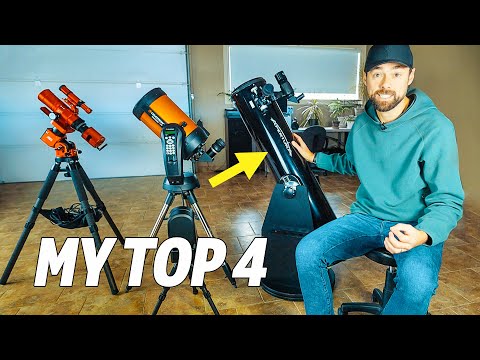
You know that moment when you’re outside on a clear night, and you look up at the stars? It’s like staring into a giant glittering blanket, right? One time, I tried to count the stars but got distracted by my neighbor’s cat chasing what I thought was a shooting star. Spoiler alert: it was just a squirrel.
Anyway, if you’ve ever thought about getting a telescope to take your night sky experience to the next level, you’re in for some fun! Seriously. A beginner’s telescope isn’t just for kids or hardcore astronomers. It’s like having a backstage pass to the universe.
Looking at the moon up close or spotting Jupiter’s moons is pretty magical. It’s amazing how much there is to see out there! So grab your curiosity and let’s chat about how these little gadgets turn us all into amateur stargazers.
Exploring the Cosmos: Observing Planets with a Beginner Telescope
Exploring the Cosmos with a beginner telescope can feel like stepping into a vast, glittering ocean of stars and planets. The universe is full of wonders just waiting to be seen, and having the right telescope opens up a whole new world. But where do you start?
First, let’s talk about what to look for. If you’re using a simple telescope, Jupiter is usually one of the best targets. It’s big enough that you can see its bands and even its moons! Imagine watching those little dots move across the sky each night—it’s like your own personal soap opera starring planetary giants.
And then there’s Saturn! Those rings are something else. You might not believe your eyes when you finally spot them. A tip for beginners? Try looking on a clear night when the air is still. This helps in seeing those details better.
Now, moving on to how to use your telescope. It can be pretty daunting if you’ve never done it before. The first thing you want to do is set it up properly. Make sure it’s stable and pointed towards a good spot in the sky—ideally somewhere with less light pollution. You might find that putting some distance between yourself and city lights makes things clearer.
Also, don’t forget about focusing. It sounds like basic stuff, but trust me, it makes all the difference. You’ll want to adjust until what you’re looking at becomes sharp and clear. This isn’t always easy; sometimes it takes a moment of fiddling!
Hmm… let me share an experience I had once while stargazing with friends who were also new to this whole astronomy thing. We set up our scopes under a dark sky after driving away from city lights, feeling all hopeful about spotting celestial wonders. But what happened? Clouds rolled in! We were bummed out at first; then we decided to hang out anyway, sharing stories under dim stars peeking through. That moment turned into one of my favorites—because exploring the cosmos isn’t just about what you see but who you’re with.
Another cool tip: join an astronomy club or group. There are loads of folks out there who love sharing their knowledge and gear with newbies like you! You’ll get hands-on experience that helps build confidence quickly.
You know what? Sometimes your telescope isn’t enough for certain distant objects once you’ve explored nearby planets and moons. That’s when binoculars come in handy too! They can help broaden your view while giving another layer of exploration without needing advanced gear right away.
Lastly, remember that patience is key here—some nights will be wonderful while others might leave you frustrated; that’s part of learning! So keep pointing your scope upwards because every time you step outside at night, you’re not just gazing at twinkling stars—you’re engaging with the universe itself!
In summary, exploring planets with a beginner telescope is all about making connections—with the cosmos and with fellow space enthusiasts too! So grab your scope, find a nice dark place to set up shop, and prepare yourself for an adventure among the stars!
Evaluating the Value of Computerized Telescopes for Beginner Astronomers
Alright, let’s chat about computerized telescopes and why they might be a great starting point for you, if you’re dipping your toes into the vast ocean of astronomy.
Computerized telescopes are pretty neat tools. They often come with built-in features to help guide your stargazing experience. They can track celestial objects in real-time, which is super handy when you’re just starting out. I mean, how many times have you looked up at the night sky and felt like an ant in a massive universe? Finding planets or galaxies can feel overwhelming. Here’s where these telescopes can really shine.
First off, let’s talk about ease of use. Most computerized telescopes come with a user-friendly interface. You can usually connect them to your smartphone or tablet. Imagine pointing your telescope at a random patch of sky, and it tells you what stars or planets are right there! That’s like having a little astronomy buddy showing you around.
Then there’s the tracking capability. Traditional telescopes require more skill and patience to keep objects in view as they move across the sky due to Earth’s rotation. Computerized models do this for you! Sure, it takes away some of the challenge, but it also means less frustration when all you want is to see Saturn’s rings without chasing it around with your scope.
Also, let’s consider affordability options these days. While some high-end models can break the bank, there are plenty of budget-friendly ones that still deliver solid performance. You don’t need to spend a fortune to get started; there are reasonable options for under $500 that come packed with features!
However, it’s not all sunshine and rainbows. You might face some technical challenges too. Like any gadget nowadays, computerized telescopes sometimes run into connectivity issues or software glitches. I’ve read stories about folks fumbling around with their gadgets instead of gazing at beautiful galaxies! But hey—once you get over those bumps in the road, you’ll feel accomplished when everything starts working smoothly.
Then we factor in learning opportunities. Many computerized telescopes come bundled with educational resources—like star charts and guides on using different features effectively. So not only do they help you observe better but also give insight into what you’re seeing! This mix could really fuel your curiosity about the cosmos.
One thing worth mentioning is that while computerized scopes are fantastic for beginners, as you grow more involved in astronomy, traditional telescopes might call out to you too. They allow for more hands-on learning about optics and celestial mechanics; it’s like getting your hands dirty in science!
So overall: if you’re just starting out in astronomy and looking for something that’ll make exploring the night sky way easier—computerized telescopes could be just what you’re looking for! Just think about what aspects matter most for your stargazing journey; remember that each option presents its own set of exciting discoveries along the way!
Beginner’s Guide: Choosing the Right Telescope Size for Planet Viewing in Astronomy
So, you’re thinking about diving into the world of astronomy, huh? That’s awesome! There’s something magical about gazing at the night sky and spotting planets. But before you rush off to buy a telescope, let’s chat about how to choose the right size for planet viewing.
First off, it’s essential to understand that **telescope size matters**, but it’s not just about going big. The size is typically measured by the diameter of the main mirror or lens, expressed in millimeters or inches. Bigger telescopes do gather more light, which helps you see fainter objects. But there’s a sweet spot when it comes to viewing planets.
A lot of folks start with telescopes that are around 70mm to 100mm (that’s roughly 3 to 4 inches). This size is manageable and won’t break the bank. With a telescope in this range, you can clearly see details on planets like Jupiter’s stripes or Saturn’s rings on a good night. Imagine peering through your eyepiece and seeing those gorgeous rings! It’ll give you chills.
Now, here are some things to think about when choosing your telescope:
- Portability: Larger scopes can be heavy and awkward. If you’re planning on carrying it around for star parties or trips, something smaller might be better.
- Aperture vs. Focal Length: Aperture is crucial for light-gathering power; however, focal length affects how magnified your images appear. A longer focal length can help zoom in on planets nicely.
- Stability: Make sure your telescope has a stable mount. A shaky viewfinder can ruin that perfect moment of seeing something cool in space!
- Budget: Decide how much you’re willing to spend first. You don’t want to end up with an expensive telescope that’s not what you thought.
- Easiness to Use: Some telescopes have fancy features but are not user-friendly for beginners. Go for something simplified if you’re just starting out.
Think back to the first time you saw Jupiter through a friend’s scope—you know that feeling when your jaw drops? That’ll be yours too! With a decent telescope in hand—say one around 90mm, you’ll have a solid experience watching major features without getting overwhelmed.
But remember: **It’s not all about the equipment**! Your local weather can really make or break your stargazing plans too. Even with an excellent telescope, if it’s cloudy or there’s too much light pollution where you live, then what? You’ve got to find those dark spots where stars shine bright!
Lastly, don’t forget that practice makes perfect! The more you use it—the easier it gets—and before long, you’ll be helping others navigate their new telescopes too.
So there you have it—a starter guide without all the jargon! Now go grab that telescope and get ready for some stellar adventures ahead!
So, let’s chat about telescopes. You know, those cool gadgets that look like they belong in a sci-fi movie? I remember the first time I peered through a telescope. I was at a friend’s house, and he was so pumped to show me the moon. We set it up in his backyard—kitchen chairs for support, of course—and, wow! There it was: craters and all, just hanging out like it owned the night sky. That moment felt magical. It made everything else feel tiny and insignificant.
Anyway, if you’re thinking about getting a telescope as an adult, you might be feeling a bit hesitant. Like, isn’t that something for kids? Look, believe me when I say it’s not just for the young ones! Imagine standing outside on a crisp evening—stars twinkling above—just you and your telescope connecting with the universe.
A beginner’s telescope can be your ticket to exploring the cosmos without needing six years of astrophysics training or anything. They’re designed to be user-friendly and accessible. Most of them don’t come with complex manuals that sound like they were written in another language either; they’re pretty straightforward. It’s all about pointing it at something cool and looking through the lens.
The thing is, using a telescope as an adult can also spark curiosity you might have thought faded away with childhood. Remember those days when everything felt exciting and new? The night sky has so many stories to tell! Want to spot Jupiter’s moons or catch Saturn’s rings? Just aim your telescope at them—it feels like magic every single time.
But let’s not forget about connections either! You can gather friends for stargazing nights or even join local astronomy clubs where people come together to share experiences and tips over a cup of cocoa or maybe some popcorn (seriously). It’s such an amazing way to bond with folks who share that same curiosity.
Sometimes it takes just one small step—or in this case, one little lens—to reignite that flame of wonder we all had as kids. So grab a beginner’s telescope if you’ve been mulling it over; you’ll be amazed by what you’ll see—and who knows what new connections you’ll make along the way?