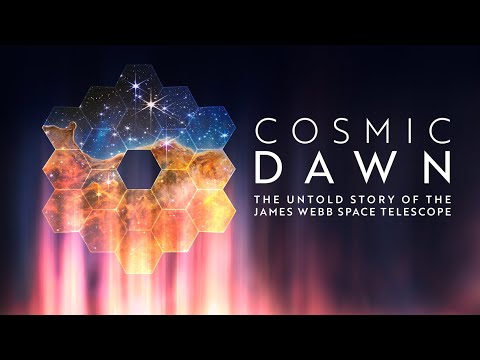
You know how when you look up at the night sky, it feels like you’re peering into a giant glittering blanket of secrets? Well, here’s a fun thought: those twinkling stars are just the tip of the cosmic iceberg!
Enter the James Webb Space Telescope. This beast has been shaking things up in the space department. Seriously, it’s like a cosmic detective on a mission to uncover what’s brewing light-years away.
Imagine this: you’re sitting outside on a clear night, maybe with a buddy or two, and you see something that just blows your mind. That’s kinda what scientists are feeling as Webb brings back jaw-dropping images and findings that were once just dreams!
With its super cool tech and gadgetry—think of it as the ultimate space camera—it’s revealing wonders we’ve only read about in sci-fi books. Get ready to dive into some stellar discoveries that are reshaping how we think about our universe!
Groundbreaking Discoveries of the James Webb Telescope: Insights from 2025 in Astronomy
So, let’s talk about the James Webb Space Telescope. You know, it’s that big guy hanging out in space, doing some seriously cool stuff. It’s like a cosmic detective! By 2025, this telescope has already given us some incredible insights into the universe.
First off, let’s touch on its ability to see farther back in time than ever before. Seriously. Because it’s positioned way out in space—like a million miles away from Earth—it can gaze at galaxies that formed just after the Big Bang. Imagine looking at the universe when it was only a few hundred million years old! The light from those galaxies takes billions of years to reach us, so we’re literally seeing history.
Another huge deal is its impressive infrared capabilities. You might be wondering why that matters. Well, infrared light can pass through dust clouds that hide a lot of cosmic goodies. So, instead of just peering through clear skies, Webb sees right through those dusty patches where stars and planets are being born. That’s like finding treasure in a sandstorm!
What’s also fascinating is how Webb has been revealing details about **exoplanets**—planets outside our solar system. With its advanced tools, it can analyze the atmospheres of these distant worlds. Imagine discovering water vapor or even signs of potential life on a planet millions of light-years away! It could change everything we know about life beyond Earth.
The telescope also gives us new perspectives on familiar sights. For example, our own solar system! It has taken stunning images of planets like Jupiter and Saturn that reveal details we’ve never seen before. The swirling storms on Jupiter look more majestic than ever! And let me tell you; if you had seen those images firsthand… wow!
In addition to all this cool stuff, there’s something emotional about what Webb represents for humanity as well. Each image it sends back is like an invitation to dream bigger and reach higher—you know? It’s a reminder of what we can achieve when we work together as humans.
- The telescope’s position allows it to see deep into space.
- Infrared capabilities let it peer through dusty regions where stars are born.
- Exoplanet research opens new doors for understanding life beyond Earth.
- The breathtaking images of gas giants offer fresh insights into our own solar system.
So you see? The James Webb Space Telescope isn’t just another piece of fancy technology; it’s unlocking the mysteries of the universe one discovery at a time—and honestly, who doesn’t find that exciting?
Unveiling Cosmic Mysteries: James Webb Telescope’s Surprising Discoveries That Challenge Scientific Norms
The James Webb Space Telescope, or JWST for short, is shaking things up in the cosmic realm. Launched not too long ago, it’s already given us some mind-blowing findings that really challenge what we thought we knew about the universe. Seriously, it’s like someone opened a door to a whole new dimension of space exploration.
One of the coolest surprises from JWST is its ability to peer deeper into the **early universe** than any other telescope before it. This means we’re catching glimpses of galaxies that are billions of years old—far younger than we’d previously been able to observe. Think about it: it’s like traveling back in time! These discoveries help us understand how galaxies formed and evolved over time.
Then there’s the **atmospheres of exoplanets**. JWST has been studying the atmospheres of distant planets outside our solar system, revealing their compositions with surprising detail. Some findings have shown signs of molecules like water vapor and even carbon dioxide! This is huge because it opens up possibilities regarding habitability. Who knows? Maybe there are some potential homes for life out there!
And don’t forget about the **detailed images of star formation**. JWST captured stunning views of nebulae where stars are born, showing intricate structures and processes happening in those regions. We’ve seen images where stellar nurseries come alive with color and texture—almost like watching a cosmic painting unfold right in front of us.
Another remarkable element is how JWST is unraveling the mysteries behind **black holes**. It’s challenging existing theories by offering new data on their formation and growth. For instance, researchers discovered that certain black holes may have formed much earlier in the history of the universe than models predicted. It begs some questions: How did they get so massive so quickly?
Lastly, you might be stunned by what JWST has found concerning **dark matter and dark energy**—the unseen forces making up most of our universe! It turns out that observing galaxies’ movements has become more detailed thanks to this telescope’s capabilities, potentially altering our understanding around these phenomena.
So it’s clear: as JWST continues its mission, it’s not just revealing new cosmic wonders but also nudging our scientific norms. Each discovery challenges old concepts while opening doors to new questions that scientists are eager to explore. The universe has so many secrets left to uncover; all we can do is look forward to what this incredible telescope will reveal next!
Exploring the Frontiers of Astronomy: Are There Telescopes More Powerful Than the James Webb Space Telescope?
So, let’s talk about the James Webb Space Telescope (JWST), right? It’s this amazing piece of technology that’s been giving us some seriously cool views of the universe. But you might be wondering, are there other telescopes out there that can rival or even surpass it?
First off, the JWST is like our cosmic time machine. Its mirrors are designed to capture light from some of the earliest stars and galaxies, which is kind of wild! And then there’s its infrared capabilities, allowing it to see through dust clouds. That’s super handy for spotting new stars forming.
Now, you might think, “Okay, but what about other telescopes?” Well, there are a few contenders in this game:
- Hubble Space Telescope: This classic has been around for ages and still holds its own. It mainly focuses on visible and ultraviolet light but has given us jaw-dropping images for decades.
- Extremely Large Telescope (ELT): Set to be completed in a few years, it’s going to have a mirror that’s over 39 meters wide! That’ll allow it to gather tons of light and study distant objects in stunning detail.
- Thirty Meter Telescope (TMT): Talk about size! This one’s got a mirror made up of 492 segments that can collect more light than most other ground-based telescopes combined. It promises to reveal things JWST might just skim over.
But here’s the kicker—these telescopes aren’t exactly better; they just have different strengths! Hubble gives us beautiful images in visible light while JWST dives deep into infrared.
I remember reading about how astronomers felt when they first saw images from the JWST. They were overwhelmed with emotions—like kids on Christmas morning! The excitement about what they could see was palpable.
Aside from these big players, scientists are also looking into future technologies such as:
- Space-Based Arrays: Imagine multiple small telescopes working together, like teammates at a cosmic Olympics!
- Next-Gen Ground Telescopes: These will use adaptive optics and other tech advancements to improve clarity and resolution significantly.
In essence, while the James Webb is currently leading the charge into deep space exploration with its unique tools and abilities, new developments will keep popping up that could expand our view even further. So yeah, it’s not so much about “better” but more like “different.” Each telescope brings something special to our understanding of this vast universe we live in.
So keep your eyes peeled because this cosmic journey is far from over!
You know, it’s pretty mind-blowing to think about what the James Webb Space Telescope (JWST) is doing up there in space right now. It’s like we’ve given our eyes a serious upgrade—like going from those old, fuzzy TV screens to HD! Just imagine that feeling when you get a new pair of glasses and realize how much you’d been missing out on. That’s kind of what this telescope is doing for us.
When I first heard about the incredible images it was sending back, I felt this rush of excitement. They revealed galaxies we’d never seen before, and some are billions of light-years away. That means the light we’re looking at now has traveled for eons, showing us a snapshot of the universe from way back in time. So whenever I gaze at those pictures, I can’t help but feel this connection—a kindred spirit moment with the cosmos! It’s like peeking into history; who wouldn’t want that?
One thing that really blows my mind is how it can see through dust clouds that used to hide stars and planets from view. Let me tell you a little story: there was this one time when I was looking for my cat, who loves to hide under blankets. After searching everywhere and getting frustrated, I finally spotted him cozying up under all that fabric. It’s so similar—you think you’ve looked everywhere until something (or someone) reveals where everything is hiding! The JWST acts like that friend who points out all the hidden gems in your messy room.
And let’s not forget about exoplanets! This telescope has already started discovering atmospheres around some distant worlds. How cool would it be if one day we find signs of life beyond our blue planet? It feels like opening a door to new possibilities—you start to wonder what else is out there waiting for us.
But here’s the thing: with all these discoveries comes this responsibility too. We have to cherish and protect our own planet while exploring others. Sometimes I look up at the stars and think about how vast everything is yet how small we are in comparison. Seriously, it’s humbling.
So yeah, as JWST continues its cosmic adventure, just remember every picture it snaps is not just data—it’s a glimpse into something much bigger than ourselves. And isn’t that just awe-inspiring?