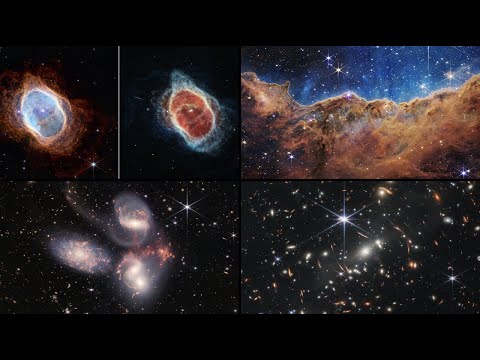
So, picture this: it’s Christmas morning in 2021, and instead of unwrapping gifts, the universe was getting a shiny new toy. Yep, NASA’s James Webb Space Telescope, or JWST for short, was launched into space! Can you imagine? A telescope the size of a tennis court zipping off to peer deep into the cosmos.
You know that feeling when you stare up at the stars and wonder what’s out there? Well, this bad boy is about to answer some of those burning questions.
We’re talking about looking back in time. Like way back—billions of years ago! So grab a comfy seat because we’re diving into how JWST is changing everything we thought we knew about space.
Exploring the Universe: The Impact of the Spitzer Space Telescope on Modern Astronomy
The universe has always been a place of wonder and mystery. We’ve spent centuries gazing at the stars, trying to figure out what’s out there. One of the coolest tools we’ve had in this quest is the **Spitzer Space Telescope**. Launched back in 2003, Spitzer was like our cosmic eye, peeking behind the curtain of space and revealing a whole new world.
What’s amazing about Spitzer is that it operated in infrared light. This type of light is invisible to our eyes but can show us things other telescopes miss, like dust clouds where new stars are born or distant galaxies hidden from view. You see, when we look up at the night sky with regular telescopes, we mainly see visible light. But Spitzer opened up a whole new range of astronomical wonders.
Here are some key impacts of Spitzer on modern astronomy:
- Star Formation: By peering into thick clouds of gas and dust, it helped astronomers understand how stars and planets form.
- Exoplanets: Spitzer played a pivotal role in identifying exoplanets—planets outside our solar system—by studying their atmospheres and potential habitability.
- Galaxy Evolution: It provided insights into how galaxies evolve over time, particularly those that formed in the early universe.
- Cosmic Structures: The telescope helped reveal large-scale structures in the universe, shedding light on dark matter and energy’s roles.
Imagine being wrapped up in a cozy blanket while sipping hot chocolate during winter; that’s kind of how Spitzer felt to astronomers! It made discoveries possible that felt almost impossible before.
But what really makes this story interesting is how Spitzer’s achievements paved the way for newer instruments like NASA’s **James Webb Space Telescope** (JWST). JWST is meant to be even more powerful than its predecessors. Think of it as an upgrade you didn’t know you needed! It builds on what Spitzer accomplished by seeing even deeper into space and further back in time.
Both telescopes share a vision—literally! They both focus on understanding our universe better than ever before. The data collected by Spitzer laid crucial groundwork for JWST. So when JWST started its mission, researchers were already buzzing with excitement about what they could discover next.
The legacy left by Spitzer is pretty huge; it changed the way we think about many cosmic phenomena. For instance, because it found so many instances of star-forming regions and studied them in detail, scientists now have better models for understanding how fast or slow these processes can be—not something you think about every day!
In some ways, exploring space feels like reading an epic novel; each chapter reveals more about characters (planets and stars) you thought you knew all along. With tools like Spitzer paving paths for others, we’re not just learning about what’s out there; we’re reshaping our understanding of everything from life-supporting worlds to massive galactic structures.
So next time someone mentions telescopes or talks about exploring space, just remember: it all started with curiosity fueled by machines like Spitzer that showed us just how beautiful—and complex—our universe really is!
Exploring the Universe: Insightful Analysis of James Webb Telescope Images in Modern Astronomy
Alright, let’s chat about the James Webb Space Telescope (JWST) and what it’s been up to lately! You know, this incredible piece of tech is really shaking things up in the world of astronomy. It’s like having a superpower for peering deep into space and time.
The JWST launched back in December 2021, and since then, it’s been sending back some seriously jaw-dropping images. These images aren’t just pretty pictures; they’re gateways to understanding the universe better than ever before. It can see farther into the cosmos than any telescope that came before it.
So, what makes this telescope so special? Well, it operates mainly in the infrared spectrum. That means it can pick up light from objects that are too cool or distant for our eyes—or even other telescopes—to see clearly. Think about how much we can learn from things like dust clouds and cool stars.
It’s a bit like trying to find your way through foggy weather. Regular telescopes are like driving without headlights; JWST turns on those high beams! Take, for example, its stunning images of distant galaxies. Some of these galaxies are so far away that their light has taken billions of years to reach us. When you look at these photos, you’re actually peeking back in time! Isn’t that mind-blowing?
Now let’s talk about some specific discoveries. One highlight is when JWST observed a galaxy known as SMACS 0723. This was one of its very first images released to the public. The level of detail was just insane! You could see thousands of galaxies packed into a tiny patch of sky—like seeing a whole city from a mountaintop!
Also, have you heard about its work on exoplanets? JWST can analyze the atmospheres of some planets outside our solar system by examining how their starlight filters through those atmospheres. This is huge because it opens up possibilities for finding signs of life elsewhere. Can you imagine?
And hey, speaking of life, think about how scientists can now identify chemicals like water vapor or even carbon dioxide in those atmospheres! Imagine sitting around with your friends and talking about life on another planet—that’s what these findings could mean for future generations.
But it’s not just about finding new planets or gazing at beautiful galaxies; it’s also giving insights into our own backyard—the solar system! For instance, JWST has sent back amazing shots of Mars, revealing details we’ve never seen before and helping us understand more about our neighboring planet.
In summary, the James Webb Space Telescope represents a whole new era in astronomy. It’s not only expanding our view but also changing how we think about our place in the cosmos. With every image it captures and every piece of data it sends back home to Earth, we’re unraveling more mysteries from the vast universe out there.
So next time someone mentions JWST, just remember: it’s way more than just a fancy camera in space—it’s helping humanity take giant leaps towards understanding everything from ancient stars to potential life beyond Earth! Pretty awesome stuff if you ask me!
Live Updates and Insights from the James Webb Telescope: Exploring the Universe’s Mysteries
So, the James Webb Space Telescope (JWST), right? It’s like the coolest kid on the astronomy block. Launched by NASA in late 2021, this telescope is here to give us a fresh look at the universe. Seriously, it’s a game changer!
First off, Webb helps us see farther back in time than ever before. You see, light takes time to travel—like, super long time! When we look at distant galaxies, we’re actually looking at how they were billions of years ago. That’s literally peeking into the past! Isn’t that mind-blowing?
What makes Webb special is its big mirror. I mean, really big—about 21 feet across! This giant mirror collects light from those faraway places and sends it back to Earth. This allows us to capture incredibly faint light, which smaller telescopes would miss entirely. So basically, it’s like having night vision goggles for space.
Now let’s talk about what Webb has actually seen so far. It’s not just about pretty pictures (though they are stunning!). One of its coolest feats was capturing images of the Carina Nebula. This area is like a stellar nursery—lots of stars being born and all that jazz! The details in those images are just something else; we can even see structures forming where new stars are coming into play.
Then there’s the stuff going on with exoplanets—planets outside our solar system. JWST can analyze their atmospheres to figure out what they’re made of. For instance, it detected carbon dioxide on a distant planet called WASP-39 b. This finding helps scientists understand whether these planets could support life or what kinds of conditions exist there.
Speaking of life out there: Webb isn’t just taking pretty shots; it’s diving into tough questions too! Another mission involved looking for signs of organic material on distant worlds or watching how galaxies evolve over time.
In case you’re wondering about updates from this fancy telescope—NASA keeps it real with live updates and insights from the mission team as they analyze data and release findings. So you can totally geek out while watching discoveries unfold right before your eyes!
To wrap things up: The James Webb Telescope isn’t just an amazing piece of tech; it’s a ticket to unlocking secrets of our universe that we couldn’t even imagine before. Whether it opens up new understandings or raises new questions, one thing’s for sure—it’s changing how we think about space.
So keep an eye out for those Webb updates; who knows what mind-boggling stuff is coming next?
So, let’s chat about the James Webb Space Telescope. I mean, wow, it’s like opening a whole new window to the universe! Seriously, it’s one of those moments in science that feels like being handed a key to a room filled with mysteries you never even knew existed.
I remember reading about how, for years, we were stuck peering at the night sky with good old Hubble. Don’t get me wrong; Hubble was amazing. But if you’ve ever tried to compare an old flip phone to the latest smartphone, you get what I mean. Hubble was fantastic for its time but Webb? It’s like the leap from VHS tapes to streaming services—everything is clearer, more vibrant!
The cool part about Webb is its infrared capability. This means it can see things our eyes can’t—like stars forming inside clouds of gas or galaxies that are so far away they’re practically ancient history by now. It’s kind of mind-blowing when you think about it! Imagine looking back in time and seeing how our universe began; it’s like being a cosmic historian.
Oh! And there was this moment—I read about it when they first started sending back images—that people were literally crying tears of joy at NASA when they unveiled those first photos. Can you imagine? All those years of work and waiting finally turning into stunning visuals that show us places we’ve never even dreamed of? It just hits you right in the feels.
Webb is also going to help us understand more about exoplanets—that’s planets outside our solar system—and their atmospheres. This could open up discussions about life beyond Earth and what might be out there waiting for us. Who knows? Maybe we’ll find another Earth-like place with little green creatures sipping cosmic smoothies or something!
But beyond the technical achievements and pretty pictures, Webb represents something deeper—it’s humanity’s curiosity and desire to understand our place in all this vastness. In a world where things can feel chaotic or overwhelming, looking up at the stars reminds us that we’re part of something bigger than ourselves.
So yeah, as we embrace this new era in astronomy brought on by the James Webb Space Telescope, let’s hope it inspires even more exploration and discovery. Because who knows what else is out there just waiting for us to uncover it?