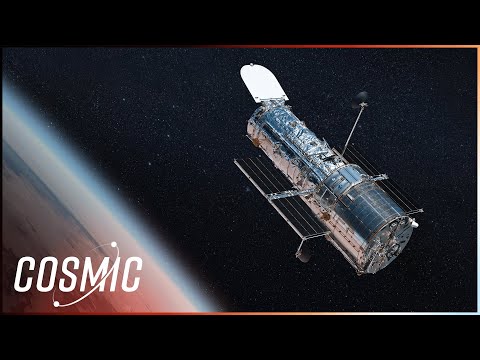
So, picture this: a massive telescope floating in space, snapping pics of galaxies light-years away. It’s like the ultimate cosmic Instagram, right?
You know how sometimes you catch a glimpse of something that just blows your mind? Well, the Hubble Telescope has been doing that for over three decades. Seriously! It’s helped us peek into the universe’s secrets in ways we never thought possible.
From stunning photos of nebulae to discovering distant exoplanets, Hubble has seriously expanded our cosmic knowledge. And I’m not talking about just a few fun facts at a party—this is some jaw-dropping stuff!
So let’s dive into what makes Hubble such a game-changer in our quest to understand the universe. You’ll want to stick around for this one!
Exploring the Universe: The Hubble Space Telescope’s Impact on Our Cosmic Understanding
Sure, let’s chat about the Hubble Space Telescope and how it’s totally changed the way we see and understand the universe. Picture this: a giant telescope floating in space, peering deep into the cosmos, capturing images that blow our minds!
The Hubble Space Telescope was launched back in 1990. It floats about 547 kilometers above Earth, which is pretty high up! And this location is super important because it avoids all that annoying atmosphere stuff that messes with telescopes down here on the ground. You know how when you look up at stars, they twinkle? Well, that’s because of our atmosphere. Hubble doesn’t have to deal with that!
You might think, “What’s so special about Hubble?” Well, here are some key points:
- Amazing Images: Hubble has taken some jaw-dropping photos of galaxies, nebulae, and other cosmic phenomena. These images are not just pretty pictures; they help scientists understand how these structures form and evolve.
- Measuring Distances: With its sharp view, Hubble has helped astronomers measure distances in space more accurately. This is huge for figuring out how far away things like galaxies are from us!
- Looking Back in Time: Every time we look at distant galaxies with Hubble, we’re actually looking back in time. Light takes ages to travel across space—sometimes millions or billions of years! This lets us see what the universe looked like long ago.
- Dark Energy Discovery: One of the coolest finds thanks to Hubble was evidence of dark energy—this mysterious force that seems to be speeding up the expansion of the universe. Talk about a cosmic mystery!
Now let’s talk about an example that really gets me: remember when Hubble captured those stunning deep field images? It pointed at a tiny patch of space for days and days and ended up finding thousands of galaxies all crammed into that little spot! Just imagine standing on a beach, looking out at the ocean and realizing every drop represents an entire galaxy! Mind-blowing.
But it’s not just about pretty pictures or facts; it really changes how we think about our place in this vast universe. We used to think our galaxy was all there was—like being stuck in your small town without knowing there’s a whole big world out there waiting for you. In a way, that’s been humanity’s journey too.
Hubble has allowed us to ask bigger questions: How did it all begin? Are we alone? What will happen next? The answers are like pieces of a giant puzzle we’re still trying to complete.
So yeah, because of instruments like Hubble, we’re getting closer every day to understanding our universe’s epic story—one stunning image at a time!
Exploring the Universe: The Hubble Space Telescope’s Role in Advancing Cosmological Knowledge
The universe is a big place, right? It’s like an endless ocean of stars, galaxies, and mysteries. And the Hubble Space Telescope has been our trusty ship in exploring this vast cosmic sea. Launched back in 1990, Hubble has changed the game for astronomers and space enthusiasts alike.
One of its biggest contributions has been giving us clearer views of distant galaxies. You know how when you look at the night sky, sometimes you see a smudge instead of a star? Hubble helps us see those smudges in incredible detail! It’s like having a super-powered pair of binoculars floating high above the atmosphere, away from all that pesky light pollution and air distortion.
- Deep Field Images: One of Hubble’s most famous shots is the Deep Field image. It captures thousands of galaxies in just a tiny patch of sky, showing us how crowded our universe really is. Seriously, it’s mind-blowing! Each dot is a whole galaxy.
- Measuring the Universe’s Expansion: Hubble also helped us figure out that the universe isn’t just getting bigger; it’s expanding faster and faster! This was a huge revelation that led to defining what we now call dark energy—like an invisible hand pushing everything apart.
- Studying Exoplanets: It even aids in finding exoplanets—those planets outside our solar system. Just imagine! Some are similar to Earth and sitting in their zone where liquid water could exist. Talk about exciting possibilities for life out there!
Sometimes I think about how different things would be without Hubble. You remember those evenings spent gazing up at stars as a kid? Well, thanks to this telescope, we can at least feel like we’re peeking into some of those twinkling mysteries up close.
Hubble has also provided insights into cosmic events like supernovae—those epic explosions marking a star’s death—and black holes lurking at galactic centers. Each discovery seems to unfold more questions than answers, keeping scientists busy trying to understand what they’re really looking at.
But there’s more! The telescope has captured breathtaking images that not only help scientists but inspire regular folks too. Those vibrant colors and intricate structures showcase nature’s creativity on an astronomical scale!
Let’s not forget: Hubble isn’t alone anymore. New telescopes are being launched that hope to build on its legacy. But honestly, Hubble laid the groundwork for everything we know today about our cosmos.
In short, whether examining far-off galaxies or studying cosmic phenomena, Hubble keeps revealing secrets about our universe that were once thought impossible to uncover. Who knows what other surprises await us as more eyes turn towards the stars?
Edwin Hubble’s Pioneering Contributions to Our Understanding of the Expanding Universe
Edwin Hubble was a dude who really shook things up in the world of astronomy. Before him, everyone thought the universe was pretty much static and unchanging. You know? Kind of like that old video game you used to play, where everything stayed the same level after level.
But then, Hubble came along and changed the game. In the 1920s, he made some incredible observations using the powerful telescope at Mount Wilson Observatory in California. He looked at galaxies and noticed something wild: they were moving away from us! And that wasn’t just for our Milky Way. Pretty much every galaxy he studied was doing the same thing.
This led him to propose what’s now known as Hubble’s Law. It basically states that a galaxy’s speed is proportional to its distance from us. So, the farther away it is, the faster it’s zooming away! You can picture it like blowing up a balloon; as you blow air into it, all those little dots on its surface get farther apart—just like galaxies in our universe.
Now let’s talk about how his work laid down some serious groundwork for understanding our universe. Hubble’s findings supported the idea that not only was our universe expanding but that it had actually started from a hot and dense state — later known as the Big Bang. Think about how mind-blowing that is! For ages, people thought space was just… well, here forever. But Hubble helped show us it’s dynamic and ever-changing.
Fast forward to today, and we have super high-tech tools like the Hubble Space Telescope, named after him no less! Launched in 1990, this telescope took his revolutionary ideas light years ahead (literally!). By orbiting above Earth’s atmosphere, it captures stunning images of galaxies far beyond our own—and with super clarity too!
Because of what Edwin Hubble started back in his day, astronomers can study things like dark energy and cosmic inflation—two big puzzles in modern astrophysics. Like a detective piecing together clues about how our universe evolved—and still evolves!
In short: thanks to Hubble’s legacy, we’ve got a clearer view of our cosmic neighborhood than ever before. Not only did he open our eyes to an expanding universe but helped kickstart lots of exciting questions still being explored today. It’s all kind of inspiring if you think about it!
You know, it’s kind of amazing to just sit back and think about the Hubble Space Telescope. I mean, this thing has been floating around out there since 1990, and it’s like a gateway into the universe. Seriously, can you imagine being up there in space, peering into the depths of the cosmos? It’s almost like having your own magical window to see what’s really going on beyond our little blue planet.
I remember watching the news when they first launched Hubble. I was just a kid, but those images of distant galaxies made my heart race. It was like seeing art from an alien world! How wild is it that we can look at something so far away that it happened billions of years ago? And here we are on Earth, trying to piece together this cosmic puzzle with incredible snapshots.
So, what has Hubble actually shown us? Well, it’s taken some mind-boggling photos that have helped scientists understand everything from how stars are born to what happens when they die. It even peeked at black holes! Now that’s something you’d think only exists in movies or sci-fi books. It also helped us figure out how fast the universe is expanding—something called the “Hubble Constant.” Makes you feel small and big all at once, doesn’t it?
Plus, let’s not forget how Hubble’s discoveries have changed our perspective on life beyond Earth. We’re always asking if we’re alone in this vast universe. Hubble has shown us other galaxies and planets orbiting distant stars—some even in those sweet spots where life could exist! Just think about that for a second; there might be someone else peering back at us through their own telescope!
But it’s not all just neat pictures and fun facts; there’s a human side to this exploration too. People from all walks of life get inspired by Hubble’s imagery—like artists creating breathtaking pieces or kids dreaming about becoming astronauts or scientists one day. Isn’t it beautiful how a telescope can ignite curiosity and wonder in so many?
So yeah, while Hubble might just be some high-tech gadget floating in space (not just any gadget…we’re talking some serious engineering!), its role goes beyond science—it connects us as humans searching for answers about our place in the universe. And that connection is pretty special if you ask me. We’re all part of this cosmic story unfolding right before our eyes!