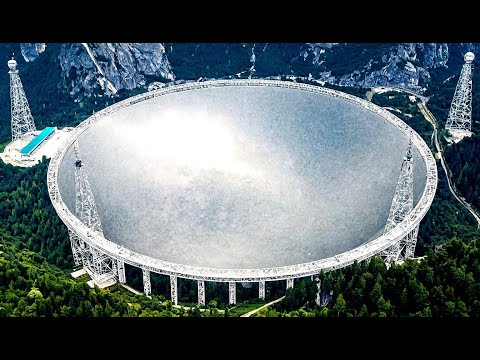
So, picture this: you’re lying on your back in the grass, staring up at the stars, and suddenly you spot something that totally blows your mind. Like, is that a shooting star or just a plane? Could it be aliens? Well, if you had a large telescope handy—like one of those mega ones—they could help clear things up big time!
Seriously, these giant telescopes are like the superheroes of astronomy. They’re not just fancy gadgets; they help us peek into the universe’s secrets. It’s wild to think about how much we’ve learned because of them.
I mean, have you ever thought about what’s out there? Galaxies colliding, stars being born—it’s like cosmic drama! And these telescopes are our ticket to the front row.
So let’s chat about why these colossal eyes in the sky matter so much to our understanding of the cosmos. Trust me, once you start to see what they can do, you’ll be hooked!
Exploring Modern Astronomy: A Comprehensive Guide to Different Types of Telescopes and Their Uses
Well, let’s talk about telescopes, shall we? Those incredible instruments have changed the way we look at the universe. Seriously, they’re like giant eyes peeking into the infinity of space.
First off, not all telescopes are created equal. There are a few types that really stand out in the field of modern astronomy, which helps scientists unlock the mysteries of the cosmos.
Optical Telescopes are probably the most familiar to you. They gather light from stars and galaxies to create detailed images. They come in two main flavors: refractors and reflectors. Refractors use lenses to bend and focus light, while reflectors use mirrors for that purpose. You’ve likely seen one of those big refractor telescopes with its shiny glass lens! They’re pretty cool for watching planets up close.
Then there’s Radio Telescopes. These bad boys don’t rely on visible light at all; they pick up radio waves emitted by celestial objects. Imagine using your WiFi router’s antenna to listen to signals from space instead of streaming your favorite shows! One famous example is the Arecibo Observatory in Puerto Rico, which was used for everything from studying pulsars to searching for extraterrestrial life.
Moving on, we have Astronomical Survey Telescopes. These are designed specifically for mapping the sky over large areas and capturing as much information as possible quickly. It’s like taking a panoramic photo of a vast landscape! The Pan-STARRS (Panoramic Survey Telescope and Rapid Response System) is a great example that helps detect near-Earth objects.
Next up are Space Telescopes, which orbit above Earth’s atmosphere where they can get an unobstructed view of the universe. The Hubble Space Telescope has given us some jaw-dropping images over its decades-long mission. It really takes imagery to another level since there’s no atmosphere to mess with clarity.
There’s also this category called Multi-Wavelength Telescopes. They combine data from various types of telescopes across different wavelengths—from radio to gamma rays—giving astronomers a more complete understanding of cosmic events. Imagine piecing together a puzzle but each piece tells a different part of the story!
Now let’s get back to those Large Telescopes you mentioned earlier. These giants play such an important role today. For instance, one very notable telescope is the Gran Telescopio Canarias located in Spain, which is renowned for its size and clarity! Its ability to gather light means it can see fainter objects far away in space than smaller telescopes could ever dream of.
In summary, each type of telescope has its unique strengths and plays its part in helping us understand our universe better—from optical beauty spots capturing colors and shapes to radio arrays decoding cosmic signals in anonymity.
So next time you gaze up at the stars, remember all these fancy tools out there helping us make sense of what we see—or don’t see! Isn’t it wild?
Exploring the Universe: The Largest Telescopes in Astronomy and Their Impact on Science
Sure! Let’s chat about the universe and those gigantic eyes we call telescopes. You know, it can be a bit overwhelming thinking about how vast space is. I mean, when I stare up at the night sky, I get this sense of wonder and just a sprinkle of panic at how little we actually know. But these telescopes? They’re like our super-smart best friends who help us unravel some of those mysteries!
Now, let’s break it down a bit. The larger the telescope, the more light it can capture. This means it can see fainter and more distant objects in space. Think of it like trying to spot a firefly in a dark field; if you have a stronger flashlight (or telescope), you’ll see way more. So it’s all about collecting that light!
The Largest Telescopes out there are like mega tools for astronomers. Here are some real heavyweights:
- Gran Telescopio Canarias: Located in Spain’s Canary Islands, this bad boy is one of the largest optical telescopes on Earth! With a mirror that’s over 10 meters wide, it brings far-away galaxies into clear view.
- Keck Observatory: Found in Hawaii, this place has two massive telescopes that together collect tons of light. They’re also super fancy—able to adjust for atmospheric distortion, which means clearer images!
- Very Large Telescope (VLT): Now we’re talking about four separate telescopes working together in Chile! It’s like having your cake and eating it too—using them separately or combined gives astronomers flexibility.
- Atacama Large Millimeter/submillimeter Array (ALMA): This one’s pretty cool because instead of one big dish, it has tons of smaller antennas spread out over distances. What they do is combine their powers to create sharp images of distant cosmic phenomena.
But wait—why does this even matter? Well, these giant eyes not only help us peek into our cosmic backyard but also push the boundaries of what we know about everything from black holes to star formation.
Think back to my firefly analogy for a sec—when astronomers use these telescopes to gather more light from faint objects, they can start piecing together how galaxies formed billions of years ago. Crazy right? We’re literally looking back in time!
And check this out: Every time scientists point these giant lenses at something new—a distant planet or an exploding star—they’re adding another page to our ever-growing book of knowledge about the universe.
But here’s something emotional for you: Imagine being among people who first started pointing telescopes toward the stars centuries ago—they had so many questions and no answers! Fast forward to now; thanks to modern astronomy with its big tech and international collaboration, we’re getting closer than ever to answering those age-old queries.
So yeah—you see those twinkling stars? With all these massive telescopes around, every glimmer might just be telling us a story waiting to be uncovered! Isn’t that something?
Exploring Modern Astronomy: The Most Commonly Used Telescopes in Scientific Research
Sure! Let’s talk about telescopes in modern astronomy and how they help us understand the vast universe around us. It’s pretty cool stuff, so buckle up!
When you think about telescopes, you might picture the little ones some folks have in their backyards. But serious astronomers use much larger instruments to catch glimpses of distant stars, galaxies, and other celestial wonders. Large telescopes are the backbone of modern astronomy, allowing scientists to observe objects billions of light years away.
So what are some of these big players? Well, there are a few kinds you really should know about:
- Optical Telescopes: These are the classic type we often think of. They collect visible light using lenses or mirrors. The Hubble Space Telescope, for example, has given us stunning images of deep space since 1990.
- Radio Telescopes: Unlike optical telescopes that look at light, radio telescopes pick up radio waves emitted by cosmic objects. The Arecibo Observatory, which sadly collapsed recently, was famous for this and helped us learn so much about pulsars and planets.
- Infrared Telescopes: These detect infrared radiation, which is heat emitted by objects in space. The James Webb Space Telescope, launched in 2021, is designed for this purpose and is already rewriting our understanding of star formation.
- X-ray Telescopes: These do the heavy lifting when it comes to observing high-energy processes like black holes and supernovae. The Chandra X-ray Observatory has been vital in uncovering the mysteries of such extreme phenomena.
But here’s where it gets interesting: each type of telescope offers a unique view of the universe. You see, different wavelengths reveal different features. For instance, while an optical telescope can show us beautiful images of visible galaxies, infrared might show regions where new stars are being born hidden by dust.
You remember that feeling when you first looked up at a starlit sky? All those sparkling dots just waiting for someone to figure them out! That’s what drives astronomers every day—curiosity mixed with passion.
Also crazy to think about is how these large telescopes work together! By linking several telescopes from different locations around the globe (or even from space), scientists create what’s called an “interferometer.” It sounds fancy (and it is!), but basically it helps increase resolution and gather more data than a single telescope could.
Let me tell you a quick story that really captures this excitement: A few years back at an observatory in Chile, astronomers were watching a binary star system—a pair of stars orbiting each other—when they noticed something odd happening with one star’s brightness. They realized it was actually transiting in front of another galaxy! This magical moment allowed them to collect light curves that helped them discover new exoplanets as well as gain insights into galaxy formation.
In summary, large telescopes play an essential role in modern astronomy by allowing scientists to explore various wavelengths and make amazing discoveries! So next time you gaze at the night sky or hear news about some galactic event—it all ties back into those powerful tools looking deep into space for answers we’re still searching for. Cool stuff right?
You know, I always find it a bit magical when I think about how we peer into the vastness of space. Large telescopes play such a pivotal role in modern astronomy. They can be these massive machines that look like something out of a sci-fi movie, yet they’re just tools—extraordinary tools that help us decode the universe’s secrets.
I remember the first time I actually saw a telescope up close. It was at an observatory on a school trip. This enormous dome opened up to reveal giant lenses and mirrors, all polished to perfection. I was just in awe, standing there as an enthusiastic guide explained how light from distant stars bounces around inside the telescope before reaching our eyes. Seriously, it felt like holding hands with the cosmos!
So here’s the thing: large telescopes are crucial because they collect tons more light than our eyes can handle, allowing us to see fainter objects or details we’d totally miss otherwise. Just think about it! Without them, we’d be stuck squinting at twinkling dots in the night sky without much understanding of what those dots are really about.
Modern telescopes like the Keck Observatory in Hawaii or the Gran Telescopio Canarias in Spain are incredible examples of what humanity can achieve when we set our minds to it. They have these gigantic mirrors—some almost 10 meters across! That’s like trying to drink coffee from a bucket instead of your cup! These big guys help astronomers discover new planets and study galaxies that are billions of light-years away.
But it’s not just about size; it’s also about technology. Imagine attaching cameras and sensors which can detect infrared or ultraviolet light—the stuff our eyes can’t see! This opens up whole new realms for exploration. It’s exciting because with every new discovery, there comes this possibility that we might find life beyond Earth or understand more about how everything started.
And let me tell you—a lot of this research is collaborative too! International teams gather data from multiple locations and blend their findings together like a cosmic puzzle. When you think about all those brains working together across countries and cultures for one goal, it’s really heartening!
But as thrilling as all this sounds, sometimes I think back to those quiet nights spent star-gazing, my imagination running wild with thoughts of what could be out there without any fancy machinery involved. In many ways, large telescopes enhance that childlike wonder; they remind us there’s so much left to explore.
So yeah, while we’ve come so far with advanced technology pushing boundaries and revealing beautiful unknowns within our universe—it’s nice to remember those simple moments where curiosity ignites passion for discovery; whether through looking down a large telescope lens or lying on your back under a sky full of stars.