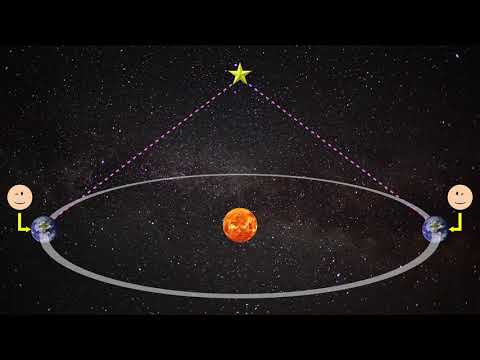
Alright, picture this: it’s the 1500s, and everyone thinks the Earth is the center of the universe. Seriously! People were going about their daily lives thinking they stood on this big rock that was just chilling in the cosmic spotlight.
Then along comes Nicolaus Copernicus. This guy had a wild idea — what if, like, we’re actually spinning around the Sun instead? Mind blown, right?
I mean, can you imagine dropping that bombshell at a dinner party? “Hey folks, how about we rethink our whole place in the universe?” Talk about stirring the pot!
But really, Copernicus didn’t just change how we view space. He kind of kicked off a whole new era in astronomy. A revolution that made us rethink everything. So let’s dive into why this dude was such a big deal and how his ideas changed our night sky forever!
“The Birth of Modern Astronomy: A Comprehensive Overview of Its Key Developments and Impact on Science”
So, let’s talk about the birth of modern astronomy, shall we? It’s kind of a big deal because it shifted the way we see not just our place in the universe, but also how we approach science itself. The guy you’ve got to know about here is Nicolaus Copernicus. He popped onto the scene in the 16th century and changed everything!
You see, before Copernicus came along, most folks believed that Earth was the center of the universe. This idea is called geocentrism. Imagine everyone thinking they were at the top of some cosmic hierarchy! But then, Copernicus said, “Hold up!” He proposed that the sun was actually at the center of our solar system—this concept is known as heliocentrism.
Why was this a big deal? Well, for starters, it flipped how people thought about their place in everything. Instead of being important cosmic players, humans were just one planet orbiting a star. Seriously eye-opening stuff! Here are some key developments that followed:
- The Heliocentric Theory: Copernicus published his major work called “De revolutionibus orbium coelestium” (On the Revolutions of Celestial Spheres) in 1543. Can you imagine that? He had to be super brave to challenge centuries of accepted wisdom!
- Improved Observations: His ideas laid groundwork for guys like Tycho Brahe, who made really detailed observations of planets and stars without fancy telescopes.
- The Telescope: Then came Galileo Galilei, who used a telescope in the early 1600s to support Copernican ideas by observing moons around Jupiter and phases of Venus. Wasn’t that mind-blowing?
- The Laws of Motion: Next up was Isaac Newton, who developed laws explaining how planets move through gravity. This was like icing on an already remarkable cake!
This whole shift didn’t just impact astronomy; it sparked a scientific revolution! Suddenly science moved from philosophy to empirical evidence—that means using observation and experiments.
An anecdote I think is pretty touching involves Galileo’s trial by the Catholic Church after he supported Copernican views. They put him on house arrest because they couldn’t handle his ideas challenging traditional beliefs. But he didn’t waver—he kept studying and writing from his home! Can you imagine being so dedicated?
The effects ripple even into our lives today: GPS systems, satellite technology-all this relies on understanding celestial mechanics! So when you’re checking your phone for directions or looking up at stars on a clear night, remember—you owe it all to those brave thinkers who dared to look beyond Earth.
If there’s one takeaway from all this, it’s that questioning what we know can lead to monumental changes in understanding—and maybe even create a new way for all human beings to connect with each other and with our universe.
Exploring Copernicus: The Father of Modern Astronomy and His Impact on Scientific Thought
Nicolaus Copernicus, born in 1473 in Poland, is often hailed as the father of modern astronomy. So, what did this guy do that changed everything? Well, let’s start with a little backstory. Before him, people believed the Earth was at the center of the universe. This view came from ancient thinkers like Aristotle and Ptolemy. They thought the Sun, Moon, and stars all revolved around us. Can you imagine?
Then came Copernicus with his bold idea. He proposed a heliocentric model, saying that the Sun was actually at the center of our solar system and that Earth revolved around it along with other planets. Seriously revolutionary stuff! Imagine being in his shoes; challenging centuries of established beliefs must’ve been daunting.
You know what’s wild? Copernicus didn’t just pop out a paper one day announcing this theory. No way! He took years to gather evidence and refine his model. His big work, *De revolutionibus orbium coelestium*, published just before he died in 1543, laid out his heliocentric theory in detail. It wasn’t an instant hit either; many were skeptical or outright hostile to his ideas at first.
So why does this matter? Well, think about it: when you swap out an older idea for a newer one like Copernicus did, you shake up how people view themselves and their place in the universe. This shift led to a major transformation in scientific thought. It’s called the Scientific Revolution!
Copernicus’ ideas didn’t just change astronomy; they had huge implications for physics, philosophy, and even religion! If we weren’t at the center anymore, what did that mean for mankind? This spurred thinkers like Galileo and Kepler to explore these questions further!
Here are some key takeaways from Copernicus’ impact:
- Shifted Perspective: Helped humanity see its place differently in the cosmos.
- Scientific Inquiry: Encouraged others to question established beliefs.
- Foundation for Future Scientists: His work inspired astronomers who followed him.
One more thing—it’s super interesting to note how Copernicus’ work influenced not just science but also art and literature! Think about how themes of exploration and understanding emerged after his time.
In essence, Nicolaus Copernicus sparked a change in thinking that allowed science to flourish as we know it today. It created a ripple effect—moving astronomy from ancient traditions into fresh waters filled with inquiry and observation. Not too shabby for a guy who started off by flipping our worldview upside down!
Exploring the Celestial Contributions of Johannes Kepler: The Father of Modern Astronomy
Johannes Kepler is often hailed as the father of modern astronomy, and for good reason. He took the ideas of his predecessor, Nicolaus Copernicus, who proposed that our planet orbits the sun instead of the other way around, and really ran with them. Kepler was all about details and precision, which made a huge difference back in the 17th century.
So, let me paint you a picture here: Imagine a time when people thought the sun revolved around the Earth. Kind of wild, right? This geocentric view dominated for centuries until Copernicus stirred the pot with his heliocentric model. But it was Kepler who came in and set things straight by adding mathematical rigor to these ideas.
One of Kepler’s big contributions was his three famous laws of planetary motion:
- The Law of Ellipses: This one states that planets move in elliptical orbits around the sun. An ellipse is like a squished circle—so no more perfect circles!
- The Law of Equal Areas: According to this law, a line connecting a planet to the sun sweeps out equal areas during equal times. Basically, planets move faster when they are closer to the sun.
- The Law of Harmonies: This law establishes a relationship between the time it takes for a planet to orbit the sun and its distance from it. More specifically, if you take the square of a planet’s orbital period (the time it takes to go around once) and divide it by the cube of its average distance from the sun, you get the same number for all planets!
These laws didn’t just help astronomers understand how planets moved; they laid down principles that are still used today! It’s kind of like when you’re trying to figure out how fast your friend can run while carrying all those snacks; you start noticing patterns.
And then there’s this amazing story about how Kepler figured these things out. He worked with precise measurements taken by Tycho Brahe, an astronomer known for his detailed observations—but not so great at actually interpreting them himself. When Tycho died, Kepler got his hands on all those meticulous records. It’s like finding a treasure trove full of clues!
It wasn’t easy for him either; he faced tons of obstacles—skepticism from fellow scientists and challenges in aligning his findings with both theological beliefs and traditional science at that time. But he kept pushing forward! Talk about determination!
In essence, Kepler’s work wasn’t just about predicting where planets would be; it transformed our understanding of our place in space. And can you imagine? It changed how we view everything—from our own existence to concepts like gravity that would come later thanks to Isaac Newton.
Kepler’s impact echoes through scientific history even today—it encourages us to question what we know and seek deeper understanding through observation and mathematics. So next time you look up at those twinkling stars on a clear night, remember Johannes Kepler—and all he did to help us understand why they shine!
So, there’s this guy, Nicolaus Copernicus. You might have heard of him? He was around in the 1500s, and let me tell you, he basically flipped the whole astronomy game on its head. You know how everyone thought the Earth was the center of the universe? Crazy, right? Well, Copernicus came along and said, “Hey, what if it’s actually the Sun?” I mean, just imagine being in his shoes back then. The world around you believes one thing so deeply that it’s almost religious. Then you come up with a theory that says they’re all wrong! Talk about nerve!
I remember reading about an old friend of mine who loved stargazing. We’d lay on a hilltop at night, just staring up at the stars and making up constellations. It was magical! But what if we had to believe that we were sitting on a giant spinning ball while everything else revolved around us? It kind of changes your perspective, doesn’t it? Copernicus’ idea did just that for humanity.
His work wasn’t just about saying “the Sun’s at the center.” It was about challenging norms—he faced serious backlash from people who couldn’t handle the thought of their comfy little worldview being shaken up. It took guts to suggest that Earth wasn’t special or unique but part of a larger cosmic dance.
And look at where it got us! His heliocentric model laid down the framework for guys like Galileo and Kepler to take things even further. The way we see our place in space dramatically shifted because one man dared to think differently—or should I say more logically?
But even more than his scientific impact, I think about how Copernicus embodies that spark of curiosity we all need today. It reminds us to question things sometimes—even if it feels uncomfortable or risky. The night sky can seem endless and daunting at first glance; however, when you start connecting those dots—the Sun here, Earth there—it gives you this rush of insight.
So yeah, Nicolaus Copernicus didn’t just help create modern astronomy; he ignited a movement towards exploration and understanding that’s still shining bright today! And every time I look up at those twinkling stars with friends—or even by myself—I can’t help but feel grateful for folks like him pushing boundaries and expanding our view beyond what seemed possible at their time.