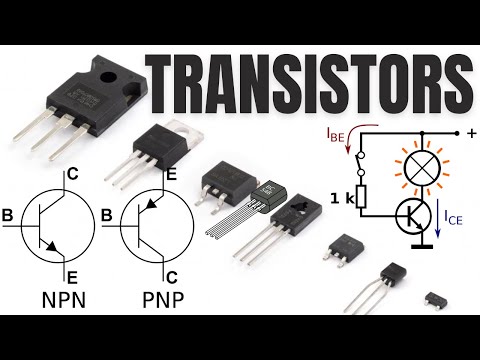
So, picture this: you’re sitting there, scrolling through your phone, and suddenly, it freezes. Ugh. You know that feeling? It’s like your tech just decided to take a nap on you! But, let me tell you about something that keeps all this magic running smoothly behind the scenes: transistors.
Yeah, I know what you might be thinking—a transistor sounds like something straight outta a sci-fi movie or physics class. But hang on! These little guys are way more exciting than they sound. They’re basically the tiny gatekeepers of electronics.
Without ’em, we wouldn’t have smartphones or computers. Imagine life without memes or cat videos—no way! These unsung heroes have shaped our world in more ways than you can count. So stick around while we unravel the story of transistors—promise it’ll be a good time!
Transistors: The Essential Building Blocks of Modern Electronics and Their Impact on Scientific Advancements
Transistors are, like, super important in the world of electronics. You know that little device in your phone or that laptop you use? Yeah, it probably has millions of them. These tiny things are what let us control electrical signals, making our gadgets smart and efficient.
A transistor is basically a switch or an amplifier. When you apply a small voltage to one part of it, it can control a much larger voltage flowing through another part. So, you can think of it as a gatekeeper, letting electricity flow when you want it to and stopping it when you don’t. This on-and-off ability is crucial for all kinds of digital devices.
So where did this whole transistor thing come from? It all started back in the 1940s when three physicists—John Bardeen, Walter Brattain, and William Shockley—figured out how to create the first point-contact transistor at Bell Labs. This invention was pretty amazing because it replaced vacuum tubes, which were big, bulky, and not very efficient. Imagine having your entire music setup run by those enormous light bulbs!
Now let’s talk about what transistors can do for science and technology:
- Computing Power: Every computer you’ve ever used relies on transistors. A modern chip can contain billions of them crammed into a tiny space! This density allows for faster processing speeds and higher performance.
- Communication: From smartphones to satellites, transistors are key players in communication devices. They enable data transmission through modulation of signals.
- Medical Devices: In healthcare tech like MRI machines or portable monitors, transistors help process signals from medical imaging or keep track of vital signs.
- Energy Efficiency: Transistors also play a big role in renewable energy systems by helping control solar panels or wind turbines.
Think about this: thanks to their ability to switch on and off at lightning speed (we’re talking nanoseconds!), transistors allow computers to perform complex calculations needed for things like climate modeling or analyzing huge datasets in research.
I remember when I first got into electronics as a kid; I was fascinated by how these little components could build everything from flashlights to gaming consoles. It blew my mind that something so tiny could create such substantial waves in technology!
Then there’s the future! Researchers are always looking for ways to improve transistor efficiency and size—some are even exploring materials like graphene that could lead to smaller yet more powerful devices. Who knows? We might see computer chips with way more power than we can imagine today.
In short, transistors are these unsung heroes behind almost everything electronic today—from massive scientific machines down to your favorite video game console. It’s kind of incredible when you really think about it!
The Crucial Role of Transistors in Advancing Modern Electronics and Scientific Innovation
Transistors, oh man, they’re like the tiny superheroes of our modern world! Seriously, without them, you wouldn’t be reading this on your phone or laptop right now. They play a crucial role in pretty much everything electronic.
So, what exactly is a transistor? Well, think of it as a really small switch that can turn electrical signals on or off. It’s also able to amplify those signals. You see, when you press a button on your device, you’re sending an electrical signal. That signal travels through transistors and tells the rest of the device what to do. Simple as that!
Now let’s chat about why transistors are such big shots in electronics:
- Size Matters: Transistors are incredibly tiny—like teeny-tiny! Some are so small you can fit billions of them on something the size of a fingernail. This compact size is what has allowed devices to become more powerful yet smaller at the same time.
- Energy Efficiency: These little guys don’t require tons of energy to work. They can switch on and off fast without draining your battery too much—so they help keep your phone charged longer!
- Speed: Transistors can operate at lightning speed. Whenever you click something on your screen, transistors are working at almost the speed of light to make things happen right away.
- Versatility: They can be used for various functions—from amplifying audio signals in speakers to processing data in computers or managing power in devices.
Let me tell you, I remember the first time I got my hands on a simple circuit kit as a kid. I was like, ‘Whoa!’ when I saw how these little components could make lights blink or buzz sounds just by putting them together right. It blew my mind that something so small could make magic happen!
On another level, transistors have paved the way for **scientific innovation** too. With their help, we’ve developed technology that fuels advancements in fields like medicine and space exploration. For instance:
- Computational Power: Think about it—supercomputers rely on millions of transistors working together to solve complex problems faster than we can blink!
- Medical Devices: From MRI machines to wearable health monitors—they all use transistors to function accurately and efficiently.
In short, every time you type a message or scroll through social media, there’s likely a bunch of tiny transistors buzzing away behind the scenes making it all happen smoothly.
So yeah, they might be small and often overlooked but **transistors** are truly some of the most important inventions driving our tech-heavy lives forward! It’s kind of amazing when you think about how much we owe them for our daily conveniences and scientific breakthroughs.
Exploring the Materials Behind Modern Transistors: A Scientific Perspective on Semiconductor Composition
Transistors are like the tiny heroes of our electronics world. Without them, we wouldn’t have smartphones, computers, or even some of those fancy kitchen gadgets we can’t live without. So, what’s the deal with the materials that make these essential little guys work? Let’s break it down.
First off, transistors are made primarily from **semiconductors**. But what exactly is a semiconductor? It’s a material that can conduct electricity under certain conditions but not others. Think of it like a bouncer at a club; they decide who gets in and who doesn’t.
One of the most common materials used to create semiconductors is silicon. Silicon is super abundant on Earth and has this neat property: its conductivity can be adjusted with impurities, or “dopants.” When you mix in elements like phosphorus or boron, you change how silicon behaves. This process is called doping, and it’s crucial for creating n-type (extra electrons) and p-type (missing electrons) semiconductors.
But silicon isn’t the only player in town! There are other materials that chip makers love to use:
- Gallium Arsenide (GaAs): This material is actually better than silicon for certain applications because it can operate at higher frequencies and with less power loss. You’ll find this one in solar cells and some high-speed electronics.
- Indium Phosphide (InP): Another superstar material! It’s great for making devices that need to work at really high speeds, like fiber-optic communication systems.
- Graphene: A newer kid on the block, graphene has amazing electrical properties due to its unique structure—just one layer of carbon atoms arranged in a two-dimensional lattice! It’s still being researched but could revolutionize electronics.
So let’s talk about how these materials actually come together to form transistors. Typically, transistors consist of three regions: the **source**, **gate**, and **drain**. The gate controls whether electricity flows between the source and drain by creating an electric field when voltage is applied. This setup allows transistors to switch on and off quickly—hence why they’re perfect for digital circuits where binary code (the 0s and 1s we hear about) rules everything.
Think back to your middle school science class when you learned about “conductors” versus “insulators.” Well, semiconductors fall right between those two categories on the spectrum! They’re practically magic if you think about it; they let us harness electricity while keeping things safe from overloads or shorts. A well-designed transistor means more efficient devices that save energy—seriously noteworthy!
And speaking of efficiency, as technology evolves, researchers constantly search for new semiconductor materials that offer better performance while being environmentally friendly. Materials like organic semiconductors—those derived from carbon-based compounds—are also gaining traction because they can be printed on flexible substrates.
In short, exploring the materials behind modern transistors opens up a fascinating window into how our digital age came to be. From silicon’s established reign to gallium arsenide’s speed demon status and even graphene’s futuristic promise, each choice impacts everything from your favorite gadgets to energy use worldwide.
So next time you pick up your phone or turn on your computer, remember all those tiny transistors working behind the scenes—built from clever combinations of amazing materials doing their job day in and day out!
So, let’s talk about transistors for a second. You know, those tiny little things that make our world go round? They’re like the unsung heroes of modern electronics. Seriously! Without them, we wouldn’t have our computers, smartphones, or even the simple remote control for your TV. Just think about it: your entire life is intertwined with these nifty little gadgets.
I was at my friend’s house the other day, and he was fixing his old radio. It was one of those retro ones with a big wooden case and all the knobs. The sound was totally off, and I thought he could just toss it out and buy a new one instead—easy peasy! But he took it apart and started poking around with some tools. After what felt like an eternity (let’s be real, I almost fell asleep), he pulled out this tiny chip full of transistors. He went on to explain how they act as switches or amplifiers in the radio circuit. It struck me that this little piece of technology was crucial for making music come alive again in that old thing!
Transistors revolutionized technology when they came around in the mid-20th century. Before them, vacuum tubes were all the rage but super bulky and not very efficient. You can imagine how inconvenient it must’ve been to have these giant tubes everywhere! And then boom—transistors came along and changed the game completely. They made electronics smaller, faster, and way more energy-efficient.
So here’s where it gets cool: A single transistor can control electrical signals with just a small amount of power. This means you can connect thousands of them together to create complex circuits… which is basically how every piece of tech works today! Ever heard of Moore’s Law? It’s this observation that says the number of transistors on a microchip doubles roughly every two years. That’s why computers get faster while also getting smaller! It’s mind-blowing!
But sometimes I think we take this stuff for granted. Like when you scroll through your phone or binge-watch your favorite show; you don’t really think about all those tiny transistors doing their thing behind the scenes. But hey, maybe next time you plug in your laptop or snap a photo with your phone, take a moment to appreciate those little guys working hard for you.
In short, transistors are like that quiet friend who always has your back but never seeks attention—crucial but often overlooked! So next time you see something electronic working seamlessly, remember it’s thanks to these tiny building blocks! Isn’t it amazing what a little piece of technology can do?