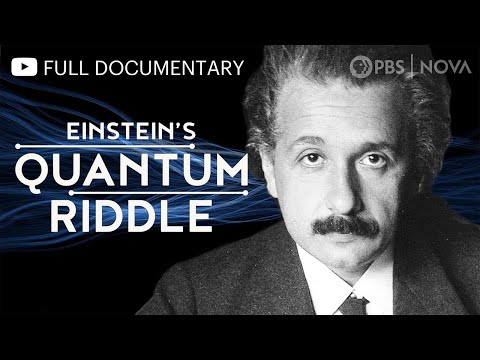
So, imagine this: it’s the early 1900s, and a young Albert Einstein is chilling in his patent office, daydreaming about light rays and time. You know, just your typical day for a genius!
Now, what if I told you that this guy would change the rules of physics forever? Crazy, right? He basically threw a wrench in the old-school machine of classical physics with his wild ideas about quantum theory.
I mean, can you picture it? Everyone was like “What are you talking about?” while he was busy rethinking everything we thought we knew about particles and waves.
The thing is, Einstein wasn’t just a thinker; he was a rebel in science. He mixed up particles like they were ingredients in a cosmic smoothie! And that’s how he shaped our modern understanding of quantum theory. So grab your favorite drink and let’s unpack this wild ride together!
Exploring Einstein’s Pivotal Contributions to Quantum Theory and Their Impact on Modern Science
So, you know, when we think about Albert Einstein, what usually comes to mind? Maybe the wild hair and that famous equation, E=mc²? But there’s so much more to this genius than just relativity. Seriously! He also played a huge role in shaping modern quantum theory. Let’s explore that a bit.
First off, how did Einstein even get mixed up with quantum mechanics? Well, back in the early 20th century, physics was basically going through a revolution. You had guys like Max Planck proposing that energy isn’t continuous but rather comes in tiny packets called quanta—kind of like how you buy candy by the piece instead of by the bulk.
Now, Einstein jumped on this idea and took it further. In 1905 (what a year for him!), he published a paper explaining the photoelectric effect—where light hits metal and releases electrons. He suggested that light doesn’t just act like waves but also behaves like particles called photons. This was huge! It opened up a whole new way of thinking about light and got him the Nobel Prize in 1921. Can you believe that his work on quantum theory got him recognized more than his contributions to relativity?
But wait, it gets even more interesting! Einstein wasn’t too thrilled about some of the implications of quantum mechanics though. He famously said, “God does not play dice with the universe.” Basically, he thought that the randomness at the core of quantum mechanics was unsettling. He believed in an underlying order—a deterministic universe—where everything has its cause. So while he helped lay down crucial groundwork for quantum theory, he always had his reservations.
Then there’s this awesome concept called quantum entanglement. This is where particles become interconnected; change one and you change another instantly—even if they’re super far apart! Einstein referred to this as “spooky action at a distance.” While he thought it sounded crazy, guess what? It’s become one of those fundamental principles used in modern technology today!
And let’s not forget about what these ideas meant for modern science and technology. Quantum mechanics paved the way for revolutionary stuff: think semiconductors and lasers—basically everything from your smartphone to those cool laser pointers came from these principles!
In summary:
- Photoelectric Effect: Einstein’s explanation changed our understanding of light.
- Quantum Entanglement: A mind-bending principle suggesting interconnectedness across distances.
- Causal Universe vs Quantum Randomness: Einstein’s struggle with unpredictability sparked fascinating discussions.
- Technological Impact: Modern advances owe a lot to his early contributions.
It’s so cool how one person can change our perception of reality itself—Einstein did just that by diving into quantum theory while also keeping it real with his skepticism. The impact? Huge! You can see echoes of his ideas everywhere in science today—and probably won’t stop seeing them anytime soon!
Exploring the Impact of Einstein’s Theory of Relativity on the Evolution of Modern Physics
Einstein’s theory of relativity is one of those concepts that just blows your mind, right? I mean, this guy basically reshaped the way we look at the universe. His ideas weren’t just cool—they were revolutionary. You know, when you hear “relativity,” you might think only of sci-fi movies or time travel, but there’s so much more to it.
First off, let’s break down a couple of key terms. There are actually two parts to Einstein’s theory: special relativity and general relativity. Special relativity, introduced in 1905, focuses on objects moving at constant speeds—especially speeds close to the speed of light. It tells us that time and space aren’t as straightforward as we once thought. Imagine being on a spaceship zooming through space; time actually moves slower for you compared to someone standing still on Earth!
Then there’s general relativity, which came out in 1915 and deals with gravity. It suggested that massive objects like planets and stars warp the space around them—kind of like how a bowling ball makes a dent in a trampoline. This means gravity isn’t just some invisible force; it’s the effect of this curvature in space-time! Talk about changing perspectives!
Now, how did all this affect modern physics? Well, one major impact is on our understanding of quantum theory. Before Einstein, physicists had pretty much settled into Newtonian mechanics—everything was nice and tidy until those pesky quantum particles came along. These tiny particles didn’t play by the same rules! Einstein himself wasn’t a fan of quantum mechanics at first. He famously said, “God does not play dice with the universe,” because he found randomness hard to swallow.
But here’s where it gets interesting: while Einstein resisted quantum ideas like wave-particle duality—where particles can act like both waves and particles—his work laid groundwork for others to build on. Physicists like Niels Bohr took his principles further into the quantum realm. You see, his work showed that understanding larger cosmic structures could be linked back to these tiny particles.
In addition to all this academic stuff, Einstein’s theories also had practical applications we see today—think GPS systems! They rely heavily on both special and general relativity because satellites move fast enough and are far enough from Earth’s gravitational pull that their clocks tick differently than ours do here on the ground.
So yeah, pretty incredible how one guy’s ideas created such ripples in physics! His work inspired countless scientists who continue pushing boundaries even now,. It feels kind of emotional when you think about how one person’s genius can change our collective understanding of reality itself—like we’re all part of this crazy quest for knowledge together!
To wrap it up:
- Special relativity: Time slows down at high speeds.
- General relativity: Mass warps space-time; it’s not just an invisible force.
- Quantum theory: Built upon older ideas; challenges conventional thinking.
- Practical applications: Technologies like GPS rely on his theories.
- Influence: Opened doors for future physicists.
Einstein’s legacy is more than equations; it’s about reshaping how we understand everything from atoms to galaxies! Isn’t that something worth celebrating?
Exploring Albert Einstein’s Enduring Influence on Contemporary Science
When you think of science, chances are Albert Einstein pops into your mind. His wild hair and quirky smile are iconic, but it’s his brain that really left a mark on the world. So, let’s talk about how Einstein shapes our understanding of things today, especially in quantum theory.
Einstein’s famous equation E=mc² is often the first thing people associate with him. This equation basically tells us that energy (E) is equal to mass (m) times the speed of light (c) squared. Super simple, right? But what it also does is link matter and energy in a way that changed everything. It implies that tiny particles can have massive amounts of energy, which is a foundational idea for quantum physics.
Now, Einstein wasn’t just a one-trick pony! He also contributed to quantum theory, even though he had some reservations about it. For example, his work on the photoelectric effect showed that light can behave like particles—this idea was crucial for developing quantum mechanics. Basically, he said light isn’t just waves; sometimes it acts like tiny balls called photons. This was groundbreaking!
- Wave-Particle Duality: This concept says that particles like electrons can behave both like waves and like particles. This confusion continues to intrigue scientists and has practical applications in things like lasers and semiconductors.
- The Uncertainty Principle: Although not directly from Einstein, his debates with physicists like Niels Bohr led to this principle, which says you can’t know both the position and momentum of a particle precisely at the same time.
- Bells Theorem: It’s all about entanglement! Einstein famously called it “spooky action at a distance,” but experiments have shown that particles can be connected in ways we still don’t completely understand.
You might remember from school (or those late-night science shows) how Einstein once said he hoped God doesn’t play dice with the universe. Well, quantum mechanics seems to do just that! While he was skeptical about random events at the quantum level, many breakthroughs in modern physics owe their existence to these very principles he questioned.
The beauty of it all lies in how practical quantum theory has become today. Think about technologies we take for granted: computers, smartphones—they all rely on principles rooted deeply in quantum mechanics! And while Einstein might have had his doubts back then, his contributions helped lay the groundwork for these innovations.
In short? Albert Einstein’s influence still ripples through contemporary science. His theories continue to provide answers and spark debate among physicists diving into topics like black holes or dark matter. So next time you look up at the stars or swipe on your phone screen, remember—you’re witnessing echoes of Einstein’s genius light-years ahead!
You know, when we think of Albert Einstein, the first thing that usually pops into our minds is that iconic image of him sticking out his tongue or maybe some genius-level formula scribbled on a chalkboard. But there’s this whole other side to him, especially regarding quantum theory, that’s worth chatting about.
So, picture this: it’s the early 1900s. The world is buzzing with new ideas in physics, but not everyone agrees. I mean, here’s Einstein, who famously said he didn’t like the idea of quantum mechanics. Like, really? A guy who basically revolutionized our understanding of time and space was skeptical about this emerging field? It sounds a bit contradictory but also kind of human in a way.
Here’s a little anecdote: my old professor used to tell us how Einstein felt about particles being both waves and particles at the same time—it drove him nuts! Seriously! He believed that there had to be an underlying reality behind those strange quantum behaviors. You could almost see his frustration boiling in those heated debates with Niels Bohr and others during their renowned discussions on the nature of light and matter.
He contributed some foundational ideas that helped shape quantum theory—even if he didn’t entirely buy into it himself. Take the photoelectric effect as an example; he explained how light can knock electrons off a material like it was flipping a switch—it wasn’t just light; it was packets of energy called photons. This idea played a huge role in advancing quantum physics. Crazy to think something so revolutionary came from someone who doubted its core principles!
Einstein’s work has become this cornerstone upon which modern physics stands tall today—it’s kind of mind-blowing when you step back and really see how everything connects. Without him pushing boundaries and questioning established norms, who knows if we’d be where we are now with quantum theory?
And while he had his reservations about some aspects of it—like that famous phrase “God does not play dice”—his legacy paved the way for future physicists to explore and expand upon those puzzling quantum concepts even further. So basically, even if Einstein dressed like your quirky uncle at family gatherings, he still played an essential role in influencing ideas that have shaped modern technology! It’s pretty clear that genius doesn’t always come wrapped up neatly; sometimes it’s messy and full of questions—just like us humans!