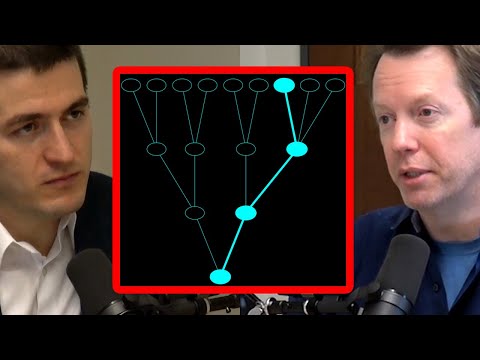
Alright, imagine you’re at a party. You grab a slice of pizza, right? But then, boom! A second version of you pops up—one that chose nachos instead.
Sounds ridiculous? Well, that’s kinda what the Many Worlds Theory suggests!
In the quantum world, every time a choice is made or something happens, the universe splits. Like, thousands of alternate realities popping up all over the place.
Pretty wild idea, huh? It’s not just sci-fi stuff; it’s actually part of quantum mechanics.
So let’s unpack this mind-bending concept together! You ready for some cosmic fun?
Exploring Stephen Hawking’s Insights on the Multiverse: Unraveling the Scientific Perspectives
You know, Stephen Hawking was one of those brilliant minds who really made us think about the universe and our place in it. His views on the multiverse have stirred up quite an interesting conversation. So, let’s break it down a bit.
First off, what is this multiverse idea? Well, imagine that every time you make a choice—like whether to grab a burger or a salad—a new universe branches off where you choose the other option. It’s like each decision creates an entirely different reality. Mind-bending, right?
Now, this ties in with something called quantum mechanics. Here’s the thing: quantum mechanics is all about the weird stuff that happens at tiny scales, like atoms and particles. In that realm, things can be in two places at once, or seem to vanish into thin air! So when Hawking talks about the multiverse, he’s suggesting that perhaps all those possibilities are real—somewhere out there.
Hawking was particularly influenced by the Many Worlds Theory, which basically says every possible outcome of a quantum event happens in its own universe. Imagine flipping a coin; instead of just getting heads or tails in our universe, both outcomes exist but in different worlds!
You might be thinking: “That sounds ridiculous!” But before you dismiss it altogether, consider this: in quantum mechanics experiments—like the famous double-slit experiment—particles behave differently based on whether they’re being observed. It nudges us to think there might be way more going on than we see daily.
But here’s where it gets really interesting! Hawking proposed that not just one universe exists but many—including ones where time behaves oddly or fundamental laws are slightly different! It opens up endless possibilities for how life might exist elsewhere.
However, it’s important to mention that while these ideas are tantalizing and make for great sci-fi stories (hello, parallel universes!), they aren’t easy to test scientifically. That’s what makes them controversial among scientists. They’re kind of floating around in some theoretical space without direct experimental evidence to back them up.
So why should you care about all this? Well, engaging with these concepts pushes boundaries and encourages us to think outside our little bubble on Earth. It sparks curiosity and wonder about existence itself!
In essence:
- The multiverse suggests infinite realities based on choices.
- Quantum mechanics showcases bizarre behaviors at tiny scales.
- The Many Worlds Theory implies every possibility is played out across these realities.
- While fascinating, these ideas lack concrete experimental evidence.
- This exploration inspires awe and deep thought about existence.
So next time you’re pondering life’s big questions or just deciding what to have for lunch, remember—the outcome could lead to whole new worlds beyond your imagination!
Exploring the Connection Between Multiverse Theory and Quantum Mechanics in Modern Science
You know, the universe is a pretty big concept, right? But what if I told you that there might be *multiple* universes out there? That’s where the whole multiverse theory comes into play. It’s kind of like opening a box of chocolates and finding out there are a ton of different flavors you didn’t even know existed.
So, let’s kick things off with **quantum mechanics**. This is the branch of physics that deals with the super tiny stuff in our universe, like atoms and subatomic particles. The way these little guys behave can be super strange. For example, there’s this idea called *superposition*. Picture it like a coin spinning in the air—until you catch it and see either heads or tails, it’s kind of both at once! That’s what particles do; they can be in multiple states until we observe them.
**Now, here comes the juicy part: Many Worlds Theory!** According to this theory, every time there’s a quantum decision—like our spinning coin landing—you don’t just get one outcome; instead, all possibilities occur. So if that coin lands on heads in one universe, there’s another universe where it lands on tails. Crazy, huh?
Here are some key points to chew on:
Imagine making a choice today—what to have for breakfast or whether to grab that coffee on your way to work. Each possible choice opens up new worlds. So right now, in some alternate reality, you’re enjoying pancakes while another version of you is stuck with toast!
But wait—this isn’t just wild imagination fluff; scientists actually engage with these ideas seriously! They explore mathematical models and thought experiments that challenge our understanding of reality itself. Like I said earlier about quantum mechanics being odd enough already; adding the multiverse makes things even wilder.
Now you might wonder how this all connects back together. Well, as scientists dive into experiments involving particles like electrons—those tricky little things—they sometimes find evidence—or lack thereof—that hints at these many worlds existing.
So what does this mean for us? It challenges our view on determinism—the idea that everything is set in stone—and pushes us toward embracing uncertainty and countless potential realities.
In sum, exploring the link between the multiverse theory and quantum mechanics reveals deep questions about existence itself. You might walk away thinking we really have no clue what we’re dealing with—but isn’t that part of what makes science so thrilling? The more we learn, the more mysteries unfold before us!
It’s kind of humbling when you think about it: you’re not just part of one universe—you could be one among many! Don’t you just love how science keeps turning our heads around?
Exploring the Bizarre Logic of the Many Worlds Theory in Modern Science
The Many Worlds Theory, huh? It’s one of those things that makes you go, “Wait, what?” Basically, this theory is part of quantum mechanics and deals with the nature of reality. So, sit back and let’s break it down.
First off, the Many Worlds Theory suggests that every time a quantum event happens—and I mean every little thing—**the universe splits.** Imagine flipping a coin. Instead of just landing on heads or tails, in this theory, it actually creates two different worlds. One where you got heads and another where you got tails. Kinda mind-boggling, right?
Now let’s talk about **quantum mechanics** for a second. This is the branch of physics that looks at the tiniest particles in our universe—like atoms and electrons. These guys can be kind of weird. They can exist in multiple states at once! It’s called superposition. When you measure them, though, they “choose” a state to show us—heads or tails.
But here’s where it gets funky: the Many Worlds Interpretation says that when that measurement happens and we see just one outcome, all the other possibilities still exist! They play out in separate branches of reality. So if you’re wondering what happened to those other outcomes? They’re living their best lives in parallel universes somewhere!
You might be thinking: why should I care about these parallel worlds? Well, it gives us a new perspective on life choices too! Every decision we make could lead to different outcomes in different universes. It’s as if we’re living out multiple lives at once—but not really because we can’t access them.
And then there’s **the problem of observation**—which is pretty important here. Quantum particles behave differently when we look at them compared to when they’re not being observed. Some folks are like “maybe observation collapses those many possibilities into one.” But with Many Worlds Theory? **Observation doesn’t collapse anything; it just reveals which world we happen to be in!**
However, let’s not kid ourselves; Many Worlds Theory isn’t without its quirks or criticisms. Some scientists are all like “there’s no evidence for these other universes!” That’s totally valid because how do you even prove something you can’t see? It pushes the boundaries of science into some seriously philosophical territory.
To wrap your head around this concept better: picture yourself standing at a fork in the road with two paths before you—a left turn leading to one life and a right turn leading to another completely different one. Somewhere within this vast multiverse of many worlds theory lie countless paths you’ve never taken—lives never lived.
In short: Many Worlds Theory presents an incredibly fascinating way to think about reality and quantum mechanics! It challenges our understanding and tickles our imaginations about what could be lurking out there—in worlds beyond our own. Pretty wild stuff for sure!
So, let’s chat about this mind-bending idea called the Many Worlds Theory. Picture this: you’re in a really tough situation, like deciding whether to take that job offer or stay at your current gig. You weigh the pros and cons, but what if, in some alternate reality, you chose differently? That’s kind of how Many Worlds Theory works in quantum mechanics. Crazy, right?
Basically, this theory springs from the weird realm of quantum physics where particles act like they’re both here and there at the same time—seriously! It’s all about what happens when we observe particles. When you look closely at something tiny like an electron, it behaves differently than when you’re not watching. This is where things start to get trippy.
The Many Worlds Theory says that every time a quantum event happens—like your electron being in two places at once—nature splits into multiple worlds! So instead of just one outcome, you’ve got a whole bunch of ’em occurring simultaneously. It’s like having infinite versions of yourself out there making different choices. Imagine how many alternate versions of your day could exist right now!
I remember one time, talking with my friend Alex about decisions we had made years ago. We both got really nostalgic and wondered how our lives would have played out if we had taken different paths—like if Alex had pursued acting instead of teaching. The idea that there could be a version of him on stage somewhere totally blew our minds.
Now, I won’t pretend to understand all the nitty-gritty math behind quantum mechanics—all those equations can make your head spin! But it’s kind of poetic when you think about it: every choice we make potentially leads to a new universe where things unfold differently.
But here’s the kicker: while Many Worlds Theory sounds super fascinating and all, it’s still just one way to interpret quantum mechanics. Some scientists argue about its legitimacy because it raises questions like how do we know these other worlds even exist? That’s where it gets tricky; after all, who wants to be stuck in their own head without proof?
Anyway, whether or not we’re living in these parallel universes doesn’t really change our lives here on Earth. All those “what-if” scenarios might just serve as reminders to embrace our choices and live fully because who knows what paths are being traveled out there? It’s a wild ride through life—and maybe even through the multiverse!