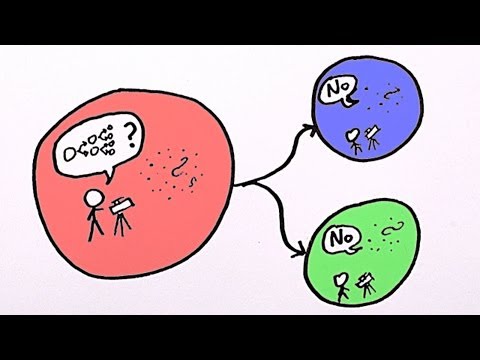
So, imagine you’re sitting on your couch, binging your favorite show. You spill your drink everywhere—total disaster! But what if, in another universe, you didn’t spill a drop? Or, like, maybe you decided to dance instead of sit?
Crazy to think about, right? Well, that’s kind of what parallel universes are all about. It’s this mind-blowing idea that there might be countless versions of ourselves out there, living different lives based on the choices we make—or don’t make.
These alternate realities are part of something called the Many Worlds Hypothesis. Sounds sci-fi-ish and a bit wild if you ask me! But seriously, it’s not just for movies or books; it’s a real concept that scientists have been pondering for ages.
So let’s take a little journey through these parallel universes together. You’ll see how they could change our understanding of reality—and maybe even your next snack time choice!
Exploring the Hypothesis of Parallel Universes: Implications and Insights in Modern Science
So, let’s chat about the mind-boggling idea of parallel universes—you know, those worlds that exist alongside our own. It sounds like something straight outta a sci-fi movie, but bear with me! The concept comes mainly from something called the Many Worlds Hypothesis, which basically suggests that every time we make a decision, the universe splits off into different branches. Like, if you choose to eat pizza instead of a salad for lunch today, there’s another universe where you went with the salad. Wild, right?
Now, diving a little deeper: this theory isn’t just about choices; it has some serious implications for quantum mechanics. You see, in quantum physics, particles can exist in multiple states at once until they’re observed. So when you look at an electron, it “decides” on a position or state. But according to the Many Worlds Hypothesis, instead of making just one choice, all potential outcomes happen simultaneously in different universes! Isn’t that mind-blowing?
To help visualize this idea better, think about a tree. Each branch represents a different outcome or decision point—where things could’ve turned left instead of right. On one branch you’re an astronaut; on another, you’re living your best life as a cat café owner!
But here’s where things get really interesting: This hypothesis raises all sorts of questions about existence and reality. If there’s an infinite number of universes out there—some similar to ours and maybe even some where dinosaurs never went extinct—what does that mean for us? Are we special? Do our choices matter if everything is happening somewhere else? It kind of makes your head spin!
And then there are the implications for science and technology! Researchers are investigating ways to test this hypothesis. Sure, it’s tricky because we can’t pop over to another universe to check things out directly (like who wouldn’t want to meet their alternate selves?). But scientists are looking into quantum entanglement, which is when particles become linked so that the state of one instantly influences the state of another—even across vast distances.
Here’s another twist: some physicists think parallel universes might help explain certain cosmic mysteries like dark matter and dark energy—the unseen forces that seem to fill our universe but can’t be directly observed. They theorize these forces could be influenced by other parallel universes interacting with ours.
So yeah! The Many Worlds Hypothesis remains controversial and somewhat speculative (hey, who doesn’t love some healthy debate?), but it opens our minds to possibilities we’ve only dreamed about—or read in comic books.
The fun part? As we explore these ideas further through research and discussion (and maybe some late-night conversations), we keep questioning what reality truly means. And who knows? You might find yourself imagining how life would have been if you’d made different choices along your journey.
In case you’re still curious about what all this means for us humans living here right now: It reminds us that choices shape our paths while also hinting at an incredibly vast and mysterious cosmos filled with endless possibilities and alternate selves waiting just beyond our grasp!
Exploring Stephen Hawking’s Insights on Parallel Universes: A Scientific Perspective
So, let’s talk about **parallel universes** and what Stephen Hawking had to say about them. It’s a mind-bending topic that can really make you rethink reality, you know?
Hawking, a brilliant theoretical physicist, did some groundbreaking work related to **black holes**, cosmology, and the nature of the universe. He was all about exploring ideas that sound like they belong in a sci-fi movie. One of those ideas is the **Many Worlds Hypothesis**, which suggests that every time we make a decision or something happens in our universe, it spawns alternate realities. Like, if you chose chocolate ice cream instead of vanilla last Saturday, there’s an alternate universe where you totally went with vanilla. Pretty wild, right?
Now, the thing is: this concept leads us to think about how many versions of ourselves might be out there—each living different lives based on different choices. It kind of blows your mind to imagine yourself as a superhero or maybe even an intergalactic traveler in some other universe!
Hawking’s insights highlighted that these parallel universes could help explain certain aspects of quantum mechanics—the field that studies the tiniest particles in existence. Quantum mechanics is weird and sometimes contradictory; particles can exist in multiple states at once until measured. This ties into the idea of parallel universes because each possibility may exist in its own separate universe.
Let’s break down some key points:
Hawking’s work made waves because it encourages us to think outside the box, or maybe outside our universe altogether! It raises questions about reality and existence—what do we really know? Sometimes I ponder if there’s another version of me who decided to become an astronaut instead of writing about them!
While some scientists are skeptical and urge caution with these theories—arguing there’s not enough empirical evidence—they certainly open up fascinating discussions around existence itself.
So yeah, exploring these ideas isn’t just brain candy; it forces us to consider our place in this vast cosmos and if there’s more out there than just what meets the eye—even if it’s just theoretical for now!
Exploring the Intersection of Faith and Science: What Does God Say About Parallel Universes?
Okay, so let’s talk about this wild idea: parallel universes. It sounds like something out of a sci-fi movie, right? But in the realm of physics, it’s a serious topic. The basic thought is that there might be other worlds out there—kind of like different versions of our own universe. Some folks even call it the Many Worlds Hypothesis, and it’s deeply tied into quantum mechanics, which is like the weird underbelly of physics.
The Many Worlds Hypothesis suggests that every time there’s a quantum event—a point where things are uncertain—universes split off. So if you had a decision today about what to eat for lunch, there could be another universe where you picked something totally different. Mind-boggling, huh? It kinda challenges our understanding of reality.
Now, onto the juicy part: faith and science. It’s often seen as a battle between belief systems and scientific reasoning. But many people think these two can coexist peacefully. For instance, theologians might argue that God created the universe with such complexity that parallel realities could exist within His grand design.
- C.S. Lewis, a famous author, believed in multiple dimensions—that there could be layers to reality beyond what we perceive.
- Then there’s St. Augustine, who spoke about God’s infinite nature. If God is infinite, who’s to say He can’t create infinite worlds?
- A lot of scientists who are also spiritual think exploring these ideas doesn’t undermine faith; rather it expands our understanding of creation.
You know how sometimes when you look at the stars and wonder about life out there? Imagine if those thoughts led to deeper questions about existence itself! That’s *exactly* what some physicists and theologians are doing with parallel universes.
If God created everything—including potential alternate realities—then it opens up fresh conversations about His nature and our universe. Like, how does free will fit into this? In one universe you chose pizza for lunch; in another, you went for sushi! Does that mean every choice ever exists simultaneously somewhere? Crazy thought!
The thing is, discussions around parallel universes and their intersection with faith aren’t just intellectual exercises; they can be deeply personal too. People find meaning or reassurance in these explorations of existence beyond our single reality; others may feel threatened because it challenges their viewpoints.
So here we are at this intersection: science gives us tools to explore what’s possible while faith provides insights into why those possibilities matter on a spiritual level. Whether you’re team science or team faith—or somewhere in-between—it’s fascinating to ponder what all these theories mean for us as humans trying to make sense of our place in the cosmos.
No easy answers here! But embracing questions like these can lead us down paths full of discovery—both scientifically and spiritually!
So, parallel universes, huh? It’s one of those topics that can make your head spin and your imagination run wild. Picture this: you’re sitting in a coffee shop, sipping on your favorite drink. Suddenly, you think about how life could’ve turned out differently—if you had taken that job offer in another city or said yes to that spontaneous trip with friends. Now, imagine there’s a universe where every decision you ever made led to a completely different life. Seriously! That’s the essence of the many worlds hypothesis.
Let’s break it down a bit. Basically, this idea suggests that every time we make a choice, like whether to hit snooze on our alarm or get out of bed (you know the struggle), the universe splits into multiple branches. Each branch represents a different outcome. So there’s a version of you who got up early, and another who stayed in bed for a glorious extra 15 minutes of sleep. Pretty mind-boggling, right?
I remember chatting with my friend one night about this whole concept while we were stargazing. We were lying on the grass, contemplating whether aliens exist or if there are other versions of us living wildly different lives out there—maybe one where I’m an astronaut and she’s an intergalactic chef! It was such a silly idea at first, but then it turned into this deep discussion about choices and fate. The night sky felt so vast and full of possibilities; it kind of mirrored how limitless our imaginations can be when we think about parallel universes.
But here’s where it gets really intriguing: Scientists have been exploring these concepts through quantum mechanics—the branch of physics that deals with tiny particles at atomic levels. Quantum entanglement and superposition suggest that particles can exist in multiple states simultaneously until they’re observed; it’s like they’re waiting for someone to peek! Could this be evidence for all those alternate realities? Who knows!
Sometimes I find myself pondering if these parallel realities have their own versions of us living lives full of what-ifs and alternate timelines. What if there’s a universe where everyone is super-powered? Or one where dinosaurs never went extinct? Not sure if I’m explaining myself well… but the mere thought adds layers to our understanding of existence.
Of course, all this is still theoretical; nobody’s exactly hopping between universes anytime soon (wouldn’t that be cool?). But thinking about them challenges our perception of reality itself—it pushes us to explore ideas beyond what we see every day.
So yeah, whether you believe in multiple realities or not, it adds some spice to life’s conversations—at least when you’re having late-night chats with friends under the stars! Embracing the unknown keeps things interesting because who doesn’t love entertaining the possibility that somewhere out there is another version of you living out what could’ve been?