You know that feeling when you’re lying on the beach, soaking up the sun, and you think to yourself, “Man, I wish I could just bottle this sunshine for later”? Well, turns out, we kinda can!
Solar panels are like those little bottles, capturing sunlight and turning it into energy. But here’s the twist: not all solar panels are created equal when it comes to efficiency. Some are just better at catching those rays than others.
Imagine trying to catch a football with one hand while juggling a bunch of groceries—kinda tricky, right? That’s what solar panels can feel like when they’re not set up right. So let’s chat about how tweaking these connections can seriously amp up their game.
Trust me—it’ll be worth it!
Exploring the Impact of Parallel Solar Panel Connections on Current Generation
It’s wild how solar panels can transform sunlight into energy, right? So, let’s chat about parallel connections and how they affect the current generation in solar setups.
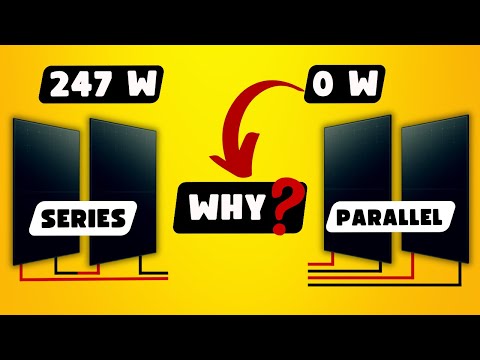
When you connect solar panels in parallel, all those positive terminals are linked together, and the same goes for the negative ones. This configuration can be super powerful for a couple of reasons.
First off, when you link panels this way, the voltage stays the same while the current gets boosted. You know how it is when you have several friends pitching in to buy that one big pizza—more people means more slices! Well, with solar panels, more panels mean more current (that’s like the slices) flowing into your system. So if one panel is a bit shaded or dirty and generates less current, the others can still do their thing without it dragging everyone down.
This leads us to another point: reliability. Picture this: you’re out camping and your buddy forgets to bring marshmallows for that fire pit. If only one panel in a series setup underperforms, it can mess up the entire flow of energy. But with parallel connections? The other panels keep chugging along as usual! It’s like bringing extra snacks on that camping trip; you’re covered no matter what!
Then there’s efficiency to think about. If each panel has a different output, connecting them in parallel allows you to harvest more power overall. For example, let’s say you have three panels: one does 100W under perfect conditions while another might only manage 60W due to shade. When connected in parallel:
- The total system can draw from all available currents.
- You still get a pretty solid output overall.
- This makes it easier to match energy demands with available generation.
But here’s something important: when setting up your system this way, ensuring all your panels are similar in type and capacity can make a big difference. It helps maintain balance and prevents any lopsided performance issues.
Also, think about wiring! Using thicker cables helps minimize losses due to resistance because remember—current travels down those wires like a marathon runner needing good shoes. If they’re too thin or too long? Yeah… expect some serious drag on that current output!
And hey, let’s not forget about safety! In case of a short circuit in one panel while they’re linked up together (that would be bad news), having them wired parallel could limit potential damage since other panels aren’t directly affected.
In summary? Parallel connections can really enhance solar panel efficiency by boosting current output while keeping things reliable and safe—just like always having enough snacks on hand when you’re out with friends!
Exploring the Advantages of Parallel Solar Panel Connections in Renewable Energy Systems
So, let’s get into the nitty-gritty of parallel solar panel connections in renewable energy systems. First off, you might wonder why we even care about how panels are connected. Well, it makes a huge difference in how well they work together and how much energy they produce.
When you go with parallel connections, the panels are wired alongside each other instead of one after the other, which is known as series connection. There are several perks to this method that can really boost the performance of your solar array.
1. Consistent Output
You know how sometimes clouds roll by and cast shadows? In a series connection, if one panel is shaded, it can drag down the performance of all the others since they rely on each other for current flow. But with parallel connections, each panel operates independently. So a little shade won’t knock out your system—one shaded panel just produces less while the others keep chugging along.
2. Increased Reliability
If something goes wrong—like a panel gets damaged or a connection fails—the impact is way less severe with parallel arrangements. In a series setup, a problem with one panel can bring down the whole system. Parallel connections isolate issues better. It’s a bit like having separate lanes in traffic: if one person gets stuck, everyone else can keep moving.
3. Flexibility in Expansion
Thinking about adding more panels later? With parallel connections, it’s generally easier! You can just add another panel or two as needed without having to reconfigure everything else that’s already set up. You follow me?
4. Better Performance in Varied Conditions
Different angles and orientations play a big role in solar efficiency too! If your panels are all facing different directions or have varying tilt angles (which pretty much happens everywhere), it doesn’t mess things up too much if they’re connected in parallel. Each one does its own thing based on how much sunlight it’s getting.
Now don’t get me wrong—there are some challenges with parallel arrangements too! For instance, wiring might be more complicated and you’ll need to use fuses or circuit breakers for safety because different panels could produce varying currents.
5. Cost-Effectiveness Over Time
Although setting up parallel systems may seem pricier initially due to extra cabling and components needed for protection, over time it often pays off with lower maintenance costs and better efficiency when operating under real-world conditions.
So there you have it: when considering renewable energy systems using solar panels, parallel connections offer some serious advantages. They enhance reliability and flexibility while mitigating performance issues commonly found in series setups.
Thinking about going solar? Just remember—how you connect those panels matters way more than you might think!
Evaluating the Impact of Parallel Connections on Solar Panel Efficiency: Advantages and Disadvantages
So, you’re curious about how parallel connections affect the efficiency of solar panels? Let’s break it down in a way that makes sense.
First off, when you connect solar panels in parallel, they’re like a group of friends deciding to play the same game together. Each panel gets the same voltage, but their currents combine. This setup can actually help increase total output under certain conditions.
Now, let’s get into some of the advantages of parallel connections:
- Consistent Performance: If one panel gets shaded or damaged, it doesn’t drag down the performance of the others. This is huge for maintaining a steady output.
- Improved Output: If some panels perform better than others due to sunlight differences—like if one faces east and another west—they all contribute their maximum potential.
- Simpler Installation: You can often connect panels more easily in parallel, especially if space is tight.
But hold on! There are also some disadvantages to consider:
- Circuit Complexity: Parallel connections might require more complicated wiring setups. More wires mean more chances for errors or failures.
- Inequality Effects: If one panel consistently underperforms, it could lead to inefficiencies across your setup. Any imbalance can be problematic.
- Higher Current Load: The combined current can be higher than expected, which may necessitate thicker wires or specific types of circuit breakers to handle that load safely.
Remember that anecdote I mentioned earlier? Well, once I helped a friend install solar panels on her roof. We connected them in parallel since her house had some shady trees nearby. At first glance, everything looked great! But then we noticed that one panel was always getting less light. Because we chose parallel connections instead of series ones, we were relieved to see that her system still performed well overall.
So basically, whether you go for parallel connections really depends on your specific circumstances and what you’re hoping to achieve with your solar setup. Balancing efficiency with practicality is key! Hopefully this helps you figure out if it’s right for you!
Alright, let’s chat about solar panels for a bit. You know how they’re popping up everywhere? It’s pretty cool to think about harnessing sunlight to power our lives, right? But here’s the kicker—how do we make them even better at doing their job? That’s where parallel connections come into play.
So, imagine you’ve got a bunch of friends all trying to take a group photo. If they stand in a line, some might get cut off or end up looking squished. But if you spread them out and connect them side by side, everyone fits beautifully into the frame! In solar panel terms, that’s basically what parallel connections do. Instead of wiring them one after another in series (which can be kind of limiting), you wire each panel separately but still connect them together. This helps improve efficiency and keeps the energy flowing smoothly.
I remember visiting my aunt’s house one summer. She had this array of solar panels on her roof, and I was curious about how much energy they really produced. To be honest, they were great when the sun was shining bright! But on cloudy days? Not so much. If she had set them up with parallel connections, though, she could’ve kept getting a good amount of energy even if one or two panels weren’t performing their best because of shade or dirt or whatever.
Basically, when we connect solar panels in parallel, we can avoid that annoying “bottleneck” effect that happens when one panel underperforms and drags down the rest. Each one acts kinda like its own little superstar! That’s super important for maximizing energy harvest throughout the day.
Of course, there are trade-offs too—like installation complexity and more wiring involved—but isn’t it cool how just changing how we connect these panels can have such an impact? It feels like every little decision in renewable energy can ripple outwards and make a difference in our homes—and beyond.
At the end of the day, enhancing solar efficiency isn’t just about technology; it’s also about rethinking our approach and finding smarter ways to work together—kind of like how we all need each other to shine brighter!