So, picture this: you’re at a carnival with your friends, and there’s this huge spinning wheel of fortune. You give it a spin, hoping it’ll land on the big prize. But what if I told you that the way we think about chance and outcomes in experiments is kinda similar?
Welcome to the world of two-tailed hypotheses. It sounds fancy, right? But it’s really just a way scientists figure out if something is happening or not. Like flipping that wheel and wondering if you’ll hit the jackpot—or just get a rubber ducky.
In research, sometimes things aren’t just black or white. It’s all about possibilities. Think of it like looking for hidden treasure in both directions: you wanna know if things are better or worse than expected!
So, let’s break down what all this means. Get comfy, grab your favorite snack, and let’s chat about how this concept pops up in science and beyond!
Understanding the Importance of Two-Tailed Tests in Scientific Research: A Comprehensive Guide
Understanding Two-Tailed Tests in Scientific Research
So, imagine you’re a scientist working late at night. You’ve just come across some data that could change everything. But wait! Before you jump to conclusions, there’s this thing called a two-tailed test. It’s super important in research, and I’m here to explain why.
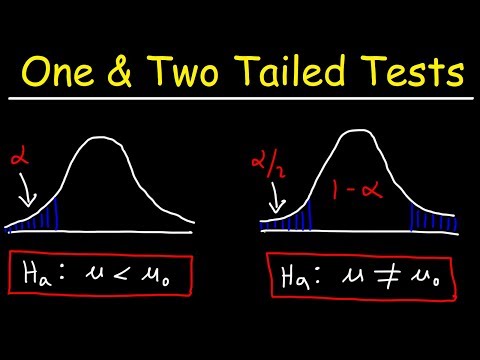
A two-tailed test helps you figure out if there’s a significant difference from what you expected, whether that difference goes one way or the other. For instance, let’s say you’re testing a new medication. It might be better than the current one or worse! A two-tailed test looks at both possibilities.
Why is this crucial? Well, it means you’re not missing out on any potential effects. If you only looked one way—let’s say just for improvement—you could totally miss when things go south. That would be like only watching one side of a coin; you won’t see what else it can show.
When researchers set up their hypotheses, they usually have two types: null and alternative hypotheses. The null says there’s no effect or difference (think: “the medication does nothing”), while the alternative suggests there is one (like “the medication actually works”). Here’s where the two-tailed test comes into play:
- Testing Both Directions: A two-tailed test evaluates whether results are significantly different from what’s expected in either direction.
- P-Values: You’ll be calculating p-values to see if your results are less than 0.05 (or 0.01 for stricter tests). If they are, your findings are considered statistically significant.
Now, let me tell you an anecdote that sticks with me: A friend of mine was knee-deep in his biology research on plant growth. He thought his special fertilizer would work wonders but ended up getting results that showed the plants grew shorter instead! If he’d only looked for increase, he might have missed that important finding entirely.
It gets even juicier when we talk about real-world applications. In fields like medicine, psychology, and social sciences, it’s vital to ensure findings reflect true effects—not just flukes or biases from only looking one way.
Of course, using a two-tailed test doesn’t mean it’s always the right choice. Sometimes researchers might go with a one-tailed test when they have strong reasons to believe results will only go one way—maybe because previous studies suggested so.
In summary, two-tailed tests are essential for robust scientific research because they allow exploration in both directions of possible outcomes. This ensures we capture all relevant information and avoid overlooking anything crucial—like my friend’s unexpected plant growth results! So next time you’re analyzing data or reading papers, keep your eye out for those two tails—they hold more than just statistical significance; they hold the keys to deeper insights!
Understanding Two-Tailed Tests in Scientific Research: Key Examples and Applications
Sure, let’s break this down and make it simple to grasp.
Two-tailed tests are a fundamental concept in scientific research when you’re looking at hypotheses. Basically, they help you figure out if there’s a significant difference between two groups or conditions.
When you’re using a two-tailed hypothesis test, you’re checking for the possibility of an effect in both directions. So, if you’re testing a new medication, for example, you want to know not just if it works better than the existing treatment but also if it might actually perform worse. That’s pretty much what makes it “two-tailed.”
To put it simply, the null hypothesis (H0) usually claims that there’s no effect or difference. The alternative hypothesis (H1) says that there is one—either greater than or less than what you’re comparing against.
Here’s the deal: when performing your test, like using a t-test or z-test, you calculate something called a p-value. This tells you how likely your observed results are under the null hypothesis. In two-tailed tests, if your p-value falls below your significance level (commonly set at 0.05), you reject H0.
Let’s say you’re running experiments on plant growth with different fertilizers and want to see if one is either better or worse than another. If your calculated p-value is 0.03, that means there’s only a 3% chance of observing such an effect (or more extreme) under the null hypothesis—pretty strong stuff! Since 0.03 is less than 0.05, you’d reject H0 and say there’s a significant difference in growth.
Now, why use two-tailed tests? Well:
- Flexibility: They give room for unexpected outcomes.
- Simplicity: You don’t have to decide beforehand which direction to expect.
- Broader insights: They provide a complete view of potential effects.
Think about how important this can be in fields like medicine! If researchers are testing new treatments for diseases, they really want to ensure they won’t overlook anything harmful or beneficial by only looking in one direction.
By contrast, one-tailed tests only check for an effect in one direction—like just testing if something works better without worrying about if it’s worse.
In short, when you’re designing experiments or analyzing data and considering hypotheses—that’s where two-tailed tests shine! They keep things fair and balanced by accounting for possibilities on both sides of the equation.
So next time you’re sinking into some research data and trying to make sense of those numbers, remember this approach—it could very well guide your findings toward solid conclusions! Keep asking questions and exploring—all while knowing that science doesn’t always have clear-cut answers!
Understanding the Importance of Two-Tailed Tests in Scientific Research: When and Why to Use Them
Alright, so let’s chat about two-tailed tests in scientific research. You might be wondering, “Why should I care?” Well, the thing is, they play a huge role in how we interpret data and make sense of uncertainty in our results.
A two-tailed test is a type of hypothesis test used to determine if there’s a statistically significant difference between two groups. Unlike one-tailed tests, which only look for differences in one direction (like checking if something is greater than or less than), two-tailed tests check for differences in both directions. So, they’re pretty versatile.
Imagine you’re testing a new medication. You wanna know if it works better than an existing treatment. In this case:
- If you only check if the new drug is **better**, that’s a one-tailed test.
- If you want to see if it’s either **better or worse**, then you’re looking at a two-tailed test.
This flexibility is super important because science isn’t always so clear-cut. There are times when results can swing either way! Think about it like this: let’s say your experiment unexpectedly shows the new drug actually makes patients feel worse instead of better. If you had only done a one-tailed test, you’d miss that crucial information!
When should you use them? Well, typically when you’re not sure which direction your results will go. That uncertainty means you want all bases covered! Two-tailed tests can also help minimize bias because you’re not just looking for support for your preferred outcome—you’re open to any result.
Another cool thing about these tests: they provide stronger evidence against the null hypothesis (that’s the idea that there’s no effect). Since you’re considering both sides, even small changes could be significant enough to conclude something interesting happening!
It’s also worth noting that when conducting a two-tailed test, you’ll need more data to achieve the same level of significance as you would with a one-tailed test. But hey, good research usually requires solid data anyway!
In summary, using two-tailed tests means being thorough and open-minded about what your data might show. It’s like saying you’re ready for anything—just like life throws unexpected surprises at us daily! So next time you’re setting up an experiment, think carefully about whether a two-tailed approach suits your goals.
When we talk about science, there are all these cool things that pop up—like the two-tailed hypothesis. So, let’s break it down a bit. Imagine you’re flipping a coin. A two-tailed hypothesis is kind of like betting on both heads and tails. You’re saying, “Hey, I don’t really know what will happen; it could go either way!”
This kind of approach is super useful in research. You’re not just looking for something to prove your point; you’re open to finding out something unexpected too. Like, when scientists test new drugs, they might think the new one is better than the old one (that’s a one-tailed hypothesis), but with a two-tailed hypothesis, they’d also consider if it’s worse or if there’s no difference at all.
I remember this one time when my friend was trying to find out if colder weather made people less cheerful. He set up this whole study and started collecting data from folks outside in winter versus summer. He expected that winter would drag people’s moods down. But then he realized he had to be open to the idea that some people actually liked winter! Some folks talked about how cozy blankets and hot cocoa made them feel good during those chilly months.
So yeah, that’s what makes the two-tailed approach so interesting—you don’t just chase after your expectations; you see where the evidence takes you. It allows for more flexibility in thinking and opens doors to discovering new angles on problems.
But here’s the catch: working with a two-tailed hypothesis can be trickier too! It often means you need a bigger sample size or more robust data since you’re covering all bases—like double-checking your work in math class instead of just answering one question.
In scientific research, being open-minded like this can lead to unexpected breakthroughs or challenge existing beliefs. So when it comes down to it, whether you’re flipping coins or studying complex diseases, embracing uncertainty can take you places you’d never expect.