You know what’s wild? Algebra can be a total lifesaver, especially when you’re knee-deep in science stuff. Like, I remember back in school, I was swirling around formulas and graphs, feeling all lost. But then I stumbled on algebraic fractions, and it was like a lightbulb moment.
So, what’s the deal with algebraic fractions anyway? Well, they’re not just some boring math concept that lives on the blackboard. Nope! They’re like little superheroes in the world of scientific calculations.
Think about it: every time you dive into physics or chemistry, those fractions pop up everywhere! It’s almost like they’re lurking behind the scenes, ready to jump in and save your calculations from chaos. Seriously, understanding how to work with them can make or break your experiment results.
Join me as we unravel the fun world of algebraic fractions and see how they play such a crucial role in science. You’ll be amazed at how something that seems tricky can turn into your best buddy when tackling calculations!
Exploring the Role of Fractions in Scientific Research and Analysis
So, let’s talk about **fractions**. Seriously, they’re everywhere in science! You may not realize it, but whether you’re measuring, analyzing data, or even just doing calculations, fractions play a big role.
First off, you got your simple fractions like 1/2 or 3/4. These guys can show proportions. For instance, if you’re looking at a pizza and one person eats half while two friends eat the rest together—well, you’ve got ratios like 1:2 there. This can help compare things quickly without needing to dive deep into complex numbers.
Now, onto something a bit more complex: **algebraic fractions**. These are the ones that might have variables in them—like (x + 1)/(x – 2). You encounter these mostly in scientific equations. Say you were studying how substances mix together in chemistry; you’d need to manipulate these algebraic fractions to balance your equations properly. That’s crucial!
Also, think about calculations with measurements. A researcher might be working with **concentrations of solutions** where they express parts per million (ppm) using fractions too. If you’re mixing solutions and need a concentration of 0.5%, that’s literally saying you have half of one part for every hundred parts of the solution.
There are also cases when scientists use fractions for statistical analysis. Imagine this: during a study involving patient responses to a specific treatment—the results could show that maybe 3 out of 5 patients improve after treatment. Here again is where fractional representation shines.
And let’s not forget about their connection to units of measurement! Scientists often deal with conversions between units that use fractional relationships too! If you’re calculating speed (like meters per second), you’d have to convert distances and time into compatible fractions—no big deal until you’re racing against time!
Working out these algebraic and regular fractions can sometimes feel overwhelming but think back to math class—the basics really do lay the groundwork for tackling scientific problems later on. It connects arithmetic with analytical skills needed during research.
So yeah, whether you’re measuring stuff in physics or analyzing data in biology experiments, fractions are quietly but definitely holding everything together! It’s pretty cool when you think about it—fractals leading us through complexity!
In summary:
- Fractions help in expressing proportions clearly.
- Algebraic Fractions assist in manipulating equations.
- They play an important role in measurements, especially concentrations.
- Statistical analysis often relies on fractional data.
- Conversion between units uses fractional relationships extensively.
Who’s ever thought of how fundamental something as simple as a fraction can be? Pretty mind-blowing if you ask me!
Understanding Algebraic Fractions: A Key Concept in Scientific Problem Solving
Algebraic fractions, you know, they’re a bit like regular fractions but with letters thrown in the mix. They look like this: (x + 3)/(x – 2). Now, you might be thinking, “What’s the big deal?” Well, they’re super important for solving problems in science! Seriously.
Think about it: when scientists are working on experiments or calculations, they often need to simplify complex equations to see what’s happening. Here’s where algebraic fractions come into play. They help break down those complicated relationships between different variables.
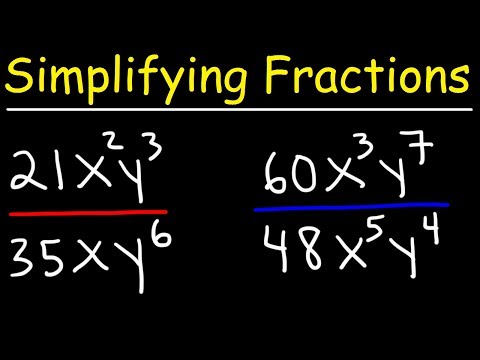
One of the first things you need to grasp is how to simplify these fractions. Just like with regular fractions, you want to reduce them as much as possible. So if you have something like (2x)/(4x), you can simplify it down to (1)/(2) by canceling out the common factor of 2x. Pretty handy!
Another key aspect is addition and subtraction. When you’re adding or subtracting algebraic fractions, you need a common denominator—just like with plain old numbers. So if you’ve got (1)/(x) and (1)/(x + 1), you’d find a common denominator of x(x + 1). This allows you to combine them into one fraction easily.
And don’t forget about multiplication and division! With algebraic fractions, it’s actually simpler than addition or subtraction because all you gotta do is multiply across the numerators and denominators. For example: if you’re multiplying (2)/(3) by (4)/(5), you’d get a neat little product of (8)/(15). Easy-peasy!
These skills are literally everywhere in scientific problem-solving. Think about physics equations—like finding velocity or acceleration—where quantities often depend on different variables represented by letters.
Let me take a moment here to share a little story that might hit home. Picture me struggling with my chemistry homework late at night during college. I was faced with an equation involving concentrations that felt totally overwhelming. I remember my friend telling me to break it down using algebraic fractions—it was like a light bulb went off! Once I simplified and combined terms using those concepts, everything clicked into place.
So yeah, understanding algebraic fractions can really unlock doors for you in science fields—from physics and chemistry to biology and engineering! You see how useful they are?
In summary:
- Simplifying: Reduce your expressions for clarity.
- Add/Subtract: Use common denominators.
- Multiply/Divide: Just multiply across!
By getting comfortable with these ideas, you’ll be way more prepared for any scientific challenges that come your way!
Real-Life Applications of Algebraic Equations in Science: Bridging Mathematics and Everyday Problem Solving
Algebra, you know, isn’t just for those late-night study sessions in high school. It pops up in real life all the time, especially when we’re talking about scientific calculations. And that’s where algebraic equations come into play, especially those nifty little things we call algebraic fractions. They help bridge that gap between math and everyday problem solving!
Let’s start with a simple example. Imagine you’re baking cookies and you need to adjust the recipe. If the original calls for 2 cups of sugar but you want to make half the batch, you’ll need to use algebraic fractions. You just take 2 and multiply it by 1/2, which gives you 1 cup of sugar. See? Math making life easier!
In science, algebraic equations help us solve stuff like chemical mixtures or even physics problems involving speed and distance. For instance:
- Chemistry: Let’s say you have a solution where you need to mix two liquids with different concentrations. You could set up an equation like this: (C1 * V1) + (C2 * V2) = Cfinal * Vfinal. Here, C means concentration and V means volume.
- Physics: Consider the concept of speed. If you’re calculating how far a car travels at a certain speed over time, you’d use the formula distance = speed × time. What if that car speeds up? You can express speed as an algebraic fraction! If it doubles its speed after every minute, your equation starts looking pretty interesting.
There’s also something magical about how these equations fit together neatly when they’re simplified—like putting together a puzzle! In real-life situations, each equation is kind of like a little roadmap guiding us toward solutions.
A neat trick happens when scientists deal with units of measurement—yeah, fractions matter there too! Think about converting miles per hour to meters per second or something more complicated like grams per liter into moles per liter for chemistry experiments. That requires some algebraic finesse!
You might be surprised by how often these concepts come up in fields like engineering or environmental science too! Engineers use algebraic formulas to determine materials needed for construction without wasting resources. Environmental scientists rely on them for calculating pollutant concentrations in water samples.
The great thing is that learning these skills doesn’t just help in classrooms but also provides tools you can apply throughout your life—like figuring out how much paint to buy for a project or understanding your monthly budget better!
So yeah, next time you’re faced with an equation that looks daunting at first glance, remember it’s more than just numbers on paper; it’s about solving real-world problems effectively and efficiently!
You know, algebraic fractions might seem boring at first, but they’re actually super important in science. I remember back in school when I was trying to figure out why we even needed to learn about these things. One day, my chemistry teacher was explaining a complex formula involving molarity and concentration. Suddenly, it clicked for me: these fractions were everywhere!
Basically, algebraic fractions are like regular fractions but with variables, you know? So instead of just dealing with numbers like 1/2 or 3/4, you might see something like (2x)/(3y). What happens is that they help us describe relationships between different quantities. For instance, if you’re calculating the speed of something in physics or the rate of a reaction in chemistry, these fractions come into play.
And it’s not just about calculations. When scientists publish research or work on experiments, they need to communicate their findings precisely. This is where algebraic expressions can be your best friend—allowing them to express complicated ideas quickly and without confusion. It’s like having a shorthand that makes discussions clearer.
But here’s the kicker: sometimes people get all tangled up with these algebraic fractions because they can be tricky! You’ve got to remember how to simplify them and find common denominators—kind of like putting together a puzzle where some pieces don’t seem to fit at first.
For example, let’s say you have an equation from physics that deals with force and mass, involving gravity or friction—if you’ve got variables and constants jumbling together in an equation filled with fractions, it’s easy to feel lost! Yet those same equations help us predict outcomes accurately and understand the world better.
So yeah, while algebraic fractions might not top anyone’s list of fun topics to chat about over coffee, they sure play a crucial role behind the scenes in scientific calculations. It’s amazing how a little math can unlock big ideas!