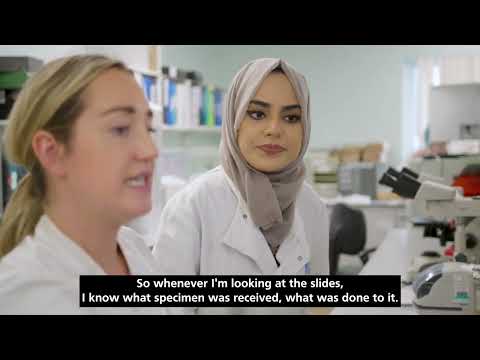
So, here’s a fun little story: I once thought pathology labs were just places where they kept a bunch of weird-looking slides under a microscope. Like, what’s the deal with those, right? Turns out, they’re way cooler than I ever imagined!
Pathology is basically the detective work of medicine. You know, like when you see a mystery movie and the hero has to piece together clues? That’s what pathologists do with our cells and tissues.
Every time we get sick, these lab wizards figure out what’s going on inside our bodies. It’s like they have a secret power of diagnosis. And guess what? Innovations in these labs are changing the game completely!
From fancy tech to new methods of analysis, it’s wild how much they’re shaping modern medicine. So grab a snack, and let’s unravel this fascinating world together!
Leveraging Artificial Intelligence in Pathology: Innovations and Impacts on Diagnostic Science
So, let’s chat about artificial intelligence (AI) and its role in pathology. You might be asking: what does that even mean? Well, basically, pathology is all about understanding diseases. It involves examining patient samples like blood or tissue to figure out what’s going on in their bodies. And AI? It’s like having a super-smart assistant that can help pathologists do their jobs more efficiently.
Now, the way AI works in pathology is pretty cool. Imagine you’re trying to identify specific features in a massive pile of tissue samples. That’s where AI steps in. It can process tons of images way faster than any human could, scanning for things like cancer cells or other abnormalities.
Here are some of the major innovations we’re seeing with AI in pathology:
- Image analysis: AI algorithms can analyze histopathology slides—basically, those super detailed images of tissues—and help identify patterns that might indicate diseases.
- Predictive analytics: By analyzing historical data, AI can predict how a disease might progress based on patterns observed in past cases.
- Automated reporting: Instead of writing long reports manually, AI can generate initial reports based on its findings, saving time for doctors.
But it’s not just about speed; it’s also about accuracy. Pathologists are trained professionals, but even they can miss things sometimes—just like when you might overlook something tiny while reading a book. But an AI system? It looks at every detail without getting tired! For example, studies have shown that some AI tools can match or even exceed human accuracy in detecting breast cancer from biopsies.
Now here’s where it gets really interesting: imagine if your doctor could combine their expertise with this technology! They bring the human touch—understanding context and nuance—while the AI handles all those tedious details and calculations.
It’s not all sunshine and rainbows though. There are challenges ahead. For one, there’s the issue of trust. Some pathologists might be hesitant to rely on machines for critical decisions. Plus, if an algorithm makes a mistake, who’s responsible? That brings up some serious ethical questions we need to think through.
Also, implementing these technologies isn’t cheap or easy—hospitals have budgets and staff training to consider. But when you see how much it could change patient outcomes for the better? It makes a strong case for pushing forward.
In my experience visiting labs that use these innovations firsthand, I remember chatting with a young pathologist who said how much less stressed she felt knowing she had this tech at her side—like having an extra set of eyes watching her back!
So yeah, leveraging artificial intelligence in pathology is shaking things up big time! From improving diagnostic accuracy to streamlining workflows and helping doctors make better-informed decisions—it’s definitely transforming how we approach health care today!
Advancements in Automation Techniques for Histopathology: A Comprehensive PDF Guide
Alright, let’s dig into this topic of advancements in automation techniques for histopathology. It’s kind of a big deal in pathology labs, and there’s a lot to unpack here.
So, to start with the basics, **histopathology** is all about examining tissues under a microscope to understand disease processes. It’s crucial for diagnosing conditions like cancer. But dealing with tissue samples isn’t just about peering through a lens; it involves a ton of steps—like fixation, embedding, cutting, staining, and then finally analyzing the slides.
Now, here’s where automation comes in. With new technologies sprouting up faster than you can say “microscope,” labs are finding ways to speed up these processes while maintaining high standards of accuracy. Seriously, it’s like giving your lab a turbo boost!
- Slide Scanners: Imagine having a super-fast camera that captures everything on those slides. Automated slide scanners take high-resolution images of tissue sections quickly. This means pathologists can analyze many samples in less time.
- AI Software: Artificial intelligence is making strides in histopathology too! AI algorithms can learn to identify patterns in cells or tissues that might indicate disease. This tech is not just for show; it helps pathologists by providing second opinions or flagging suspicious areas that need more attention.
- Automated Staining Systems: These systems can perform repetitive tasks—like staining various samples—with precision and speed. Instead of spending hours manually staining slides (which is just plain tedious), automated systems ensure consistent results across the board.
- Sample Management Systems: Keeping track of sample labels and locations can get tricky when you have tons of them piled up. Automation tools help manage these samples efficiently by tracking their status and reducing human error.
- Data Integration Platforms: With all these advancements generating heaps of data, integrating this info into existing laboratory information systems becomes crucial. Automated platforms streamline data management so pathologists spend less time sorting through paper trails.
One key thing to remember is that while machines can do an impressive job at certain tasks, they’re meant to assist—not replace—human expertise. A story I heard once was from a friend who works as a pathologist; he recalled how an AI program flagged unusual cells on what turned out to be benign tissue—a false positive! So yeah, machines are great but human judgment is still irreplaceable.
You see how these technologies all combine? The goal is to enhance efficiency without sacrificing quality or patient care. By automating routine tasks, pathologists have more time to focus on complex cases where their skills truly shine.
In short, innovation in pathology labs through automation techniques is reshaping how we approach histopathology today—a shift towards faster diagnoses and improved treatment plans for patients everywhere! Keep an eye on this space; it’s evolving rapidly!
Advancements in Digital Pathology: Transforming the Future of Scientific Research and Diagnosis
Digital pathology is like giving a high-tech makeover to how we look at slides under a microscope. You know, those tiny glass slides packed with tissue samples? Well, instead of just squinting at them through the eyepiece in a lab, pathologists can now use digital imaging to analyze these samples with amazing precision.
So, what’s the big deal about digital pathology? It’s all about efficiency and accuracy. Pathologists can digitize tissue samples and then view them on screens. This means they can zoom in or out, adjust lighting—basically play around with the image to see every little detail. It’s a game changer for diagnosing diseases, especially cancers where every cell counts.
Now let’s break it down a bit more:
I remember hearing this story from a friend who works in a hospital lab. She talked about this one case where they were struggling to diagnose something unusual for weeks. Once they uploaded the scans digitally, an expert thousands of miles away spotted something critical almost immediately! That kind of teamwork? It really highlights how technology connects people—and saves lives.
But wait, there’s more! Digital pathology isn’t just about making lives easier for pathologists; it also enhances research opportunities. Scientists can access large archives of data (without needing to physically handle old slides), which opens doors for major breakthroughs.
And let’s not forget about education! Students can learn from rich visual resources without being stuck behind an eyepiece all day. They can explore various cases interactively while studying—talk about engaging!
In summary, advancements in digital pathology are reshaping how we approach scientific research and diagnosis by improving collaboration, enhancing accuracy with machine learning, enabling better data management, and creating richer educational experiences. It seems like we’re just scratching the surface here! The future looks bright for healthcare benefitting from all these innovations—the possibilities are endless!
You know, it’s pretty impressive when you stop and think about how far we’ve come in the world of pathology laboratories. I mean, not too long ago, things like a simple biopsy or a blood test involved so much guesswork. But now? Innovations are changing the game completely.
Take, for instance, those fancy machines that can analyze samples in a heartbeat—well, not literally a heartbeat, but you catch my drift. Instead of waiting days for results, some tests can give you insights in mere hours. That’s amazing for doctors and patients alike! I once had a friend who was on pins and needles waiting for test results; the anxiety was almost unbearable. But thanks to modern advancements, he’s one of those folks who can get answers faster than ever.
Another cool development is digital pathology. Imagine being able to send high-res images of tissues across the globe so that experts can collaborate seamlessly. It’s like having an international team of detectives working on your case! They can share their opinions and findings without ever meeting face-to-face. You see? That’s real science at work—sharing knowledge to save lives.
And then there’s genomics—the study of DNA—and how it plays into pathology now. We’re not just looking at cells under a microscope anymore; we’re diving deep into what makes those cells tick! By understanding genetic information, labs can provide targeted treatments that are way more effective than traditional methods.
But here’s the kicker: all this innovation doesn’t happen in isolation. It works best when scientists from various fields—like computer science and biology—team up. Collaboration is like the secret sauce that enhances everything!
Of course, it’s easy to get caught up in the techy stuff and forget about the human side of things—the patients who rely on these innovations to navigate health challenges. Every test result tells a story; each number has someone anxious behind it waiting for clarity.
So yeah, while innovations in pathology labs are pretty jaw-dropping on their own, they carry so much weight beyond just data or machines. They’re about improving lives and offering hope when it’s needed most! And isn’t that what science should be all about?