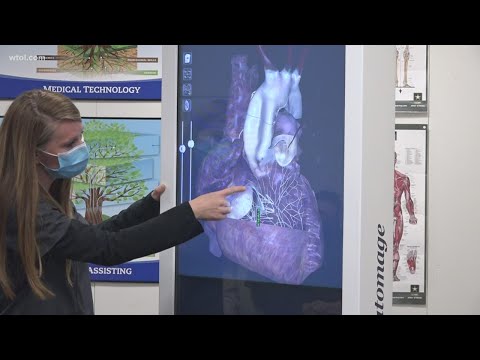
So, picture this: you walk into a classroom, and instead of rows of desks, there’s this giant touchscreen table with a lifelike 3D image of a human body on it. Yeah, that’s not sci-fi; that’s an Anatomage table!
I still remember the first time I laid eyes on one. It felt like stepping into a scene from a medical drama. My friend was standing there, gaping at the screen like it was the coolest video game ever. And honestly? It kind of is!
These tables are shaking up how we learn about science and anatomy, making everything way more interactive and engaging. No more dusty old textbooks—students can actually see and manipulate virtual organs in real time!
Imagine getting to explore the human body without needing to cut anything open… ridiculous, right? Well, that’s just scratching the surface of what these bad boys can do for modern science education.
Enhancing Science Education: The Anatomage Table’s Role in Visualizing Complex Body Systems
Enhancing Science Education is like bringing a whole new light to how we understand our bodies. You know, back in school, memorizing diagrams and textbooks could feel overwhelming. But imagine having a 3D interactive model of the human body right in front of you! That’s where the Anatomage Table comes into play.
This table is no ordinary piece of tech; it’s a digital cadaver that lets students explore intricate body systems in real-time. You can zoom in and out, rotate organs, and even peel back layers just like an onion! Just think about it—when was the last time you could see your own heart in 3D without going through surgery? Pretty cool, right?
- Visual Learning: Not everyone learns through reading or listening. Some of us need to see things to really grasp them. The Anatomage Table allows students to visualize complex structures instead of just memorizing them. It’s like learning a new game; seeing the moves helps you understand better.
- Engagement: Students today are used to interactive technology, so using something familiar makes learning more fun! When they can touch and manipulate what they’re studying, their interest often spikes. I remember my friend getting hooked on biology after using one during class—it turned into this amazing passion for medicine!
- Diverse Applications: This isn’t just for future doctors either! Anyone studying anatomy—whether it’s for nursing, physical therapy, or even art—can benefit from these tables. They bridge gaps between disciplines like science and art by showing how anatomy informs everything from healthcare to sculpture.
- Accessibility: Let’s be real for a second: not every school has access to cadaver labs. The Anatomage Table gives students opportunities they might not have otherwise. Everyone gets a chance to learn about their own biology without needing a physical body on hand.
The impact goes beyond high school or college lessons too! Imagine medical professionals continuing their education years down the line by revisiting complex cases using this technology—it enhances lifelong learning.
While it might seem pricey upfront for schools, think about the long-term benefits: better understanding leads to better care by future healthcare providers. Also, students leaving class with excited hearts instead of frustration? That’s priceless.
In summary, the Anatomage Table revolutionizes how we learn about our bodies and health sciences overall. It makes anatomy lessons sharp but accessible and engaging—a massive leap forward compared to traditional methods that sometimes left us bewildered rather than enlightened! So next time you’re in class, look out for tech that’s not just flashy but genuinely enriching education as we know it!
Exploring the Latest Advances in Anatomy: Breakthroughs and Innovations in the Science of Human Structure
So, anatomy is actually a pretty cool field that keeps evolving with new tech and ideas. If you’ve heard about Anatomage tables, they’ve been making waves in science education lately. Let’s break this down a bit.
Anatomage tables are like super fancy digital dissection tools. They allow you to explore the human body in 3D without the need for actual cadavers. It’s basically a video game for learning anatomy! You can zoom in, rotate images, and even see inside organs. Pretty neat, right? These tables use high-resolution images from real anatomical scans so that students can get a realistic view of the human body.
Now, think about those long hours spent memorizing diagrams in textbooks. I remember struggling with that back in school—trying to picture where everything fit! But with an Anatomage table, you can actually see how things look and work together. It makes a huge difference when you can interact with the structures directly. Learning becomes much more engaging, and retention improves significantly.
Another cool feature is the ability to simulate surgical procedures right on these tables. So imagine being able to practice operations virtually before stepping into the real thing! This gives students a taste of what it feels like without any risk involved. Schools are using this tech not just in medical programs but also in nursing and other health-related fields.
What’s really interesting is that these tables don’t just stop at human anatomy; they can display animal structures too! Think of it as expanding your knowledge while still keeping things relevant to your studies or career goals.
Plus, there’s another layer here: accessibility. Some students might not have easy access to cadaver labs due to various reasons like budget constraints or ethical concerns around dissection. Well, Anatomage tables help bridge that gap by providing all students equal opportunities to learn anatomy effectively.
In terms of research, having such detailed tools means scientists can collaborate better across disciplines too! So if there’s a groundbreaking study happening on muscle tissue or anything related, researchers can visualize their findings together using these advanced systems.
In summary, the advances with tools like Anatomage tables are shaking up how we learn about and understand human anatomy today. They make learning interactive, engaging, and accessible—revolutionizing education for future healthcare professionals! The future looks bright for science education with innovations like this leading the way!
Comparing Anatomage Tables and Traditional Dissection: Advancements in Science Education
So, you’ve probably heard of Anatomage Tables and traditional dissection, right? They both play a big role in science education, especially in fields like biology and medicine. Let’s break down how they compare and what makes each one special.
What are Anatomage Tables?
Anatomage Tables are basically high-tech, interactive 3D models of the human body. You can zoom in on organs, slice through layers, and view structures from all angles without any mess. They’re like video games for anatomy! You get to see everything in such realistic detail that it can be seriously mind-blowing. Imagine exploring a heart or a brain without actually cutting anything—pretty cool!
Now, traditional dissection has been around for centuries. It’s the classic method of studying anatomy by examining real specimens. Students get hands-on experience with scalpel in hand, learning through touch and observation. There’s something deeply engaging about feeling the texture of tissues and getting a sense of scale that just clicks into place when you see it in real life.
So what’s the big difference?
- Engagement: Anatomage Tables can captivate students who might not be as interested in traditional dissection methods. The interactive aspect keeps some students engaged longer.
- Sustainability: With dissection, there are ethical concerns around animal rights and preservation. Anatomage Tables eliminate this issue completely since they use digital models.
- Accessibility: Not everyone gets to dissect animals or cadavers because of safety protocols or availability issues. With Anatomage, anyone can learn anatomy regardless of location.
- Detail and Flexibility: You can manipulate 3D images with just a swipe or tap; zooming into tiny blood vessels is almost instantaneous compared to traditional methods where you might struggle to make precise cuts.
- Cognitive Learning: Some studies suggest that students might retain information better when using visual tools like tables rather than memorizing from textbooks alongside practical dissections.
Now here’s where it gets interesting! For me, I remember my first experience with traditional dissection back in high school—it was kinda nerve-wracking but also exhilarating! I mean, standing there with a scalpel felt huge at the time! Feeling what I was studying really connected me to the subject matter.
But then came these amazing tech advancements like the Anatomage Table! The first time I saw someone explore one at a workshop? Wow! Students were so excited discussing what they found instead of being all nervous about cutting something wrong!
The bottom line? Both methods have their perks and downsides. While Anatomage brings innovation to the table (pun intended!), traditional dissection offers irreplaceable hands-on experiences that digital models can’t fully replicate—like that rush you get when making your first cut into an organ!
Ultimately though, integrating both approaches could enrich learning experiences even more. This blend might just create future scientists who feel comfortable behind both a scalpel AND a screen!
So, there’s this cool tool going around in science education called the Anatomage Table. Imagine having a fully interactive, life-sized human body right in your classroom. Seriously, it’s like something out of a sci-fi movie! These tables allow students to explore anatomy with incredible detail without needing a real cadaver. It’s basically a big touchscreen displaying 3D images of the human body.
I remember my friend back in college who was super squeamish about anything medical. Once, she fainted during a class on anatomy because they brought out a model that looked too real for her comfort. But with these tables, she could have learned all that stuff just by tapping the screen and rotating the images around. No fainting spells necessary!
The beauty of it is that students can dissect virtually and explore organs or systems at their own pace, which is kind of perfect for those who might feel overwhelmed in traditional settings. Plus, with everything being digital, it includes up-to-date information—like genetic conditions or new discoveries—right at the students’ fingertips.
And here’s another interesting thing: these tables also support collaborative learning. Students can gather around and discuss their findings while interacting with the 3D models. I think this sparks conversations that just wouldn’t happen if they were reading from a textbook alone. It’s as if you’re taking teamwork to another level!
But you know, while these Anatomage Tables are amazing and all, I think we need to remember they’re just one part of learning science. It’s vital not to lose sight of hands-on experiences or fieldwork—those moments when you actually get your hands dirty (figuratively speaking!). The thing is, blending technology with traditional methods might just be the key to creating well-rounded future scientists.
So yeah, these innovative applications are really shaking things up in the world of science education—even giving everyone a chance to explore without any gross-out moments! And who knows what crazy advancements will pop up next? It makes you excited about where education is headed!