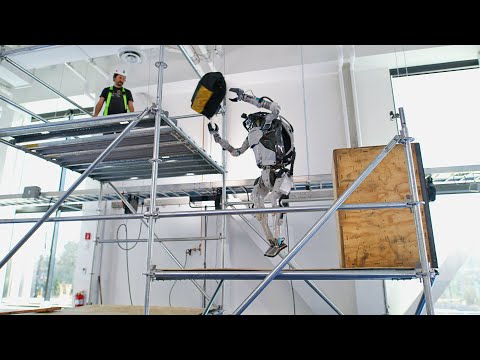
You know the first time I saw a robot walk like a human? It was like watching a toddler take its first steps—kinda wobbly but super exciting! So, there’s this robot called Atlas. Seriously, it’s not just any robot; it’s like the cool cousin of all those clunky machines you’ve seen in movies.
Imagine a robot that can do parkour! Yeah, Atlas can leap over obstacles and even do backflips. It’s like a mini superhero that’s all about moving and grooving.
But it doesn’t stop there. Atlas is also about interaction. It’s designed to work alongside us humans in ways we’ve never really imagined before. So, how does this funky metal marvel bridge the gap between robots and humans? Let’s unpack this fascinating dance of tech and teamwork!
Exploring the Cost of Boston Dynamics Atlas: Implications for Robotics in Scientific Research
So, let’s talk about the Boston Dynamics Atlas robot for a moment. You’ve probably seen videos of this impressive humanoid bot doing backflips and walking on uneven terrain. It’s pretty wild! The thing is, the cost of developing such advanced robotics raises some interesting points.
First up, let’s get into the price tag. While the exact cost of Atlas isn’t publicly disclosed (Boston Dynamics likes to keep that tight-lipped), estimates put it at around $2 million. Yeah, you heard that right! This hefty sum reflects not just the hardware but also the software development and research that goes into creating a machine capable of such complex movements.
Now, why does this matter? Well, think about how robotics can drastically change scientific research. You know those tasks that are either too dangerous or too tough for humans? Robots like Atlas could take over those jobs. For example:
- Environmental monitoring: Imagine sending Atlas into hazardous environments—like volcanic sites or contaminated areas—to collect data without putting anyone at risk.
- Assistance in labs: Robots can help with repetitive tasks, freeing researchers to focus on creative problem-solving. Seriously, who wouldn’t want a robot to fetch coffee?
Anecdote time! I remember watching a documentary about robots assisting in disaster zones after earthquakes. It was heartwarming to see how quickly they could navigate rubble and locate survivors while keeping rescue teams out of harm’s way. Now imagine if we had multiple Atlas robots helping out in such scenarios!
The investment in these technologies does lead to questions about funding. Can universities and research institutions afford such costly machines? If they can’t buy them outright, maybe collaborating with tech companies or other institutions could be an option? Pooling resources might just make these robots accessible for various scientific endeavors.
The implications don’t stop there—think about ethics. With great power comes great responsibility (you know what I mean?). How do we ensure these robots are used ethically? Are there regulations needed before we unleash them in real-world situations? These concerns aren’t just afterthoughts; they’re serious discussions among scientists and engineers alike.
In summary, while the cost of Boston Dynamics’ Atlas is definitely high, its potential impact on scientific research could be transformative. From safety in sampling hazardous materials to automating tedious lab work, the possibilities are exciting yet require careful consideration regarding access and ethics.
So basically, diving deeper into robotics like Atlas could open doors we haven’t even begun to explore!
Exploring the Applications of Atlas Robot in Scientific Research and Innovation
So, let’s chat about the Atlas robot. This nifty piece of tech is no ordinary robot; it’s like a human-like android on steroids when it comes to mobility and balance. Developed by Boston Dynamics, Atlas is designed to navigate complex environments, which makes it super useful in various scientific fields.
1. Disaster Response: Imagine an earthquake hits a city. The Atlas robot can potentially go into areas that are too dangerous for humans. It can assess damage, look for survivors, or deliver supplies. You know those situations where you just wish you could send a trusty sidekick? Well, this could be it! They’ve even tested Atlas in obstacle courses, simulating real-life disaster scenarios.
2. Research and Development: Researchers can use Atlas to test new theories in robotics and biomechanics—basically, how humans move versus how robots move. For example, studying its movements helps improve algorithms that make robots more agile or stable. If you think about it, understanding how we walk can help us build smarter machines.
3. Human-Robot Interaction: One of the standout features of the Atlas robot is its ability to work alongside people. It’s not just about making a cool machine; it’s also about figuring out how we can coexist with robots in everyday life—like having an assistant that doesn’t need coffee breaks! Researchers examine how humans interact with these robots during various tasks to enhance collaboration between us.
4. Education and Training: Schools and universities are totally getting on board with using robots like Atlas for teaching purposes. Think about engineering students learning about robotics hands-on through direct interaction with such advanced technology! The experience fosters creativity and innovation—like sparking ideas for future inventions that could make our lives easier.
But hey, integrating these robots isn’t all sunshine and rainbows—you’ve got to consider ethical implications too! Questions arise around safety and job displacement as machines take on roles traditionally held by humans.
In wrapping up this little chat about the Atlas robot: the potential applications span across **disaster response**, **research**, **human interaction**, and **education**—a true testament to innovation pushing boundaries. I mean, who would have thought a humanoid robot could be so versatile? Watching where this tech goes will be exciting because every step forward feels like we’re moving toward something special!
Exploring the Advancements in Robotics: Boston Dynamics Atlas 2 and Its Impact on Scientific Innovation
So, let’s chat about robotics and that cool kid on the block: the Atlas robot from Boston Dynamics. This little marvel has been making waves, and it’s not just for show. Seriously, it’s like watching a toddler learn to walk—but way cooler because it can jump, run, and even do backflips!
Atlas 2, which is the latest version, takes things up a notch. This robot isn’t just about looking slick; it’s got some serious brains behind those movements. The advancements in its technology are essential for pushing boundaries in how robots interact with humans and their environment.
One of the key features of Atlas is its balance and agility. It can navigate challenging terrains—think rocky paths or even stairs—like a pro. You know how you sometimes stumble while walking? Well, Atlas has this fancy control system that helps it adjust its movements in real time to avoid falling over. Pretty impressive, huh? So this ability makes it invaluable for search-and-rescue missions where conditions are unpredictable.
Then there’s the human-robot interaction. Atlas has sensors that help it understand what’s around it—like recognizing people or obstacles. This means it can operate safely alongside us without knocking us over or causing chaos (mostly). For example, if you were playing catch with Atlas, it could figure out where to move to avoid bumping into you while still trying to catch that ball.
Another thing making waves is how machines like Atlas can assist in scientific research. Picture scientists working in hazardous environments—like deep-sea exploration or volcanic areas. With robots like this being developed, they can send Atlas into places humans can’t easily go. Honestly, imagine all the data we could gather without risking lives!
Energy efficiency is also on the list of advancements with Atlas 2. The design focuses on using power wisely—not just charging but also moving around without burning extra juice. This is super important because think about all those batteries needing replacements—and less power consumption means more work gets done over time.
But here’s something emotional: have you seen those videos of people interacting with robots? It’s actually heartwarming! Kids playing with them or folks laughing at their antics make you feel something profound about technology becoming part of our lives.
In summary, Boston Dynamics’ Atlas 2 isn’t just a fancy piece of tech; it’s paving the way for innovative applications across various fields—from disaster response to everyday assistance at home. And who knows? Maybe one day you’ll have your own friendly robot buddy helping you out around the house!
You know, when I first saw the Atlas robot, I couldn’t help but feel a mix of excitement and a tiny bit of unease. It’s like watching a kid take their first steps—it’s both thrilling and nerve-wracking at the same time. This robot, developed by Boston Dynamics, is not just any robot; it’s one that can walk, run, and even do backflips! Imagine that for a second; a machine flipping around like an Olympic gymnast. Pretty cool, right?
But here’s where it gets interesting. Atlas is designed to interact with humans in real-life environments—think warehouses or even disaster zones where humans might not be able to go safely. The thought of a robot helping out during emergencies? It feels like something straight outta science fiction! I remember watching movies as a kid where robots would save the day and thinking how amazing it would be if that was real life. And now, seeing Atlas move around—sometimes it feels like we’re actually getting there.
Now, robotics isn’t without its challenges. Like, sure, Atlas can do some really impressive moves but there’s still so much to figure out when it comes to interacting smoothly with people. How does it know when to step back or lend a hand without causing chaos? There are loads of potential ethical concerns too. What happens if we rely too heavily on machines for tasks that people used to do? Families could be affected if jobs change significantly.
But let’s get real about it: the potential for good in this tech is huge. Having robots assist in tough situations could save lives and make work safer for everyone involved! Still, you can’t help but think about how this changes human interaction moving forward.
I read somewhere that robots like Atlas help raise awareness about robotics in general. They spark discussions about the future of work and what human roles might look like side by side with machines. That could lead us to create better policies or training programs as we shift into this new era together.
So while it’s easy to get lost in the cool tricks Atlas can do—it does make you wonder how these advancements will shape our lives down the road. I mean, are we ready for more robots joining our world? Seems like only time will tell!