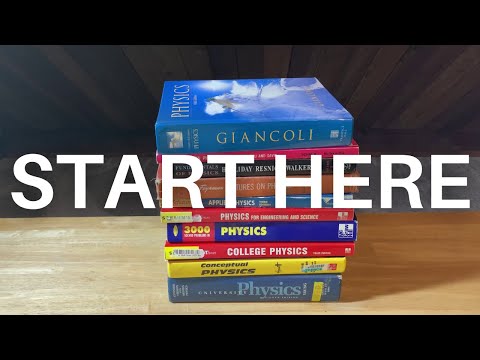
So, once I was in a physics class, and my buddy cranked up the tension by tossing a paper airplane across the room. It swooped down so smoothly that you’d think it was training for the Olympics. The teacher paused mid-sentence, pointed at it, and said, “That’s physics in action!” We all laughed, but seriously—it kinda is.
Physics might sound a bit daunting at first. But let me tell you, it’s everywhere. Ever tried to catch a ball? That’s physics! Or when you’re scrolling your phone while lying down? Yep, gravity is there too—always ready to remind us who’s boss.
If you’ve ever looked up into the night sky and wondered what those twinkling stars are really all about, you’re not alone. It’s a huge universe out there! And every little thing that happens can be explained with some basic principles of physics.
In this journey through the cool stuff that makes our world tick, we’re gonna break it down together—no big words or brainy jargon needed! You ready? Let’s get into it!
Understanding the Challenges: Exploring the Difficulty of Fundamental Physics in Science
Well, let’s chat about fundamental physics, shall we? You know, those big concepts that explain how the universe works? It sounds cool and all, but let me tell ya, it’s not a walk in the park for most people.
First off, the language of physics can feel like a foreign dialect. You dive into equations and theories that seem to have more symbols than words. For instance, think about Einstein’s famous equation (E=mc^2). Pretty iconic, right? Well, it translates to some heavy stuff—basically saying energy (E) is equal to mass (m) times the speed of light (c) squared. But if you’re just starting out with physics? That’s a lot to unpack!
Then there’s the math. Seriously, if you’re not into math or find it tricky, fundamental physics can be tough to grasp. It’s all about calculus and algebra! When I was learning this stuff myself—oy vey!—I stumbled over even simple derivatives. If numbers make your head spin, prepare for a challenge with concepts like wave functions or quantum mechanics.
Another hurdle is intuition—or rather the lack of it sometimes. Take quantum physics as an example; particles can exist in multiple states at once until you look at them. That’s called superposition! Sounds mystical but goes against everything our day-to-day experiences teach us about reality. It can feel like trying to catch smoke with your bare hands.
You also can’t ignore creativity. Yep! Even in science, thinking outside the box is crucial. Some theories come from wild ideas that sometimes seem totally out there. Like string theory suggests everything is made up of tiny vibrating strings rather than point-like particles. Wrap your mind around that! It needs not only understanding but also a little imagination.
And then there’s experimentation. Many ideas in fundamental physics need rigorous testing before they are accepted as truth. But running experiments isn’t always easy; even if you have a great idea or hypothesis, setting up experiments could take ages and require loads of resources or fancy tech—like particle accelerators for high-energy experiments.
So yeah, if you want to step into this realm as an aspiring scientist:
- Be patient: There’s a learning curve involved.
- No shame: Everyone has their own pace; don’t rush yourself.
- Ask questions: There are no dumb questions when it comes to understanding physics!
- Dive deeper: Use additional resources like videos or books that break down tough concepts.
In essence, tackling fundamental physics can be pretty daunting because it’s filled with complex terminology and requires solid mathematical skills along with creative thinking. But isn’t that part of what makes science exciting? You get to unpick the universe’s mysteries piece by piece! So keep pushing through those challenges—you might just become one of those brilliant minds who help us understand our world better!
Evaluating Resnick Halliday: A Comprehensive Review of its Impact on Science Education
<!– is a classic in the world of physics education, and it’s definitely worth talking about how it’s shaped the way aspiring scientists learn. Seriously, if you’ve ever cracked open a physics textbook, there’s a good chance you’ve seen this one.
What makes it stand out? Well, for starters, it's super comprehensive. It covers everything from basic concepts to more complex theories. The authors, David Halliday and Robert Resnick, have this knack for breaking down tough topics into manageable bits that are easier to digest. Like when they explain **Newton's Laws**—the way they present real-world examples helps you see how physics plays out in everyday life.
Another cool thing about is its emphasis on problem-solving. You know how sometimes textbooks throw a bunch of equations at you without any context? Not here! The authors guide you through problems step by step. This approach not only makes learning more engaging but also builds your analytical skills over time.
Now, let’s talk about **the impact on science education**. A lot of instructors use this book because it helps students develop critical thinking skills. And with physics being such a foundational subject in science—think engineering, chemistry, biology—the way this book nurtures understanding has ripple effects across disciplines.
But hey, it's not just about the contents; it’s also about how the book presents itself visually. The diagrams and illustrations are clear and relevant. They don’t just decorate the pages; they actually enhance understanding by showing concepts visually. Like imagining forces acting on an object through a well-constructed diagram can make all the difference when you're tackling tricky problems.
Additionally, something important to mention is that encourages experimentation and exploration in physics learning. It often includes questions that get you thinking like a scientist—like asking why specific phenomena occur or how different variables interact with each other.
Now let’s get a bit personal here! I remember back in school feeling super lost in my first physics class until someone recommended this textbook to me. I could finally connect the dots between theory and real life! It was like flipping a switch—I actually started enjoying physics! That sense of wonder and realization matched with solid education makes this book pretty special.
In summary, has played an important role in shaping modern science education by making complex concepts accessible while encouraging critical thinking and problem-solving skills among students. With its engaging style and practical applications—it really has left its mark on aspiring scientists everywhere!
Exploring the 7 Fundamental Theories of Physics: A Comprehensive Guide to Key Concepts in Science
Sure thing! Let’s talk about the 7 fundamental theories of physics in a way that’s easy to digest.
1. Classical Mechanics
This one is like the bread and butter of physics. You know, it’s all about how things move and interact. Imagine playing catch with a friend. You throw the ball, and it travels through the air until your buddy catches it. Classical mechanics explains why the ball flies through the air like that based on forces like gravity and friction.
2. Electromagnetism
Ever wondered why your hair stands on end when you rub a balloon on your head? Well, that’s static electricity at work! Electromagnetism deals with electric charges and magnetic fields. It explains not just hair-raising moments but also how your phone connects to Wi-Fi or how magnets stick to your refrigerator.
3. Thermodynamics
You know when you leave an ice cream out on a hot day and it melts? That’s thermodynamics for you! This branch looks at heat energy and how it transfers between systems. It breaks down concepts like temperature, energy conservation, and even why some processes are irreversible—like your delicious ice cream turning into a puddle.
4. Quantum Mechanics
Alright, let’s get a little mind-bending here! Quantum mechanics is all about the tiny stuff: atoms and subatomic particles like electrons or quarks. Ever heard of Schrödinger’s cat? It basically says that particles can be in multiple states at once until we observe them (kind of like that cat being both alive and dead until you peek inside the box).
5. General Relativity
Here comes Einstein’s big idea—general relativity reshaped our understanding of gravity. Picture this: instead of thinking about gravity as just a force pulling objects together, general relativity describes it as warping space-time around massive objects (like planets). So when Earth orbits the sun, it’s really just following the curve created by the sun’s mass in space-time.
6. Special Relativity
Now we’re talking about speed—especially when things move close to light speed! Special relativity shows us that time can slow down based on speed; so if you were zooming around in space at near-light speeds, time would pass differently for you compared to someone back on Earth. Crazy, right?
7. The Standard Model of Particle Physics
And finally, we have this model which is kind of like a family tree for all known particles in our universe—the building blocks of everything! It includes quarks (which make up protons) and leptons (like electrons). You could say these particles are VIPs in how matter interacts at its most basic level.
Each theory has its own quirks and applications that help us understand everything from why apples fall from trees to what makes up stars millions of light years away! That’s why they’re considered fundamental—they’re essential for building our grasp of not just physics but basically all science.
So there you go—a friendly rundown on these seven fascinating theories! Keep exploring; there’s always more to learn out there!
You know, when I think about physics, it kinda brings me back to high school. I remember sitting in class, trying to wrap my head around all those crazy concepts—the laws of motion, gravity, energy—stuff that seemed so abstract and, let’s be honest, a bit intimidating. But here’s the thing: as I started to dig deeper into it all, everything began to click.
Physics is like the ultimate puzzle; it’s all about understanding how things work in our universe. From the simplest ice cube melting in a glass of warm water to the way planets orbit around the sun—it’s all governed by some pretty basic principles. Can you believe that? When you break it down, you realize that these fundamentals are everywhere.
Take Newton’s laws of motion, for example. If you’ve ever kicked a soccer ball or watched a rocket launch on TV, you’ve witnessed those laws in action! They’re not just dry formulas scribbled on a board; they describe what happens in your everyday life. The first time you kick that ball and it soars through the air? That’s newton’s first law of inertia right there! It makes physics feel more alive and relatable.
For aspiring scientists, understanding these basics can be like having a cheat code for life—or at least for science! Once you get those under your belt, everything else starts to flow. You can tackle more complex topics like thermodynamics or quantum mechanics without feeling totally lost.
And here’s some food for thought: physics isn’t just for scientists locked away in labs or working on fancy tech. It shapes our world! Think about climate change and renewable energy—those issues are deeply rooted in physical principles. For anyone wanting to make an impact on our planet, grasping these fundamentals is crucial.
So yeah, while physics might seem daunting at first glance—with its equations and theories—it’s really about curiosity and exploration. It’s asking “why?” and seeking answers about how everything around us works. If you’re an aspiring scientist with a bit of grit and passion, embracing those fundamentals could lead you down some pretty amazing paths! Just remember: every great physicist started with the same building blocks we all have access to today.