So, picture this: you’re out in your backyard on a clear night, wrapped in a cozy blanket, spotting constellations. Suddenly, you point your telescope at the Moon and BAM! You’re staring right at those craters like you could just reach out and touch them. Pretty cool, right?
But hey, not all telescopes are created equal. There are some really awesome amateur ones that won’t break the bank but still pack a punch when it comes to discovering the wonders of the universe.
You might think science is all about big fancy equipment and PhDs, but seriously, anyone can join in on this cosmic adventure! With a good amateur telescope, you can explore planets, stars, and even some galaxies—right from your own yard.
So whether you’re just curious or looking to impress friends at your next stargazing night, let’s chat about some stellar options.
Top Amateur Telescopes for Science Enthusiasts: A Comprehensive Guide
So, you’ve caught the astronomy bug, huh? That’s awesome! Stargazing can be such a fulfilling hobby. And if you’re thinking about getting into it more seriously, investing in a good telescope is essential. But which one should you go for? Let’s break down some top amateur telescopes that are perfect for science enthusiasts.
First off, a good beginner telescope doesn’t have to cost an arm and a leg. There are several types out there—each with its quirks and benefits. Here are some key points to keep in mind when choosing one:
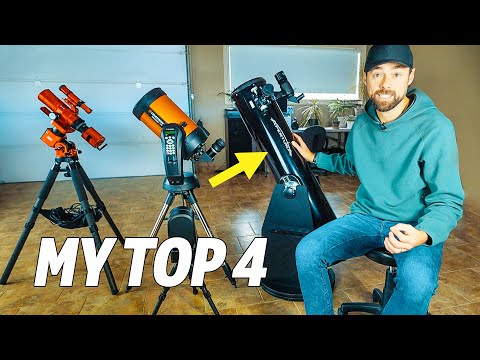
- Refractor Telescopes: These use lenses to bend light and provide clear images. They’re great for viewing planets and stars. A classic example is the Sky-Watcher 80mm. It’s lightweight and easy to set up.
- Reflector Telescopes: Instead of lenses, these use mirrors. They give a wider field of view and can pull in more light, making them ideal for deep-sky objects like galaxies. The Dobsonian telescopes, like the Orion SkyQuest, are super popular here.
- Cassegrain Telescopes: Combining both mirrors and lenses, these offer compact designs with powerful optics. They might come at a higher price point but can deliver amazing views—perfect for astrophotography!
- Aperture Size: This is key! Generally speaking, bigger apertures let in more light which means better views of faint objects. If you’re looking at deep-sky stuff, aim for at least 4 inches (or about 100mm). Think of it as opening your eyes wider to see more.
- Portability: If you plan on taking your telescope to dark sites (which is a MUST!), consider how heavy or bulky it is. A smaller telescope like the Celestron Astromaster 70AZ could fit the bill if you’re not into hauling around tons of gear.
- Mount Type: There are two main types: Altazimuth mounts let you move up/down or left/right easily, while equatorial mounts track celestial objects as they move across the sky. It might take time to get used to—but trust me; it pays off!
Now, let me share something personal here. The first time I looked through a telescope was surreal! I remember seeing Saturn’s rings clearly—like they were just sitting there waiting for me to find them! That’s what makes having your own telescope worth every penny.
Keep in mind that while getting an awesome scope is fantastic, learning how to use it is crucial too! Spend some time practicing during clear nights; read manuals; join forums or local astronomy clubs.
Oh! And don’t forget about accessories that can enhance your experience—eyepieces play a big role in what you see too!
In summary, as an amateur astronomy enthusiast aiming for scientific exploration or outreach, picking the right telescope boils down to understanding what suits your needs best—be it portability or aperture size—and just jumping into stargazing adventures! The universe waits for no one—so grab that scope and explore away!
Top Beginner Telescopes: A Comprehensive Guide for Aspiring Astronomers
So, you’re thinking about diving into the world of astronomy? That’s awesome! Telescopes can really open up the universe for you, showing stars and planets that you’d never catch just with your eyes. But when you’re starting out, picking the right telescope can feel like trying to navigate a maze! Don’t worry; I’ll help you get through it.
First off, let’s talk about what you actually want to see. If you’re dreaming of gazing at craters on the Moon or catching glimpses of Saturn’s rings, some telescopes are better suited for this than others.
Types of Telescopes:
- Refractors: These use lenses to gather light. They’re often great for viewing planets and the Moon. If you want something compact and easy to use, this could be your go-to option.
- Reflectors: These rely on mirrors and are pretty solid for deep-sky objects like galaxies and nebulae. They generally give you more aperture (that’s how much light they can capture) for less money.
- Cassegrain: This one’s a blend of lenses and mirrors. It’s kind of fancy but offers a high zoom ability, perfect if you’re getting serious about your night sky obsessions.
Now that we’ve got that sorted out, how much should you spend? Well, it really depends on your budget but aiming around $200 to $500 gets you started with some decent options without breaking the bank.
Aperture Size:
When looking at telescope specs, pay attention to aperture size. This is key because it tells you how much light a telescope can gather. A larger aperture means better views! Typically, beginners might find a 70mm refractor or an 8-inch reflector to be quite user-friendly.
Oh! And don’t forget about mobility. If you’re planning on taking your telescope out under dark skies away from city lights (hint: this is where you’ll catch the best views!), then weight and ease of setup matter a lot.
Mount Types:
You’ll also encounter different types of mounts:
- Altazimuth Mount: This is super basic—think up/down and side-to-side movements. It’s intuitive for newbies!
- Equatorial Mount: Sounds fancy, huh? This one follows celestial objects as they move across the sky because Earth rotates. It’s great for tracking stars but has a steeper learning curve.
Let’s not forget accessories! With some basic ones like eyepieces and maybe a red flashlight (so you don’t ruin your night vision), you’ll elevate your stargazing game pretty quickly.
And speaking from experience, there will be moments where you’re struggling with tech or staring at an empty sky wondering if it’s worth it—those feelings are normal! However, just remember that even seasoned astronomers have off nights; persistence is key!
So grab that telescope, embrace those late nights under twinkling stars, and enjoy every moment spent exploring our vast universe! You’ll be surprised at how much wonder is waiting just above us all along!
Top Telescope Types Preferred by Astronomers for Cutting-Edge Research
So, you’re curious about the different types of telescopes that astronomers prefer for research? That’s awesome! There’s a whole universe of options out there. Let’s break it down without getting all technical and stuff—just the good stuff, you know?
First off, there are three main types of telescopes that are popular among astronomers: refractors, reflectors, and catadioptrics. Each one has its own strengths and weaknesses.
- Refractors: These telescopes use lenses to gather and focus light. You know those classic images of telescopes with long tubes? Yup, that’s a refractor! They’re great for viewing planets and stars because they offer crisp images. My buddy once used a refractor to spot Jupiter’s moons; it was super cool watching them dance around the giant planet.
- Reflectors: Instead of lenses, these bad boys use mirrors. This design allows for larger apertures without being ridiculously heavy. You can collect more light, which is perfect for dimmer objects like galaxies or nebulae. There was this time I took a peek through a reflector during an amateur star party, and let me tell you—the view of the Orion Nebula was mind-blowing!
- Catadioptrics: These are like the hybrids of the telescope world—they combine lenses and mirrors! They’re compact and versatile, making them excellent for both planetary observation and deep-sky viewing. A friend once said using one felt like having a Swiss Army knife in telescope form—super handy for different kinds of observations.
Now, let’s chat about some cool features astronomers look for in these telescopes.
- Aperture: This is basically how big the opening is that gathers light. Larger apertures mean you can see fainter objects more clearly. So if you’re hunting for distant galaxies or faint stars, bigger really is better!
- Mounting: There are two types here—altazimuth (up/down, left/right) and equatorial (aligned with Earth’s rotation). The equatorial mounts are particularly favored when tracking celestial objects over time since they follow their movement across the sky.
- The Software: Many modern telescopes come with smart technology to help with navigation—like finding specific stars or galaxies at the push of a button! It makes everything so much easier.
Amateur astronomers are diving into scientific discovery too! Many hobbyists join local astronomy clubs where they share insights about their gear—and trust me, some amateurs have made significant contributions to astronomy just by using backyard telescopes.
The thing is, whether you’re observing from your backyard or participating in serious research projects at observatories, each type of telescope offers unique opportunities. And while professionals often have fancy gear at their disposal, don’t underestimate what a good amateur telescope can do!
So there you go! Exploring space through different types of telescopes can be thrilling no matter if you’re an expert or just starting out. Each one opens up new wonders waiting to be discovered under the night sky!
You know, when I was a kid, my dad took me on a camping trip upstate. It was one of those clear nights where the stars seemed to stretch on forever. We had this old telescope, nothing fancy, but just seeing Saturn’s rings and those twinkling stars made me feel so small yet somehow connected to everything out there. That spark went beyond just looking at cool stuff; it ignited my curiosity about the universe.
Amateur telescopes can do wonders for both personal exploration and community engagement. I mean, think about it: you don’t need to be a pro astronomer or have access to a big observatory to catch some amazing sights in the night sky. There are lots of models out there that don’t cost an arm and a leg but can still give you pretty incredible views.
The trick is finding the right one for you, depending on what you’re interested in. If you’re keen on looking at planets, something with good optics and decent magnification is key. But, if deep-sky objects like nebulas or galaxies are more your jam, you might want something with a wider aperture to gather more light.
And here’s where it gets even cooler: these telescopes can be gateways for sharing the magic with others! Imagine setting up in your backyard and inviting friends over for an evening of stargazing. You could point out constellations or dive into discussions about black holes and supernovas. It’s this mix of scientific discovery wrapped in social fun that lights up the atmosphere.
Plus, let’s not forget about how many resources there are now—websites, apps—making it easier than ever to map out what’s visible in your sky on any given night. It’s like having a personal guide to the universe right in your pocket!
In short, amateur telescopes aren’t just tools; they’re doorways into larger conversations about science and our place in this vast cosmos we call home. They remind us that exploring doesn’t require fancy gadgets or degrees—just curiosity and a willingness to look up at the night sky with wonder!