You know that feeling when you’re stumbling around in the dark, and you stub your toe on the edge of the coffee table? Ouch, right? Well, imagine if you could see that coffee table in the dark. Not just with a flashlight, but like with x-ray vision or something!
That’s kind of what’s happening with advancements in biodigital anatomy. It’s a super cool blend of biology and digital tech that helps us understand our bodies way better. You might think, “why does this matter?” But trust me, it has some serious implications in medicine and education.
So let’s chat about how these innovations are reshaping how we see ourselves—literally! There’s a lot to unpack here and believe me when I say it’s more exciting than it sounds. You ready?
Breaking Boundaries: The Latest Developments in Anatomy and Advances in Science
Alright, let’s talk about some super cool stuff happening in the world of anatomy and science, particularly with this new buzzword: biodigital anatomy. It might sound a bit fancy, but it’s actually quite relatable! Basically, it merges biology with digital technology to create a new way to study human anatomy.
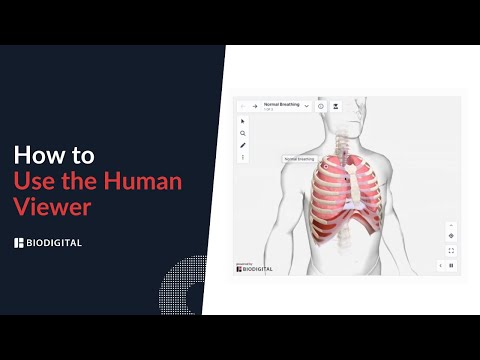
So, what’s biodigital anatomy all about? Well, it’s this blend of real-life anatomical studies with advanced imaging technology and virtual reality. You know how you’d sometimes use a map app to find your way around? Imagine using something similar to explore the human body! This tech allows scientists and students to visualize structures in 3D. It’s like having a virtual tour guide inside your own body!
Now, what are some of the latest developments that make this so exciting? Here’re a few key points:
- 3D Imaging: We’ve come a long way from textbooks. With high-res 3D scans, we can see every little detail of organs and tissues. It’s super helpful for doctors during surgeries or when teaching anatomy.
- Virtual Reality (VR) Experiences: Picture this: slipping on VR goggles and walking through a lifelike model of a heart beating. That kind of immersive experience really helps medical students grasp complex concepts.
- Biodigital Twins: This is where things get super futuristic! Think about creating a digital clone of your body that can simulate diseases or predict responses to treatments. It opens up mind-blowing possibilities for personalized medicine.
Here’s an emotional angle for you: I remember my first day in anatomy class during college; I was just blown away by the idea that these systems supposedly made up everything inside us. Fast forward to now—imagine how much easier studying would’ve been with all these technological advancements at hand instead of just trying to memorize everything from a book!
By integrating these advanced methods into medical training and research, we’re also looking at potential breakthroughs in disease treatment and understanding our body’s complexities better than ever before. They could change how we approach health care completely.
What about real-life applications? Surgeons practicing on virtual models before operations not only boosts their confidence but also increases patient safety. Isn’t that something?
In summary, biodigital anatomy isn’t just some niche thing; it revolutionizes our understanding of human biology. With every advancement comes new ways to save lives and improve health outcomes—all thanks to blending tradition with cutting-edge technology! Seriously exciting times ahead!
Assessing the Accuracy of BioDigital Human: A Comprehensive Analysis in Scientific Visualization
Assessing the Accuracy of BioDigital Human is like taking a close look at how technology is reshaping our understanding of human biology. This platform basically creates 3D models of the human body that you can explore interactively. Sounds pretty cool, right? But how accurate are these models? Let’s break it down.
When we talk about **scientific visualization**, we mean using images and simulations to help us understand complex data. In the case of BioDigital Human, it provides an interactive experience that could help students or professionals grasp anatomy more easily. Imagine being able to look at a heart from every angle without having to cut anything open—that’s pretty powerful!
Now, regarding accuracy, there are a couple key factors to consider:
- Data Sources: BioDigital relies on a variety of anatomical resources. They use information from actual medical textbooks and research journals. This foundation makes their models pretty reliable.
- 3D Modeling Techniques: The techniques used to create these models play a huge role in accuracy. They often incorporate CT scans and MRIs, which means they’re based on real patient data.
- User Feedback: Another aspect is user interaction. When scientists and educators use this tool, they provide feedback which helps improve the accuracy over time. It’s like crowd-sourcing expertise!
- Educational Value: Even if there are some inaccuracies in detail, the platform still excels in teaching basic concepts—like how blood flows through the heart or how muscles work together during movement.
But hold up! Just because it has its strengths doesn’t mean it’s flawless. There have been instances where professionals noted discrepancies between what they see on BioDigital and what they observe in real-life scenarios. It gets tricky sometimes because human anatomy can vary widely from person to person.
I remember chatting with a friend who was studying medicine; she mentioned using BioDigital for her anatomy class. She found it super helpful but also noted that some structures appeared differently than what she’d seen in her cadaver labs. This highlights why cross-referencing these models with traditional methods is crucial!
So, in essence, while BioDigital Human offers an innovative way to visualize anatomy—bridging gaps between textbooks and real-life application—it’s also important not to rely exclusively on it for detailed anatomical studies. Balancing digital resources with hands-on experience helps ensure you get the best picture possible.
All things considered, advancements like BioDigital do make waves in scientific visualization! But just like anything else, using them wisely—and understanding their limitations—is key for anyone diving into the complex world of human anatomy.
Evolution of Anatomy: Tracing the Transformative Journey in Scientific Study Through the Ages
The journey of anatomy is quite the rollercoaster ride, huh? Over the centuries, our understanding of the human body and other creatures has evolved dramatically. Let’s break it down into some fascinating points that really highlight how things have changed.
Ancient Beginnings
Way back in ancient Egypt and Greece, folks were already asking questions about their bodies. Figures like Hippocrates and Galen made some early sketches of anatomy, but they mostly relied on animal dissections because human bodies weren’t exactly up for grabs. Imagine trying to figure out your own insides without even seeing them!
The Renaissance Revolution
Fast forward to the Renaissance—this was a game-changer! Artists like Leonardo da Vinci began to dissect bodies (with permission, of course), creating incredibly detailed drawings. His work wasn’t just art; it was scientific documentation. This period really opened the door for a more accurate understanding of human anatomy.
Modern Advances
Then came the 19th century when scientists started using new techniques like histology, which is all about looking at tissues under a microscope. This helped them see what organs are made of at a cellular level. The thing is, with every advance in technology, we got closer to understanding how our bodies function and how they can go wrong.
X-rays and Beyond
Now let’s talk technology! The invention of X-rays in the early 20th century allowed doctors to see inside a person’s body without any major invasions. It opened up huge possibilities for diagnosing issues quickly and accurately.
Biodigital Anatomy
These days, we’re diving into biodigital anatomy. This involves creating digital models of anatomical structures that can be manipulated in 3D space. It’s seriously cool! Think about it: instead of just reading about blood flow or muscle movement from a textbook, you can actually “move” parts around to see how everything fits together.
Scientific Impact
The impact has been massive. With biodigital tools, students can practice surgeries on virtual models before ever touching a real patient. This means safer surgeries and better outcomes overall! Imagine being able to visualize all those complex systems without having any cadaver in front of you—it’s kind of mind-blowing!
So yeah, tracing the evolution of anatomy isn’t just about bones and muscles; it’s also about how we use technology to enhance our understanding. Each step along this transformative journey has made it easier for us to appreciate the complexity—and beauty—of life itself. Isn’t that something?
You know, the world of science has been taking some pretty wild leaps lately. I mean, think about it. Just a few years back, we’d pour over anatomy books with those old-school diagrams, right? But nowadays, the field of biodigital anatomy is flipping that whole idea on its head. It’s like combining biology and digital tech in this beautiful dance, and honestly, it’s kind of magical.
Imagine being able to view a 3D model of the human body right from your phone or computer screen. Seriously! You could zoom in on organs and muscles while rotating them to see every little detail from every angle. I remember when I first saw this at a science fair; it was like stepping into the future. A kid a few booths down had created an interactive model that lit up different body parts when you touched the screen. Everyone was buzzing with excitement! That moment made me realize how powerful technology can be in helping us understand complex living systems.
But what does this mean for scientists? Well, it opens up doors for research like never before. With these biodigital models, researchers can simulate how diseases affect organs or even test new treatments without needing to use actual patients at first. It’s a game changer for fields like medicine and bioengineering since it allows doctors and scientists to visualize problems and solutions in ways that were just not possible before.
And here’s another thing—education! Imagine medical students learning anatomy through interactive apps instead of memorizing pages from textbooks! How cool is that? They can experience anatomy firsthand without being in a dissection lab—or worrying about finding enough cadavers! This kind of learning feels more engaging and puts students right into the action.
Yet, it’s not just about shiny technology; it’s also about ethics and accessibility. We must ensure that these tools are available to everyone so that all students have equal access to this amazing learning experience. And as researchers delve deeper into biodigital anatomy, they should be mindful of how they communicate their findings too—keeping everything transparent so people understand what’s going on with their health.
So yeah, while advancements in biodigital anatomy bring tons of excitement and potential benefits to scientific research and education alike, we also need to keep it grounded with an eye toward accessibility and ethics. It’s about balancing innovation with responsibility—a pretty big task but essential for a healthier future!