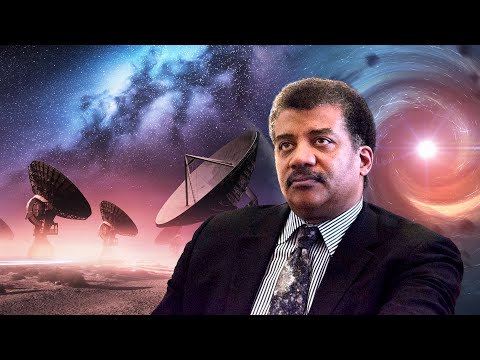
So, picture this: you’re staring up at the night sky, and all those glittering stars actually look like tiny pinpricks in a vast, dark blanket. Kind of makes you feel small, huh? But what if I told you that most of the universe is made up of stuff we can’t even see? Yep, I’m talking about dark energy.
Now, before you roll your eyes and think this is just another space lecture, hang on! Dark energy is like that mysterious friend who never shows up but somehow always gets invited to the party. It’s there influencing everything around it, especially when it comes to black holes.
Black holes are already mind-blowing—like cosmic vacuum cleaners sucking in everything nearby. But toss dark energy into that mix and things get even wilder! So let’s dive into this weird world where gravity meets mystery and see how these two incredible phenomena dance together in the cosmos. You ready?
Exploring the Connection Between Black Holes and Dark Energy in Modern Astrophysics
So, let’s chat about black holes and dark energy. These two heavyweights of modern astrophysics might seem totally unrelated at first glance. But hold on, there’s a link that’s more intriguing than you might think!
First off, black holes are regions in space where gravity is so strong that nothing—not even light—can escape them. Imagine a cosmic vacuum cleaner sucking up everything nearby! They form when massive stars collapse under their own gravity. So when a star runs out of fuel, it can’t keep its towering structure anymore. The core collapses, creating a black hole.
Now, on the flip side, we’ve got dark energy. It’s this mysterious force that’s driving the universe to expand at an accelerating rate. Seriously, it’s like the universe is on a constant growth spurt! Scientists think dark energy makes up about 68% of everything in the universe—so it’s kind of a big deal! However, we don’t know what it really is yet.
Alrighty then! Now, how do these two relate? Well, one theory suggests that black holes could play a role in understanding dark energy. You see, when black holes consume matter and grow larger, they could potentially influence the expansion of the universe around them.
Here are some things to chew on:
So let me share something personal—when I first learned about this connection between dark energy and black holes during my studies, I was mind-blown! You think you understand one thing only for it to have deeper layers intertwined with another massive concept? It felt like peeling back an onion with each layer revealing even more questions!
On top of all that, there are some wild theories out there suggesting that dark energy could even be linked to quantum mechanics and the behavior of particles at incredibly small scales. This bridge between the very large (like galaxies) and very small (like particles) keeps astrophysicists up at night!
So in short, while we have so much to learn about both black holes and dark energy, their connection is becoming clearer in modern astrophysics. They’re entwined mysteries worth exploring together because who knows what revelations lie ahead? Science always has surprises waiting around every cosmic corner!
Exploring the Connection Between Black Holes and Dark Matter in Modern Astrophysics
So let’s get into this whole connection between black holes and dark matter. Seriously, it’s one of those topics that can make your head spin, but I promise to keep it chill and simple.
Black holes are these incredible (and a bit scary) regions in space where gravity is so strong that nothing can escape from them—not even light. Imagine a vacuum cleaner on steroids, just sucking everything in! Think about how they form: usually from massive stars that run out of fuel and collapse under their own weight. It’s like the universe’s way of having a cosmic cleanup.
Now, here comes the twist: **dark matter**. You might’ve heard about it—it’s this mysterious stuff that makes up about 27% of the universe. Yup, you read that right! But, hold on, we can’t see it. It doesn’t emit light or radiation; we only know it’s there because of its gravitational effects. Picture yourself at night trying to find your way in a dark room; you can’t see anything but you can feel how objects are moving around you.
The thing is, these two concepts—black holes and dark matter—are intertwined in ways scientists are still figuring out. Here’s what’s interesting:
- Formation Influence: Some theories suggest that dark matter could play a role in how black holes form and grow.
- Gravitational Pull: Black holes could potentially accumulate dark matter as they pull in nearby materials.
- Mass Growth: The more dark matter around a black hole, the bigger it might get!
And remember: there’s also dark energy, which is different but related. It accounts for nearly 68% of the universe and is thought to be driving its expansion. So how does dark energy relate to black holes? Well, as space expands due to dark energy, it could influence how black holes interact with their surroundings over eons.
Let me tell you a little story here—imagine an ancient civilization on Earth witnessing what they thought were stars falling from the sky; they didn’t know those were meteors! Similarly, astronomers today look at phenomena like gravitational waves or cosmic microwave background radiation trying to understand black holes and their elusive cousins (dark matter and dark energy). They’re piecing together clues much like detectives!
In short, researchers are using advanced methods like simulations and observations to unravel these connections. And though we’re still scratching our heads about many details—like what exactly dark matter is—we know one thing for sure: understanding these cosmic mysteries not only gives us insights into the universe but also challenges our imagination about what lies out there.
So yeah, that’s the lowdown! Black holes and dark matter may seem worlds apart (literally!), but they’re part of this cool tapestry called astrophysics that tells us so much about our universe’s past—and maybe its future too!
Exploring the Intricate Relationship Between Black Holes and Dark Matter in Modern Astrophysics
So, let’s chat about black holes and dark matter. These two cosmic phenomena are like the ultimate puzzle pieces in the vast universe. They’re connected in ways that scientists are still trying to fully figure out, but it’s super interesting!
First off, black holes are these regions in space where gravity is so strong that nothing can escape, not even light. Imagine a vacuum cleaner with the power to suck up everything around it. You could be hurtling through space, and boom—you’re gone! They usually form from massive stars running out of fuel and collapsing under their own weight.
On the other hand, we have dark matter. Now, this one’s a bit tricky because we can’t see it directly. It doesn’t emit or absorb light like stars and planets do. What we know is that it makes up about 27% of the universe! Crazy, right? Scientists figured this out by observing how galaxies move and noticing they were whirling around much faster than they should be based on visible matter alone.
Now here’s where things get really intriguing: both black holes and dark matter play significant roles in cosmic evolution. For example:
- Gravitational Pull: Black holes can influence dark matter’s distribution in galaxies. Their immense gravity can cause dark matter to cluster around them.
- Galaxy Formation: Dark matter is believed to help galaxies form by acting as a sort of scaffold through which normal matter can collapse into stars and black holes.
- Energetic Signals: Some researchers think black holes might interact with dark matter particles at extreme energies, which could shed light on their mysterious nature.
The relationship between these two might even suggest new physics! For instance, some theories propose that dark energy—the force behind the universe’s expansion—could affect how black holes grow or behave over cosmic time scales.
I remember reading a story about an astrophysicist who spent years studying the patterns of galaxy rotations influenced by dark matter. He had this breakthrough moment while looking at data from a distant galaxy cluster; he realized how strong those gravitational effects were due to unseen mass! Like finding an invisible friend you never knew you had.
So yeah, exploring the connections between black holes and dark matter helps us understand our universe on a deeper level. It’s like peeling layers off an onion—you think you’re done, but there’s always more fascinating stuff waiting underneath! And as we keep probing these mysteries with powerful telescopes and innovative theories, who knows what incredible discoveries lie ahead?
You know, the universe has a way of throwing us some real mind-benders, doesn’t it? Like, take black holes for example. These massive cosmic vacuum cleaners can suck in everything around them. Stars, dust, even light—poof! Gone! But here’s the kicker: somehow dark energy plays into all this too.
So, what’s dark energy? Well, it’s this mysterious force that makes up about 68% of our universe. Seriously! Scientists believe it’s responsible for the acceleration of the universe’s expansion. Imagine blowing up a balloon and watching it get bigger faster over time—that’s kind of what dark energy is doing to our universe. Crazy, right?
Now back to black holes. When you think about them, you might picture these super dense areas in space where gravity is stronger than anything else. But when you consider dark energy along with it, things get… interesting. Black holes have this insane gravity pulling stuff in like crazy, but dark energy seems to be pushing galaxies apart. It’s like they’re having a tug-of-war!
Sometimes I think about how humbling it is to realize we’re just tiny specks trying to understand these colossal forces at play out there. I remember reading a story about a scientist who spent years studying black holes and thought he’d seen it all until he stumbled into research on dark energy. It was like opening a door to an entirely new room in his mind—a room full of questions and possibilities he never imagined.
What blows my mind is how much we don’t know. Sure, we’ve got concrete theories and math galore—thank you physicists—but sometimes those equations feel like they’re just scratching the surface of something way deeper and more profound.
So basically, considering how dark energy interacts with black holes touches on so many layers of our universe’s mysteries. You can almost feel that thrill of discovery when you let your imagination wander through these cosmic concepts. It reminds me that there’s still so much left to uncover and explore; that curiosity we share is what makes us human after all!