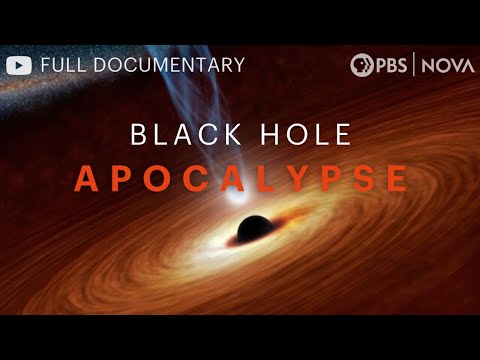
Did you know that black holes are, like, the ultimate cosmic party crashers? Seriously, they’re so dense that not even light can escape their grasp. Imagine being in a room full of people and one dude just sucks all the light out—yeah, that’s a black hole for you!
So, let’s chat about these mysterious giants in the universe. Ever stared up at the night sky and thought about what’s really out there? Black holes are mind-boggling, right? They twist our understanding of physics and challenge everything we think we know about space.
Grab a comfy seat because we’re diving into some wild stories and fresh insights about black holes. It’ll be fun! Trust me, you don’t want to miss this cosmic journey.
Exploring the Cosmos: Insights into the Universe Through Black Holes
So, black holes, huh? They’re these super mysterious, crazy cool things in space that seem to have it all—gravity so strong that not even light can escape. It’s wild when you think about it! Let’s break down what they are and what they tell us about the cosmos.
First off, what exactly is a black hole? Well, picture this: when a massive star runs out of fuel, it can’t hold itself up anymore. It collapses under its own weight and creates a black hole. There are different types of black holes—like stellar black holes formed from dying stars, and supermassive black holes which chill at the centers of galaxies with masses millions or even billions of times that of our Sun!
You might be wondering why we care about these cosmic giants. Black holes act as cosmic laboratories. They give us insights into the laws of physics. For instance, when NASA’s Event Horizon Telescope captured the first image of a black hole in 2019—talk about epic!—we got to see how matter behaves under such extreme conditions. It’s like watching how water swirls down a drain but on an intergalactic scale.
Another fascinating thing is how they impact their surroundings. Black holes can actually influence the formation of stars and galaxies. Matter spirals into them in a process called accretion. This generates heat and light, leading to bright emissions known as quasars. These can outshine entire galaxies! Just imagine that—a single point emitting more energy than everything around it!
One mind-blowing fact: Black holes challenge our understanding of reality itself! When you get close to one, time behaves differently due to their intense gravity—a concept called time dilation. If you were floating near a black hole and looked at Earth through a telescope? You’d see time speeding ahead there while your clock ticks slowly!
Anecdote time! There’s this story about physicist Stephen Hawking who proposed that black holes aren’t entirely “black” after all. He suggested they might emit radiation (now famously known as Hawking radiation) due to quantum effects near the event horizon—the boundary beyond which nothing can escape. Imagine that tiny particles sneaking out into the universe from one of these massive giants… it’s mind-bending!
To wrap it up, black holes help push the boundaries of what we understand about physics, space, and time itself. They remind us how much we still have to explore in our vast universe—it’s like opening a door to infinite possibilities! So, next time you gaze up at the night sky or think about those twinkling stars, remember there’s so much more going on beneath those shiny surfaces!
Exploring Current Research Advances in Black Hole Science: Unveiling the Mysteries of the Universe
So, black holes, huh? They’re these incredibly mysterious things out in the universe that can be kind of hard to wrap your head around. But I’ll try to break it down for you. Basically, black holes are regions in space where the gravitational pull is so strong that nothing—not even light—can escape from them. That’s why they’re called “black.” They can be formed by the collapse of massive stars after they’ve exhausted their nuclear fuel. And guess what? There are different types!
- Stellar Black Holes: These are the most common and form when a massive star runs out of energy and collapses under its own gravity.
- Supermassive Black Holes: Found at the centers of galaxies, including our Milky Way! These can be millions or even billions of times the mass of our sun.
- Simpler Versions: There are also intermediate and primordial black holes that scientists think might exist but haven’t been spotted yet.
Now, here’s what’s cool: researchers are making some crazy advances in understanding these cosmic beasts. One of the biggest breakthroughs was when scientists captured an image of a black hole’s event horizon using a network of telescopes called the Event Horizon Telescope. That was in 2019, and it gave us tangible proof that they really exist! Can you imagine how excited everyone was?
Another fascinating area is gravitational waves—ripples in space-time caused by massive events like black hole collisions. The first detection happened back in 2015 by LIGO (Laser Interferometer Gravitational-Wave Observatory). It was like getting a phone call from deep space! This opened up a brand new way to observe our universe.
And then there’s Hawking radiation, named after physicist Stephen Hawking. He proposed that black holes could actually emit particles over time due to quantum effects near their event horizon. Talk about mind-bending! This could mean that black holes aren’t just these eternal traps; they might eventually evaporate under certain conditions.
But here’s where it gets tricky: studying black holes is tough because they’re surrounded by massive amounts of swirling gas and dust that’s super hot and bright. Trying to see what’s going on is like trying to watch a movie while standing behind a giant wall!
So, scientists are using advanced simulations and models to predict their behavior better. For instance, some research focuses on how matter behaves as it spirals into a black hole, which can give insights into how material interacts with extreme gravity.
In short, current research on black holes isn’t just about figuring out what they are; it’s reshaping our entire understanding of physics and cosmology! Each piece we uncover feels like another puzzle piece falling into place in this vast cosmic jigsaw.
It really makes you think about our place in this gigantic universe, right? The more we learn about these enigmatic objects, the clearer it becomes that there’s still so much we don’t know—and maybe never will—but isn’t that part of the fun? So keep an eye out; who knows what amazing discoveries are just around the corner!
Unraveling the Mystery: The Pioneers Behind the Discovery of Black Holes in Astrophysics
Sure, let’s talk about black holes and the amazing folks who helped us understand them. It’s a wild journey through space, and it all starts back in the early 20th century with some seriously brilliant minds.
First off, you gotta give props to **Albert Einstein**. In 1915, he came out with his theory of **general relativity**. You know, that whole bending of spacetime thing? Well, one of the implications of this theory was that massive objects like stars could warp spacetime so much that they could create these things we now call black holes. It was like opening a door to a totally new way of seeing the universe!
Then we meet **Kerr and Newman** in the 1960s. They took Einstein’s ideas further by showing us different types of black holes. To keep it simple: Kerr black holes are rotating while Newman ones have electric charge. Imagine spinning pizza dough – that’s like how a Kerr black hole twists space around it.
Also, let’s not forget **John Archibald Wheeler**. He can be credited for coining the term “black hole” in 1967. Before that, people called them “frozen stars.” Oddly enough, it sounds kind of cozy but doesn’t really capture how intense they are!
And who could ignore **Stephen Hawking**? He just brought another level to our understanding with his theory of **Hawking radiation** in the 1970s. This suggested that black holes can actually emit radiation due to quantum effects near their event horizon—the point where nothing can escape their gravitational grip anymore. Just think about it! Even something as powerful as a black hole isn’t completely eternal!
But wait! How do we know these things exist? Well, over time astronomers started observing phenomena around what we thought were black holes—like stars moving really fast around invisible points in space. The evidence started piling up!
You also have organizations like ***NASA*** and various observatories employing advanced tech to bring us closer to understanding this cosmic riddle. Things like gravitational wave detectors have helped solidify the existence of these beasts by capturing ripples caused when two black holes collide—so cool, right?
Finally, let’s not skip onto today! Scientists are pushing boundaries with projects like ***Event Horizon Telescope*** which even captured an image of a black hole’s event horizon—a huge leap for making these cosmic giants feel more real to us.
So there you have it! From Einstein’s mind-bending ideas to modern-day observations—documenting these incredible celestial objects has been a thrilling ride filled with curious minds wanting to unravel the mysteries of our universe.
- Albert Einstein: Laid the groundwork for black hole theory with general relativity.
- Kerr and Newman: Introduced different types of black holes.
- John Archibald Wheeler: Coined the term “black hole.”
- Stephen Hawking: Proposed Hawking radiation—a game changer!
- Modern tech: Observatories provide crucial evidence and insights.
Black holes might seem abstract at times but remember—they’re part of our universe’s story, waiting for us to understand them better!
Black holes are those cosmic mysteries that can totally blow your mind, right? Like, these massive entities are formed when something super dense collapses under its own gravity. But the one that captures attention these days is the so-called ‘BFB’, or the ‘Big Fat Black Hole.’ Seriously, just saying it sounds fun! BFBs are among the heaviest black holes out there. They can pack a punch in terms of mass and gravity.
I remember watching a documentary as a kid, where they said if you fell into a black hole, you’d be stretched out like spaghetti due to intense gravitational forces. I thought about that for ages! Can you imagine being pulled apart like that? Just thinking about it gives me chills!
Anyway, scientists have been looking at BFBs to understand things like galaxy formation and cosmic evolution. You might think black holes just suck everything in without giving anything back, but they actually play a crucial role in shaping galaxies! They influence how stars form and interact with each other. The interaction between stars and their surrounding gas is deeply affected by these heavyweight holes.
But here’s what really gets interesting: recent research has found that some BFBs may actually be feeding on gas clouds at such rapid rates that they’re flinging out tons of material into space! It’s kind of like this chaotic cosmic buffet where instead of just swallowing everything whole, black holes can also act as fountains of material for new stars to form. Isn’t that a wild twist?
And let’s not forget about how studying BFBs can help us grasp the laws of physics better. They push our understanding of gravity and challenge scientists to think beyond current theories. It’s like trying to connect dots in an intricate puzzle—some pieces just don’t seem to fit yet.
So when you’re gazing at the night sky next time, maybe ponder on those mysterious black holes up there amidst the stars. They’re not just cosmic vacuum cleaners; they’re part of this grand narrative we all belong to—a narrative filled with wonder and questions we’re still trying to answer. Crazy how much we’ve learned but also how much more there is left to explore!