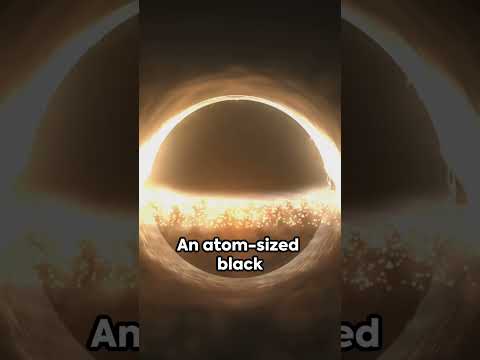
So, picture this: you’re at a cosmic party. Stars are mingling, glowing bright, and then, out of nowhere, a black hole crashes the scene. It’s like the uninvited guest no one wants but can’t stop watching.
Seriously, these guys are fascinating. A black hole is basically a hungry vacuum in space that gobbles up anything that gets too close—kind of like me at an all-you-can-eat buffet!
But it gets better. Some stars actually dance with these cosmic beasts instead of running away screaming. Yeah, you heard that right! This wild waltz between stars and black holes is like a celestial feast—one that’s just as beautiful as it is chaotic.
Like, how does that even work? Well, it’s not just about some dramatic drama in the universe; it’s science at its most intriguing level. So grab your cosmic popcorn because we’re about to dive into this stellar showdown!
Exploring the Impact of Black Holes on Stellar Dynamics: What Happens to a Star?
When you think about black holes, it’s easy to picture a giant cosmic vacuum cleaner, right? They’re these mysterious things in space that gobble up anything that comes too close. But let’s chat about how they affect the stars around them. It’s like a dramatic dance—sometimes graceful, sometimes chaotic, and really intense!
So, what happens to a star when it gets too cozy with a black hole? First off, you have to imagine the huge gravitational pull that black holes exert. This is no small feat because their mass can be millions or even billions of times that of our Sun! When a star drifts near one of these beasts, things start to get interesting.
- Gravitational Stretching: As a star approaches a black hole, it’s pulled from one side more than the other. This is called tidal forces. Imagine pulling on a piece of dough; it stretches and sometimes even tears. Stars can get stretched out in this way until they become what we call spaghettified.
- A Cosmic Feast: If the star gets too close without being torn apart, parts of it can actually fall into the black hole! This is where it gets really wild: as the star’s material spirals into the black hole, it heats up tremendously and emits radiation—like an incredibly bright light show in space.
- The Aftermath: Once part of the star has been consumed by the black hole, its fate is sealed. The remaining bits might be flung away or pulled into orbit around the black hole. Sometimes these leftovers can form an accretion disk—a swirling ring of gas and dust—around the black hole. It’s like cosmic recycling!
I remember reading about this one particular system called XTE J1118+480. This binary system contains both a black hole and a companion star. The interactions between them have given scientists so much insight into this dance! The way material was pulled from that star showed us how dynamic these situations can be.
You might wonder what happens if a star survives this encounter. Well, in some cases, stars undergo significant changes after being near a black hole—kind of like getting your hair messed up by wind! They might end up spinning faster or changing their orbit drastically.
The fascinating part? Even if stars fall victim to their gigantic neighbors, they contribute to our understanding of physics and astronomy. Each interaction gives us clues about gravity and how things work on grand scales.
In summary, interactions between stars and black holes are anything but boring! From stretching out into spaghetti-like forms to creating stunning displays of energy as matter falls in, it’s all part of nature’s wild ride through space.
Understanding Stellar Evolution: The Transformation of Stars into Black Holes
So, let’s chat about stars. You know, those twinkling dots in the night sky? They’re not just pretty lights; they’re doing some serious cosmic stuff. Over time, stars go through a whole series of changes—something we call stellar evolution. And when they finally reach their end, some of them can transform into black holes. Pretty mind-blowing, right?
First off, every star’s life begins in a massive cloud of dust and gas. It’s like cosmic birth! This cloud collapses under its own gravity, and—boom!—you get a protostar. As it gathers more material and heats up, nuclear fusion kicks in. Basically, that’s when hydrogen starts fusing into helium. This process releases tons of energy and keeps the star shining brightly.
As these stars age, they go through different phases depending on their mass. A medium-sized star might swell into a red giant when it runs out of hydrogen fuel in its core. But what about the big ones? Well, massive stars take it to a whole new level! They burn through their fuel super fast and create heavier elements all the way up to iron.
Now here’s where it gets intense! Once the core is mainly iron and fusion stops working its magic (because iron doesn’t produce energy), gravity takes over big time. Without that outward pressure from fusion to hold things up, the core collapses under its own weight.
This collapse is like a chaotic fireworks show! The outer layers get blasted away in a supernova explosion—one of the most powerful events in the universe. If the remaining core is more than about three times the mass of our Sun after this explosion? That bad boy becomes a black hole!
So what exactly is a black hole? Imagine an area in space where gravity pulls so hard that even light can’t escape from it. It forms a sort of boundary called the event horizon, beyond which nothing returns.
But wait! What happens if another star gets too close to our newly formed black hole? Well, it could actually start to feed it material—a little cosmic feast if you will! The black hole pulls matter from that star as it spirals toward the event horizon. This process creates an accretion disk around the black hole, heating things up and glowing brightly with X-rays before anything crosses over to “the other side.”
It’s all part of a larger cycle you see: stars are born, live out their dazzling lives, meet dramatic ends like supernovae or become black holes—and then maybe even help create new stars with their remnants.
To sum it all up:
Isn’t that something? Stars have this incredible journey throughout billions of years! Understanding this cosmic dance adds so much depth to how we view our universe—it’s alive with change and transformation at every turn!
Have you ever looked up at the night sky and just felt a little bit overwhelmed? I mean, there are literally billions of stars up there, each with its own story. But what about when one of those dazzling stars meets a black hole? It’s like a cosmic dance; an epic showdown that’s both beautiful and terrifying at the same time.
So, we’ve got this star cruising along in its own celestial orbit, shining bright and minding its business. But then—bam! A black hole shows up, lurking nearby with its intense gravitational pull. You know how when you’re too close to a really strong magnet, it just pulls everything in? Well, black holes are kind of like that but way more extreme!
The thing is, as our star gets closer to the black hole, it starts stretching and getting pulled apart in this spellbinding display called “spaghettification.” Imagine your favorite pasta getting all slinky—that’s pretty much what’s happening here! And all that matter that gets ripped away from the star begins to spiral into the black hole. It’s like a cosmic feast where nothing goes to waste.
I remember reading about this one event called GRB 110721A where scientists observed a star being devoured by a black hole. They caught this incredible burst of energy—a gamma-ray burst—when the star was torn apart. Can you imagine being on Earth and catching such a spectacular show? Talk about nature’s fireworks!
But despite how dramatic it seems, there’s something poetic about it too. Every end brings new beginnings in the universe. The material from that shredded star can eventually form new stars or planets over time. It’s sort of a cycle: destruction leading to creation.
So next time you’re stargazing, think about those distant celestial waltzes happening out there. Each twinkling light carries tales of survival and surrender amidst the vastness of space. And who knows? Maybe one day you’ll find yourselves dancing among them too! Isn’t that just awesome?