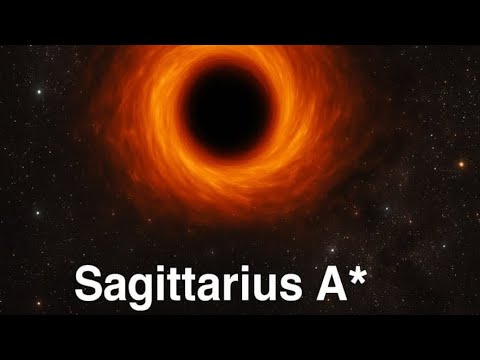
So, picture this: you’re in a room full of really smart people talking about black holes like they’re just your regular weekend plans. Wild, right? But that’s what happens when the topic is Sagittarius A*, our galaxy’s very own supermassive black hole.
Now, this isn’t just any black hole; it’s like the celebrity of the cosmic world. It hangs out at the center of the Milky Way and munches on stars, gas, and whatever else comes too close. Seriously! Imagine a hungry toddler at a buffet—nothing stands a chance.
But here’s the kicker: we still don’t really know how it got there or what it’s up to. Sagittarius A* is shrouded in mysteries that even science struggles to untangle. And guess what? That makes it even cooler! So grab a snack, and let’s unravel some of the enigma surrounding this cosmic giant together!
Insights from Albert Einstein: His Perspectives on Black Holes in Modern Science
So, let’s chat about Albert Einstein and those mysterious things we call black holes, especially the one chilling out in the center of our galaxy: Sagittarius A*.
First off, Einstein’s theories changed everything. His theory of relativity laid down some serious groundwork for understanding space and time. You see, before him, the universe was thought to be a pretty straightforward place. But Einstein shook things up by showing that gravity isn’t just a force; it’s more like a bend in the fabric of space-time. Imagine setting a heavy bowling ball on a trampoline. The trampoline sags where the ball sits, right? That’s how massive objects like stars warp space around them.
Now, when it comes to black holes, Einstein wasn’t exactly on board at first. He actually thought they were just mathematical oddities—something that popped out from his equations but didn’t exist in reality. It wasn’t until later that scientists started to take this idea seriously. The term “black hole” itself wasn’t even coined until the 1960s! Can you believe that? So wild!
But back to today—what’s all this buzz about Sagittarius A*? Well, this black hole is about 4 million times more massive than our sun! Think of it as an enormous cosmic vacuum cleaner pulling everything nearby into its grasp. This black hole is pretty secretive; we can’t see directly inside it because light can’t escape its pull. Instead, we observe its effects on nearby stars and gas clouds.
To really understand Sagittarius A*, we turn to Einstein’s equations once again. They allow us to predict how such massive objects behave in space-time. When astronomers observe how stars orbit around this black hole, it’s like following dance moves in a cosmic ballet. These orbits give us vital clues about the mass and size of Sgr A*.
Another fascinating thing is how scientists use gravitational waves to explore these hidden regions of space! When two black holes collide—boom! They send ripples through space-time that we can detect here on Earth with instruments like LIGO (Laser Interferometer Gravitational-Wave Observatory). It’s like tuning into the universe’s gossip!
Though Einstein left us long ago in 1955, his ideas still guide us through these cosmic puzzles. The understanding we have today about black holes—and specifically Sgr A*—is deeply rooted in his work.
So if you’re ever staring up at the night sky thinking about those swirling mysteries out there, remember: Einstein not only helped us understand gravity but opened doors to whole new realms of exploration that sci-fi writers could only dream about before him! Isn’t that something?
Unraveling the Cosmos: Exploring the Biggest Mysteries Surrounding Black Holes in Modern Science
Alright, let’s talk about black holes! They’re like the universe’s ultimate mystery boxes, and the one at the center of our galaxy, called Sagittarius A*, is just packed with enigmas. Imagine this: something so dense that not even light can escape. Sounds sci-fi, right? But it’s as real as it gets in modern astrophysics.
So, what exactly do we know about Sagittarius A*? Well, for starters, it’s a supermassive black hole—like really huge. It weighs in at about 4 million times the mass of our Sun! That’s a lot of gravity pulling everything in its vicinity. And yet, you can’t just see it directly; you won’t find it shining brightly like a star. Instead, scientists have been piecing together clues from the stuff swirling around it.
- Event Horizon: This is the point of no return. Once anything crosses this boundary, it’s toast! The gravitational pull is so intense that escape is impossible.
- Accretion Disk: Around Sagittarius A*, there’s a disk of gas and dust spiraling inwards. As this material falls toward the black hole, it heats up and emits X-rays—you know, some pretty wild stuff!
- Gravitational Waves: When two black holes collide (which happens!) they send ripples through spacetime known as gravitational waves. Detecting these has opened up an entire new way to study cosmic events!
You might be wondering how we even got to know all this. It’s not like we can hop on a spaceship and take selfies with a black hole! Instead, scientists use telescopes to observe how stars behave around Sagittarius A*. For instance, there’s this one star named S2. It zooms around the black hole at ridiculously high speeds—like racing on cosmic highways! By tracking S2’s orbit over time, researchers have been able to infer the mass and location of Sagittarius A*.
Now here comes one of those emotional moments—imagine being part of the team that first captured an image of a black hole shadow back in 2019. They used data from multiple telescopes around the globe to create an image showing a bright ring surrounding darkness—a silhouette of something so powerful yet elusive. That was huge for astrophysics!
And here’s another twist: despite all we’ve learned about Sag A*, there are still loads of questions left hanging out there in the cosmos. For instance:
- The Evolution: How did Sagittarius A* grow to be so massive? It’s still unclear how such giant black holes form early in galaxies.
- Matter Behavior: What exactly happens at or near the event horizon? Quantum effects may come into play here that challenge our current understanding.
You see? The quest to unravel these cosmic mysteries is ongoing. Every day brings new discoveries and fresh theories! With advanced tech on its way—and maybe some cool new ideas—we’ll keep peeling back those layers hiding what lies beyond those event horizons.
The thing is, when you think about all these complex forces dancing around each other out there in space, it’s both humbling and awe-inspiring. So next time you gaze up at those stars twinkling above us—just remember there are secrets lurking right under our noses or rather light-years away!
Exploring the Andromeda Galaxy: Insights into Our Nearest Galactic Neighbor
You know how sometimes you look up at the night sky and see all those stars twinkling? Well, there’s this one galaxy that gets everyone buzzing—it’s called the Andromeda Galaxy. And get this, it’s actually our nearest galactic neighbor. Seriously! Just about 2.537 million light-years away from us, it’s like a cosmic next-door neighbor who keeps popping over for a chat.
Now, you might be thinking, “What’s so special about Andromeda?” A lot, actually! It’s huge—like, really huge. It contains over a trillion stars, way more than our own Milky Way. If you were to count them all one by one, it would take you thousands of years. Can you imagine? Counting stars for your entire life!
What’s super interesting is how Andromeda is heading right towards us. Yep! In about four billion years, it’s forecasted that Andromeda and our Milky Way will collide. Sounds dramatic? It kind of is! But don’t worry; no stars will crash into each other because they’re mostly made up of empty space.
- Black holes: Each galaxy has its own central supermassive black hole. In Milky Way’s case, there’s Sagittarius A*. Andromeda has its own too—named M31* (not quite as catchy!). The study of these black holes gives scientists clues about how galaxies form and evolve.
- The mysteries: The beauty of watching galaxies is their twisting shapes and patterns. When astronomers study them closely, they can find clues related to dark matter—an invisible substance that makes up most of the universe’s mass but doesn’t emit light or energy.
- The future: Once they collide, it’ll create something new—a blended galaxy often referred to as “Milkomeda.” It may sound like a fun dessert flavor but think of it more as the next phase in cosmic evolution!
Now let’s swing back to Sagittarius A*, which has been making headlines lately because it’s kind of a big deal in understanding black holes. This mysterious object sits at the center of our galaxy and has a mass equivalent to four million suns packed into a teeny tiny space. Just wild! Understanding Sagittarius A* helps us learn more about black holes in other galaxies too—including Andromeda’s.
You might wonder, why focus on these distant galaxies anyway? Well, studying places like Andromeda opens doors to figuring out our origins and where we fit into this enormous universe. Each discovery brings us closer to understanding some really big questions. Sometimes I think about how people thousands of years ago gazed at the same stars we do now—it blows my mind!
The thing is: whether it’s through telescopes or computer simulations, every little bit we learn brings us closer together with the cosmos like one big interstellar family! So next time you’re outside stargazing or even just scrolling through images online, remember that there are whole worlds out there waiting for us to uncover their secrets.
So, let’s chat about this giant black hole in the center of our galaxy, Sagittarius A*. It’s like this mysterious cosmic beast, you know? I mean, we’re talking about something that has puzzled scientists for ages. Imagine staring at a dark void that holds secrets to how galaxies like ours were formed. It’s a bit mind-blowing when you think about it.
Now, here’s a personal thing for me: the first time I learned about black holes was from a late-night documentary on space. I remember lying in bed, wide-eyed and probably drooling a bit—just totally captivated. The idea of these invisible giants just swallowing everything around them is both terrifying and awe-inspiring. Like, I could barely comprehend it!
But back to Sagittarius A*. It’s located about 26 thousand light-years away from Earth in the Milky Way’s core. Scientists believe it has the mass of around four million suns! Can you even picture that? Four million! And yet, we can’t see it directly because (surprise!) black holes don’t emit light. They have this insane gravitational pull that even light can’t escape. Talk about dark and mysterious!
What’s really fascinating is how we actually know it’s there despite its invisibility. Astronomers observe the stars orbiting something they can’t see—this supermassive black hole—and from their motion, they can infer its presence and size. It’s like playing detective with the universe! Seriously though, it feels almost magical that we can deduce so much from just observing the behavior of other celestial bodies.
And get this: Sagittarius A* also gives us clues about the early universe and how things evolved over billions of years. There are theories suggesting that small black holes eventually merged into larger ones over time—so studying Sagittarius A* could unlock some secrets not just about our galaxy but possibly many others too.
Yet still, there are so many questions left unanswered. What exactly happens inside a black hole? Can they evaporate over time? What role do they play in galaxy formation? Every mystery leads to more mystery, you follow me?
In my own way of reflecting on all this, it’s humbling to realize how little we know amidst all our advances in science. The vastness and complexity of space sometimes make me feel small but also excited—a kind of wonder that keeps me curious about everything around us.
So while we might not have all the answers today—in fact, we probably have more questions—there’s beauty in that uncertainty. It reminds us there’s always more to explore and understand as we gaze into the cosmos and ponder our place within it all.