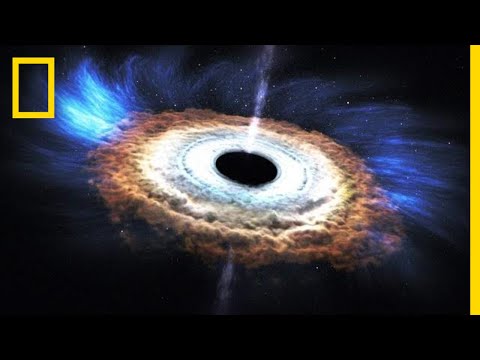
So, picture this: you’re lying in bed one night, gazing up at the stars. You know, just your average stargazing moment. And suddenly it hits you—what if that twinkling light is actually a giant black hole, just hanging out and gobbling everything in its path? Crazy thought, right?
Black holes are like the mysterious vacuum cleaners of space. They suck up everything—matter, light, even time itself—into their gravitational grip. It’s wild stuff! I mean, we’re talking about just the absolute monsters of the universe.
But hold on a second! These big black holes aren’t just cosmic villains. They’re actually key players in how galaxies form and evolve. Yup! So much more than mere space monsters.
Let’s dive into this black hole adventure together and explore why these huge cosmic enigmas are so captivating!
Exploring the Evidence: The Scientific Validation of Black Holes in Astrophysics
Sure thing! Let’s break down the whole black hole situation in a friendly way.
Black holes are these super weird objects in space. They’re formed when massive stars run out of fuel and collapse under their own gravity. Sounds dramatic, right? And here’s the wild part: they have this point called the event horizon. That’s where things get tricky—anything that crosses it can’t escape, not even light! So yeah, they’re literally invisible.
Now, you might be thinking, “How do we even know they exist if we can’t see them?” Good question! Scientists have come up with some pretty smart ways to figure this out. One of the main things they look for is how black holes affect stuff around them. For instance:
- Gravitational Pull: When a black hole pulls in nearby objects, they start moving super fast. This movement creates X-rays as the material heats up, and we can detect those X-rays with special telescopes.
- Motion of Stars: By observing stars orbiting around something invisible (hello, black hole!), astronomers can infer its mass. It’s like seeing a dog chase a tail—you know the tail is there because of how the dog moves!
- Gravitational Waves: This is like hearing ripples in a pond when you throw a rock in. When two black holes collide, they create waves throughout space-time that we can pick up with detectors on Earth.
A couple years ago, scientists actually captured an image of a black hole’s shadow! It was mind-blowing. They used something called the Event Horizon Telescope to combine data from all over Earth—like piecing together a puzzle from different locations. And bam! There it was: M87*, a giant black hole at the center of our neighboring galaxy.
Another cool thing about those big fellas is Hawking radiation—named after physicist Stephen Hawking. He suggested that black holes aren’t just eternal prisons—they could actually emit tiny amounts of radiation over time and maybe even evaporate! Talk about complex stuff for such mysterious beings!
So yeah, all these methods show us that black holes aren’t just theories floating around; there’s real evidence backing them up. They’re fundamental to our understanding of astrophysics and help explain how galaxies evolve over time.
In short? Black holes may be invisible but leave their mark on everything around them. Their evidence isn’t just hiding in shadows; it’s woven into the very fabric of our universe. Isn’t space just incredible?
Exploring the Allure of Black Holes: Unraveling the Mysteries of the Universe
Sure thing! Let’s dive into the captivating world of black holes and see what all the fuss is about.
First off, black holes are these incredible regions in space where gravity is so strong that nothing, not even light, can escape. So, if you think about it, they’re like the ultimate cosmic vacuum cleaners. But how do they form? Well, when a massive star runs out of fuel, it can’t support its own weight anymore. Boom! It collapses under its own gravity and can create a black hole.
Now, what’s really cool (and kind of terrifying) is that there are different types of black holes. Here are some to ponder:
- Stellar Black Holes: These little guys form from collapsing stars and usually have masses ranging from about three to a few tens of solar masses.
- Supermassive Black Holes: Found at the centers of galaxies like our Milky Way, these beasts hold millions or even billions of solar masses! Seriously big.
- Intermediate Black Holes: These are the mystery ones—between stellar and supermassive types—and scientists are still figuring out how they form.
But here’s the kicker: you can’t just “see” black holes. Since they don’t emit any light, we spot them by observing their effects on nearby stars and gas. For instance, if you see a star zipping around an invisible mass in space, you’re probably looking at a black hole!
And there’s this thing called an **event horizon**. It’s like an invisible boundary around a black hole. Once something crosses it—poof—it becomes part of that black hole forever. It’s almost poetic in a way; once you’re in, there’s no coming back.
I remember reading about the first-ever picture taken of a black hole back in 2019; it was mind-blowing! This image showed the supermassive black hole at the center of M87 galaxy. That fuzzy image changed everything—we could finally visualize something we thought was just theoretical for so long.
But wait; let me sprinkle some wild facts here too:
- The gravitational pull near a black hole is so strong that time actually slows down for objects close to it compared to those far away!
- If you fell into one (not suggesting you try!), you’d experience “spaghettification,” where tidal forces stretch you into long shapes as you approach.
So why should we care? Well, studying these cosmic giants helps us learn more about gravity and the laws governing our universe. They challenge what we think we know about physics! Plus, there’s something awe-inspiring about pondering existence itself while gazing up at those distant points in space.
Basically, black holes remind us that there’s still so much left to explore out there. You could think of them as nature’s ultimate puzzles—mysterious yet beautifully complex—as we continue our journey through understanding this vast universe we live in. Isn’t it amazing?
Unraveling the Mystery: The Pioneers Behind the Discovery of Black Holes in Astronomy
Alright, let’s talk about black holes! You might think they sound like something out of a sci-fi movie, right? But these cosmic mysteries are very real, and their story involves some pretty brilliant minds in astronomy.
The concept of black holes started back in the 18th century with a guy named John Michell, who was a British natural philosopher. He was the first to suggest that there could be an object so massive that not even light could escape its gravitational pull. Can you imagine? Just sitting there, pondering the nature of gravity and light? That’s some next-level thinking!
But it wasn’t until the early 20th century that things really started heating up. Enter Albert Einstein. His theory of general relativity in 1915 changed everything. He showed that massive objects warp spacetime around them. It’s like placing a heavy ball on a trampoline—everything curves towards it, and if you’re not careful, you can get pulled in! This was crucial for understanding how black holes work.
Then came Karl Schwarzschild, who took Einstein’s equations and solved them for a point mass. In 1916, he described what we now call the “Schwarzschild radius,” which is basically the size at which an object becomes a black hole. How mind-blowing is that? A lot of smart folks were starting to pay attention at this point!
Fast forward to the 1960s, when things really got exciting again with John Archibald Wheeler, who coined the term “black hole.” Before that, these objects were often called “failing stars” or other names that didn’t quite capture their essence. Wheeler made it sound way cooler and more mysterious.
You see, black holes come in different sizes—there are *stellar* black holes formed from collapsing stars and *supermassive* black holes found at the centers of galaxies. For instance, our Milky Way has one called Sagittarius A*. It’s about four million times as heavy as our sun! Imagine being sucked into something like that!
A huge leap in evidence came about in recent years with projects like The Event Horizon Telescope. They managed to capture an image of a black hole’s shadow in 2019 for the first time ever! That’s one small step for scientists but a giant leap for understanding these cosmic giants.
- The groundwork laid by early thinkers like Michell and Einstein set up what we now know about gravity and spacetime.
- Pioneers such as Schwarzschild further defined how we understand size constraints for these extraordinary objects.
- Wheeler helped popularize the term “black hole,” making it part of everyday scientific vernacular.
- Recent advancements have allowed us to actually see evidence of black holes through collaborations like The Event Horizon Telescope.
The more we learn about black holes, the more questions pop up. They challenge our understanding of physics and push us to think bigger (literally!). So next time you gaze up at the night sky, remember those brilliant minds who helped unravel this cosmic mystery—and maybe even ponder what’s lurking out there beyond our understanding!
Black holes, man, they’re like the rockstars of the universe, aren’t they? Just sitting there, practically swallowing everything around them. I mean, how cool is that? But here’s the kicker: they’re not just huge vacuum cleaners in space. They’re downright mind-bending if you really start to think about it.
So picture this: you’re looking up at a starry sky on a clear night. You see all those shiny dots twinkling away. But lurking out there are some black holes—super massive ones—waiting to do their thing. A bit eerie, right? It’s like knowing there’s a monster in your closet but way cooler because it’s a cosmic monster!
What gets me is how these giants form. It’s not like they just pop into existence. Some of them start as massive stars that have burned through their fuel and, overwhelmed by gravity, collapse under their own weight. Kind of sounds dramatic when you put it that way! The core crumbles down until it creates something with gravity so strong that not even light can escape it! That’s wild.
And then there’s the whole idea of time and space getting funky around these black holes. You ever heard of time dilation? Near a black hole, time slows down compared to how we experience it on Earth. So if you were somehow hanging out near one (not sure I’d want to!), you could take a quick trip and come back years later without aging much at all! Like stepping into some sci-fi movie.
Sometimes I think about those researchers who spend years studying these cosmic wonders. Imagine waiting for data from distant galaxies or tracking down gravitational waves—like finding tiny ripples in the fabric of spacetime itself! It must feel exhilarating to piece everything together like a giant puzzle from billions of years ago.
Sure, we may never get close enough to one of these massive black holes to see their secrets up close (thank goodness), but every new discovery makes my heart race a little faster! Each revelation sparks curiosity, just fueling our hunger for knowledge about what lies beyond our little blue planet.
So next time you’re gazing up at the stars or catching your breath over an astronomy documentary, remember that those big black holes are out there doing their thing—mysterious and awe-inspiring—and that’s pretty darn amazing!