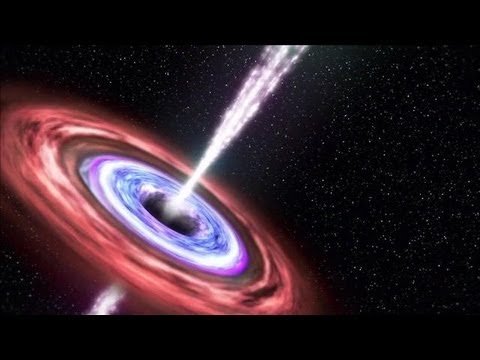
You know that moment when you lose your keys, and for a split second, you think they’ve vanished into another dimension? Yeah, well, black holes are kind of like that. Except they’re way cooler and a bit scarier.
Imagine a point in space where gravity pulls so hard that not even light can escape. Mind-blowing, right? It’s like the universe’s ultimate vacuum cleaner.
Growing up, I was obsessed with space—like seriously obsessed. I had all these books about planets and stars, but the idea of black holes always got me. They felt like the universe’s big secret, lurking out there in the dark.
So let’s take a stroll through this cosmic mystery together. We’ll explore what black holes really are, how they form, and why they’re not just fodder for science fiction movies but real wonders of our universe. Ready to unravel some cosmic secrets?
Exploring Quasars: Unraveling the Mysteries of the Universe’s Most Powerful Celestial Objects
Quasars are like the rock stars of the universe. They’re some of the brightest and most energetic objects out there. Seriously, they shine with a brilliance that can outshine entire galaxies! But what exactly are they? Well, let’s break it down in a way that makes sense.
So, a quasar is basically the core of a distant galaxy. It’s fueled by a supermassive black hole sitting at its center. When matter falls into this black hole, it heats up and releases massive amounts of energy before disappearing. Kind of like when you drop something into a hot pot – it heats up fast, right?
Now, when we talk about distance, we’re talking far. Quasars are usually billions of light-years away from us. When you’re looking at them through a telescope, you’re actually peeking back in time! That’s because light takes forever to travel those huge distances.
- The energy output from quasars is insane; they can emit more energy than hundreds of galaxies combined!
- They were first discovered in the 1960s when astronomers noticed some radio emissions coming from points on the sky that looked like stars.
- These spots turned out to be distant quasars that we now observe across various wavelengths.
Here’s an interesting tidbit: when you see a quasar shining bright through your telescope, you’re witnessing something that was happening billions of years ago! It’s like looking back through time. Imagine living in an ancient civilization and catching snippets of light from someone lighting their fire thousands of years earlier – kind of poetic if you think about it!
Now let’s get to black holes because they’re super important for understanding quasars. You might think black holes are just cosmic vacuum cleaners; they suck everything in and don’t let anything escape—like your pet cat on laundry day! But actually, not all black holes are created equal.
Supermassive black holes can weigh millions or even billions of times more than our Sun! And these colossal monsters are usually found at the centers of galaxies. When stuff gets too close to these massive black holes, it creates a disk around them called an accretion disk where material is spiraling in really fast.
As this material spirals inwards, it gets hotter and hotter—way hotter than anything on Earth—superheating until it glows brightly across all kinds of wavelengths: radio waves, visible light, X-rays. This process is what gives quasars their brightness!
But you know what’s mind-blowing? Quasars also help us understand the history and evolution of our universe. Because they’re so bright yet so far away, studying their light can provide insights into how galaxies formed and evolved over billions of years.
In essence:
- Quasars tell us about early galactic formation.
- Their brightness allows scientists to explore parts of space we couldn’t otherwise observe.
- They act as cosmic lighthouses guiding us through the expansive cosmos.
So next time you’re stargazing—or even just scrolling through astrophysics articles—think about those shining quasars lighting up the universe while we try to unravel its secrets. They might be light-years away but they’re helping us connect pieces about our own cosmic neighborhood!
Exploring the Existence of Black Holes: Unraveling Cosmic Mysteries Through Scientific Advances in 2022
So, black holes. They’ve been the stuff of science fiction and cosmic mystery for ages, right? But let me tell you—it’s not all just sci-fi fantasy. In 2022, scientists made some seriously cool advances that helped us peel back a layer or two on these enigmatic giants.
First off, what even is a black hole? You can think of it as a region in space where gravity is so strong that nothing—not even light—can escape it. Imagine trying to run away from a super powerful vacuum cleaner but in space; no matter how fast you go, you just can’t escape!
In 2022, researchers got way better at spotting these elusive beasts. They used incredible technology, like the Event Horizon Telescope (EHT), which linked up data from telescopes all over the planet to create stunning images of black holes. And guess what? This collaboration gave us our first glimpse of the black hole at the center of our own Milky Way galaxy, known as Sagittarius A*. It’s crazy to think that we can actually see something so distant!
Another big deal? Scientists confirmed that black holes don’t just sit around quietly; they actively interact with their surroundings. For instance, they can tear apart stars that wander too close—talk about cosmic munching! When this happens, they emit powerful jets of energy and radiation. These jets are like cosmic fireworks and help astronomers learn more about black holes.
Also in 2022, gravitational waves took center stage again. These are ripples in spacetime created by massive events like colliding black holes. It’s wild—scientists detected waves from merging black holes multiple times last year! Each detection adds more pieces to the puzzle about how these massive entities form and evolve.
Now let’s think about the implications. If we understand more about how black holes work—and whether they merge or consume stars—we might learn about the origins of galaxies themselves! It’s like tracing back your family tree but for entire clusters of stars and galaxies.
Oh! And here’s something cool: Theoretical physicists were also chatting it up about how information might be stored in and retrieved from black holes. This has led to debates around what happens when something falls into a black hole—is it gone forever? Theories are still bouncing around, sparking imagination as much as science.
So there you have it—black holes aren’t just mysterious voids; they’re complex entities influencing everything around them in ways we’re only beginning to grasp. Each year brings us closer to understanding their role in the vast universe we inhabit—how amazing is that? Just when you think we’ve got things figured out, nature throws another curveball our way!
The Discovery of Black Holes: Unraveling the Mysteries of Cosmic Phenomena in Science
When you think about space, you probably think about stars, planets, and maybe a few comets. But there’s something out there that’s even more mysterious: black holes. Seriously, these cosmic phenomena are like nature’s ultimate vacuum cleaners. They suck up everything around them, and getting too close is a big mistake.
So, let’s rewind a bit. The idea of black holes started back in the 18th century! A guy named John Michell first proposed the concept. He thought some stars could be so massive that not even light could escape their gravity. That’s pretty wild for the 1700s! But it wasn’t until the 20th century that we began to really understand them through Einstein’s theory of relativity.
What happens is, when a massive star runs out of fuel, it can no longer hold itself up against its own gravity. It collapses under its own weight, creating a point of no return known as the event horizon. Beyond this boundary, nothing—absolutely nothing—can escape. Imagine falling into an endless pit where you can’t climb back up; yikes!
One famous example is the black hole at the center of our galaxy called Sagittarius A*. It’s millions of times more massive than our sun! Observations using powerful telescopes have shown us how stars swirl around it at incredible speeds without being swallowed whole—talk about a cosmic dance.
And here’s something neat: black holes come in different sizes! There are stellar black holes formed from individual collapsing stars and supermassive black holes lurking at the centers of galaxies. Then there are also primordial black holes that might have formed right after the Big Bang—but I won’t dive too deep into that rabbit hole now.
Before I forget—I want to share a little story with you. In 2019, scientists released the first-ever image of a black hole’s event horizon using data gathered from Earth-based telescopes around the world. They were so excited they cried when they finally saw it! Like they had touched something utterly cosmic—a moment where science felt like magic.
But why should you care? Well, understanding black holes helps us figure out how galaxies form and evolve over time. It’s like piecing together a massive puzzle that tells us about our universe’s history and its future.
So yeah, while black holes may seem frightening or impossible to grasp at times, they’re crucial to uncovering life’s biggest questions in space and beyond. They remind us just how mysterious and exciting our universe can be!
You know, when I first learned about black holes, I couldn’t help but feel a mix of awe and a little fear. I mean, they sound almost like something out of a sci-fi movie. These massive cosmic vacuum cleaners that can gobble up everything in their path? Who wouldn’t find that intriguing!
Imagine staring up at the night sky, seeing stars twinkling, and then realizing some of those stars might just be on their final journey—getting pulled into a black hole. It gives you this eerie feeling, doesn’t it? They’re not just holes; they’re these mysterious entities packed with gravity so strong that even light can’t escape. Just picture that: light! The fastest thing we know! How cool (and bizarre) is that?
So here’s the thing: black holes have been part of our understanding of the universe since Einstein tossed around the idea of general relativity back in the day. It’s like he opened this door to a whole new realm of space and time. And scientists have been peeking through ever since. Fast forward to today, and we’ve got all this amazing tech to study them. I mean, look at gravitational waves! These ripples in spacetime tell us when two black holes collide like two massive dance partners in a cosmic ballroom.
But what really gets me is how they challenge our understanding of physics itself! When you think about it, studying black holes pushes us into areas where our current laws sort of break down. It’s like standing before a giant puzzle with missing pieces—you can feel there’s something incredible just outta reach.
There’s also this sort-of exploration vibe when scientists dive into the black hole mysteries. They’re not just trying to prove theories; they’re adventurers navigating through unknown territories without ever leaving Earth! And isn’t that amazing? Those moments when they find new evidence or capture images—like the Event Horizon Telescope did with M87*—it’s like every scientist must’ve felt their heart race!
I guess what really hits home is how we humans are drawn to unraveling these cosmic secrets despite knowing full well how small we are in this vast universe. Black holes remind us there are things beyond our comprehension—the ultimate “what ifs.” And maybe that keeps us grounded? We’ve got all these questions swirling around as fiercely as matter getting sucked into one of those celestial whirlpools.
So next time you gaze up at the stars or binge-watch some space documentary, remember: there’s so much more happening out there than meets the eye—and sometimes it takes an enigmatic entity like a black hole to stir our curiosity about everything we still don’t quite understand. Isn’t that kinda poetic?