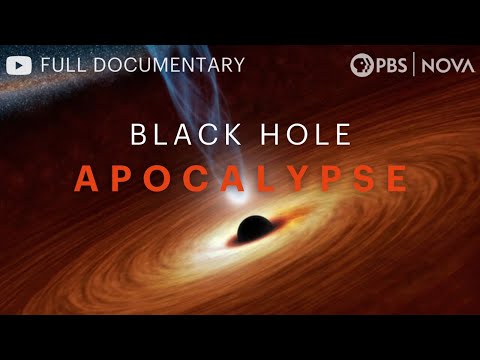
So, imagine this: you’re at a party, and some science nerd starts talking about black holes. You might think, “Ugh, here we go.” But then they mention that black holes aren’t just cosmic vacuum cleaners—they actually warp time and space like it’s nobody’s business. Wild, right?
I mean, if you’re gonna get sucked into something in the universe, you want it to be infinitely cool (and not that weird guy trying to explain quantum physics, am I right?).
Anyway, black holes are so much more than just mysterious dark spots in the sky. They play a massive role in shaping galaxies and even the universe itself. Seriously! It’s like they’re the ultimate backstage pass to understanding how everything works up there.
So stick around. We’ll peel back those layers of cosmic mystery together. Let’s figure out what these mind-bending entities really mean for us in this universe!
Exploring the Cosmic Nature of Black Holes: Unraveling the Mysteries of the Universe
So, black holes. They’re like the universe’s ultimate mystery boxes, right? You can’t see them directly, but their presence is felt through their crazy effects on nearby stars and gas. Seriously, it’s like they’re lurking in the shadows of space, waiting to surprise us.
First things first, what exactly is a black hole? Well, picture this: when a massive star runs out of fuel, it can’t hold itself up anymore. It collapses under its own gravity. If it’s massive enough, it squishes itself down into an incredibly small point called a singularity. This is surrounded by an event horizon—the point of no return. Once you cross that line, there’s no going back!
Black holes come in different sizes:
Now, why should you care about these cosmic giants? For starters, they help shape galaxies! The way they pull in gas and stars affects how galaxies grow and evolve over time. Imagine them as cosmic vacuum cleaners—pulling in everything around them and influencing their neighborhood!
What’s really wild is how scientists study black holes without seeing them directly. They look for X-rays, which are emitted when material gets superheated as it spirals into a black hole. So when you hear about a “black hole eating a star,” it’s not just dramatic storytelling—it’s actual physics at work!
Then there’s something called gravitational waves—these ripples in spacetime occur when two black holes collide or merge. Detecting these waves has opened up a whole new way to understand the universe! It’s so cool that we can literally “hear” cosmic events rather than see them.
And let’s not forget about those quirky theories floating around how black holes might connect to other universes or even act as portals (think sci-fi!). Sometimes people talk about wormholes—hypothetical passages through spacetime that could create shortcuts between distant parts of the universe.
But you know what? With all this fascinating science going on, there’s still so much we don’t understand! Like what happens inside a black hole or even what dark matter and dark energy really are—they’re still huge puzzles.
In short, exploring the nature of black holes isn’t just about understanding these mysterious objects; it’s also about piecing together the nature of everything around us—the universe itself! Isn’t that just mind-blowing? Each discovery feels like unwrapping another layer of our reality. Who knows what else lies hidden among the stars?
Exploring Quasars: Unraveling the Mysteries of Cosmic Powerhouses in Astrophysics
So, let’s talk about **quasars** and why they’re such rockstars in the universe. Seriously, these things are like cosmic powerhouses! Quasars are super bright objects powered by black holes. Imagine a black hole, which is basically a super dense area in space where gravity is so strong that not even light can escape it. Now, when matter gets really close to a black hole—like super close—it starts swirling around and gets heated up. This heated-up material is what gives quasars their incredible brightness.
You might be asking yourself, “But what makes them different from regular black holes?” Well, here’s the thing: while normal black holes just sit quietly gobbling up matter, quasars are actively devouring huge amounts of gas and dust. They radiate energy across all wavelengths—like radio waves, visible light, X-rays—you name it! Imagine being able to see a beacon brighter than an entire galaxy shining from billions of light-years away! It’s kind of like the universe’s version of a lighthouse.
Now, the **discovery** of quasars happened way back in the 1960s. One night at a telescope in Australia, astronomers found a mysterious object that seemed brighter than anything else they’d ever seen—yet it was way too far away to be part of our Milky Way. This led to the realization that these quasars were actually some of the most powerful objects in existence and were located at vast distances from Earth.
Another mind-blowing fact? Quasars can outshine entire galaxies! Just think about that for a second. A single quasar can be *trillions* of times brighter than our sun! This brightness means we can see them even when they’re billions of light-years away. It’s like having a cosmic time machine; we get to peek back into different eras of the universe’s history.
Here’s where it gets even more interesting: quasars help astronomers understand how galaxies evolve over time. They act as markers for us to trace how matter moved throughout cosmic history. As they emit powerful jets and winds that interact with surrounding gas and dust, they impact star formation in their host galaxies—you follow me? So by studying quasars, scientists gain insights into how galaxies grow and change!
Of course, there’s always more to learn about these celestial enigmas. For instance:
- **Distance:** The farther away a quasar is, the earlier in time we’re seeing it because light takes forever to travel across space.
- **Variability:** Quasars aren’t static; their brightness changes over time due to variations in their feeding habits.
- **Black Hole Growth:** Studying quasars provides clues about how massive black holes grow at different points in cosmic history.
It’s kind of poetic when you think about it—a quasar could very well be shining its light towards Earth while you’re reading this right now! It might feel abstract or distant but remember: every quasar sheds light on our understanding of the universe’s past and helps us piece together its grand story.
So next time you gaze up at the night sky or hear someone mention black holes or quasars, remember there’s so much more happening out there than meets the eye—quite literally!
Exploring Black Holes: Their Meaning and Cosmic Significance Explained
Black holes are these mind-boggling cosmic phenomena that have fascinated scientists and stargazers alike for ages. They’re like the universe’s ultimate enigma, you know? When you think about them, you’re diving deep into mysteries of physics and the very fabric of space-time.
So, what exactly are black holes? Well, they’re regions in space where gravitational pull is so strong that nothing, not even light, can escape from them. That’s why we call them “black.” Imagine trying to run away from a super intense vacuum cleaner that pulls everything in—yeah, it’s kinda like that.
These cosmic vacuums form when massive stars exhaust their nuclear fuel and collapse under their own gravity. It’s a dramatic fireworks show called a supernova explosion! After the dust settles, what’s left is either a neutron star or a black hole, depending on the original star’s mass.
- Formation: Black holes usually come from dying stars.
- Mass: They can range from a few times to billions of times more massive than our sun!
- Event Horizon: This is the “point of no return.” Once something crosses it, it can’t come back.
- Singularity: At the center lies the singularity—a point where density becomes infinite.
Now here’s where it gets really cool—there are different types of black holes! You’ve got stellar black holes, which form from collapsing stars; then there are supermassive black holes, chilling at the centers of galaxies (like our Milky Way) with masses millions or even billions times greater than our sun. And folks are starting to think there might be wormholes, which could act like shortcuts through space-time!
You might be thinking: “Okay, but why do these things matter?” That’s a great question! Black holes help us understand how galaxies evolve. By studying them, scientists learn about gravity and its influence on time and space. It’s all tied to Einstein’s theory of relativity—mind-blowing stuff!
I remember when I first learned about black holes in science class. We were shown these stunning images from telescopes capturing the glow around these mysterious objects. My mind was totally blown! I mean, how can something so invisible have such an enormous impact on everything around it?
A study published in 2020 had astronomers observing how black holes influence star formation in their host galaxies. They found out that supermassive black holes can regulate how fast stars form by blowing out energy and matter into their surroundings—kind of like controlling a cosmic garden!
The meaning behind studying black holes stretches beyond just understanding our universe; it challenges our comprehension of physics itself. They push boundaries and invite questions about existence itself—what is reality? What happens inside those cosmic voids?
The thing is, while we know quite a bit about them now thanks to advanced technology and research, there’s still so much more waiting to be discovered. So next time you’re gazing up at the stars, maybe ponder those swirling mysteries hanging out up there—it might stir something profound within you!
So, black holes, right? They sound kind of scary and mysterious, like something straight outta a sci-fi movie. But when you really think about it, they’re one of the most fascinating things in our universe. Imagine this: something so dense that not even light can escape its grip. That’s mind-blowing!
I remember the first time I stumbled upon a black hole in a documentary. I was lying on my couch, eyes wide open, feeling like I was diving into another universe. The idea made me feel both tiny and awed at the same time. Seriously, the cosmos has this way of putting everything into perspective.
Now, here’s where it gets interesting. Black holes form from massive stars collapsing under their own gravity once they’ve exhausted their nuclear fuel. We’re talking about stellar remains that go from shining bright to cosmic vacuum cleaners! They suck everything in – gas, dust, even entire stars if they’re close enough. Yet they also give rise to some pretty amazing phenomena, like quasars and gravitational waves when two black holes collide.
And you know what’s cool? They challenge our understanding of physics! Like how can something be so small yet pack more mass than our Sun? It really makes you appreciate how much we still don’t know about our universe and how much is left to uncover.
But let’s not forget their cosmic significance—black holes are more than just cosmic beasts. They play a pivotal role in galaxy formation and evolution. Without them, galaxies might look totally different! So yeah, while they might seem like the dark side of space (pun intended), they actually help shape our universe.
In the end, thinking about black holes gives me this weird mix of fear and excitement because it shows just how complex and beautiful our universe is. It’s kinda humbling to realize we’re just little specks floating around a giant cosmic dance floor. And honestly? That thought alone fills me with awe every time I look up at the stars.