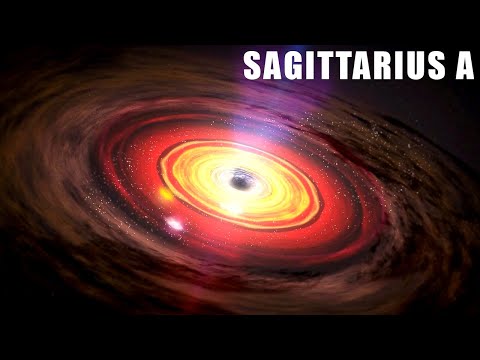
You know, I once thought black holes were just sci-fi nonsense. Like, come on, how could something suck everything in? But then I got curious and started digging deeper.
Turns out, there’s this super massive black hole right in the heart of our own Milky Way galaxy! Its name? Sagittarius A*. Sounds like a character from an action movie, right?
This thing is about four million times heavier than our sun. Seriously! Imagine that much mass squished into a tiny space. It’s got secrets and mysteries that are just waiting to be uncovered.
So, let’s take a little journey together. We’ll explore this cosmic giant and maybe even figure out why it’s such a big deal. Ready for the ride?
Unraveling the Mysteries of Black Holes: Insights and Discoveries in Modern Astrophysics
So, black holes, huh? They’re like the rock stars of the universe—totally mysterious, a bit scary, and everyone’s trying to figure them out. You might have heard about Sagittarius A*, the black hole at the center of our Milky Way galaxy. It’s around 4.6 million times the mass of our Sun! Can you imagine that? It’s hard to wrap your head around.
First off, black holes are born when massive stars collapse under their own gravity after exhausting their nuclear fuel. The core implodes, and if it’s hefty enough, it creates this point of no return—what we call the event horizon. Everything that crosses this boundary is sucked in for good. It’s like a cosmic vacuum cleaner!
When scientists wanted to learn more about Sagittarius A*, they had to get creative. Regular telescopes can’t see it directly because it doesn’t emit light. Instead, they used a method called very long baseline interferometry. Yeah, that sounds like a mouthful! Basically, they combined data from multiple radio observatories around the world to create one amazing image of the black hole’s shadow. The result was stunning!
Now think about this: surrounding these black holes are often swirling disks of gas and dust known as accretion disks. As matter spirals in towards the event horizon, it heats up and glows brightly in X-rays. This is how we can detect them from afar—even if we can’t see them directly.
And here’s something else: black holes aren’t just hungry monsters gobbling everything up. Some actually eject jets of high-energy particles; these are called relativistic jets. Imagine shooting out beams of energy at nearly the speed of light! Scientists believe these jets can influence star formation in nearby galaxies—and that’s a big deal!
Another cool fact: recent research has shown that Sagittarius A* has been pretty quiet compared to other supermassive black holes out there. But every so often, it flares up! These flares can provide insights into its behavior and even teach us about gravitational waves—ripples in spacetime caused by massive objects moving around.
So where does this leave us? Well, understanding black holes helps us grasp fundamental concepts about our universe and its evolution. Each discovery opens new questions—like what happens when two black holes collide or how they affect galaxy formation over billions of years.
In essence, unraveling these cosmic enigmas isn’t just about looking into space; it’s also about looking into the past—and maybe even our place in all this vastness! Seriously cool stuff if you ask me!
Exploring the Existence of a Black Hole in the Milky Way Galaxy: Scientific Insights and Evidence
The idea of a black hole at the heart of our Milky Way is truly captivating, isn’t it? So, let’s break it down and see what we know about this mysterious region of space.
First off, black holes are **regions in space where gravity is so strong** that nothing, not even light, can escape from them. They’re formed when massive stars run out of fuel and collapse under their own gravity. In our galaxy, the main suspect for this phenomenon is called Sagittarius A* (pronounced “Sagittarius A-star”).
Now, here’s where it gets interesting. Scientists have observed stars orbiting something super massive at the center of the Milky Way. These stars move really fast — as in thousands of kilometers per hour! By tracking their orbits, astronomers have been able to estimate the mass of this unseen object. And guess what? The calculations suggest that it has about **four million times the mass of our Sun**! That’s a whole lotta gravity right there!
- Observational Evidence: One way scientists gather evidence about black holes is through measuring how nearby stars behave. For instance, if you spot a star darting around in tight circles near an invisible point in space, it might be responding to a black hole’s pull.
- Radio Waves: Another cool technique involves detecting radio waves emitted by matter falling into a black hole. As stuff gets close to Sagittarius A*, it heats up and radiates energy before going over the edge.
- Event Horizon Telescope: Recently, astronomers used an international network called the Event Horizon Telescope to take pictures of black holes. They captured stunning images, like that iconic one from M87*, which isn’t part of our galaxy but shows just how exciting these investigations are!
One emotional anecdote I came across was when a team finally confirmed Sagittarius A*’s existence by studying its gravitational effects on nearby stars for nearly two decades! It was like solving an intergalactic mystery together. They named one star “Stars S2,” which orbits dangerously close to the black hole every 16 years—it’s like a cosmic roller coaster ride!
But what does this mean overall? Well, understanding more about Sagittarius A* helps us learn about galaxy formation and evolution too! It seems that most large galaxies have supermassive black holes at their centers—and our Milky Way is no exception!
So yeah, while we may never see Sagittarius A* directly (thanks gravity!), scientists continuously work hard to unravel its secrets. The research inspires not only scientists but also anyone with their head in the clouds—dreaming big and wondering what else is out there beyond our little corner of the universe.
It’s mind-boggling when you think about all those swirling galaxies across time and space! And who knows?
You know, the Milky Way’s black hole is one of those cosmic mysteries that just gets you thinking, doesn’t it? I mean, it’s like this massive, invisible vacuum at the center of our galaxy, and trying to wrap your head around that can be a real brain teaser. Imagine being in a room where there’s a giant hole in the floor. You can’t see it, but you feel its pull. Kinda creepy and cool at the same time!
So, here’s the deal: scientists think our black hole is called Sagittarius A* (yeah, fancy name). It’s about 4 million times heavier than our Sun! Just think about how mind-blowing that is! It sits there doing its thing while we zoom around in our little solar system. The way they found it was through super clever detective work. They watched stars dancing around something they couldn’t see—and boom! That was their clue.
What’s super interesting though is what these black holes can teach us about everything else in the universe. For instance, they pull on everything nearby. Their gravity’s so strong that light itself gets trapped! You might be like “Whoa,” right? And yet, we’re still figuring out the implications of all this gravity business.
I remember reading this story about how astronomers use radio waves to study these mysterious giants. It’s kind of like listening to whispers in a noisy room to spot someone talking about your favorite show—but way more high-tech and complicated! The first time they captured an image of a black hole’s shadow was monumental; you could almost hear the collective gasp from people all over the world.
But here’s something deeper: as we learn more about black holes, we’re peeking into some fundamental questions about space and time itself. Like, what happens when something falls into one? Do they hold secrets of what came before? It makes you ponder life beyond just our small corner of existence.
It’s kind of humbling when you think about it—this giant force existing far away from us that challenges everything we know. Makes you realize how much there is still out there to understand. So yeah, when you think about Sagittarius A*, remember it’s not just a black hole; it’s an invitation to explore and question everything we’ve ever known about the universe. And isn’t that an amazing thought?