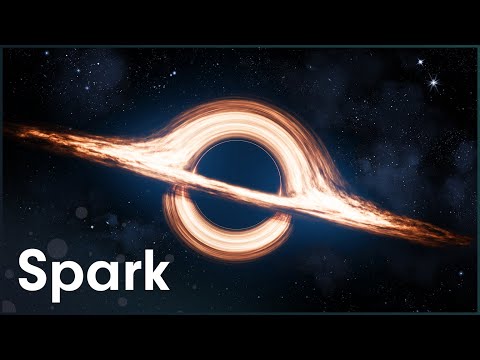
So, imagine you’re hanging out with friends, and someone casually mentions that there’s a black hole hiding out in our galaxy not too far away. I mean, how wild is that? Like, it’s just chilling there while we’re all going about our lives on this tiny blue planet.
Now, black holes aren’t just some sci-fi fodder. They’re real, and they come with a whole bunch of mysteries. You know what’s even cooler? The closest one to us is called V616 Monocerotis or A0620-00—yeah, try saying that three times fast!
Picture this: a giant vacuum cleaner in space sucking up everything around it. Sounds like a cosmic horror flick, right? But there’s so much more to these celestial beasts than meets the eye. Seriously, they’ve got stories to tell and puzzles to solve! Let’s peek into the mind-boggling world of our neighboring black hole and see what secrets it holds.
Exploring the Milky Way: Insights into Our Galaxy’s Structure, Formation, and Cosmic Significance
Exploring the Milky Way is like taking a journey through an enormous cosmic city. Seriously, just think about it: we live in a galactic neighborhood packed with billions of stars. Each one has its own story, just like you and me!
So, our galaxy, the Milky Way, has a pretty cool structure. It’s shaped like a flat spiral, with arms that stretch outwards. Picture it like a giant pinwheel spinning in space! In the center is something called the **galactic bulge**, which is super dense. That’s where you’ll find a lot of stars and gas crammed together.
Now, let’s talk about formation. The Milky Way formed around 13.6 billion years ago from clouds of gas and dust – basically leftover stuff from the Big Bang. Over time, gravity pulled these materials together to create stars and planets. It’s kind of amazing that our solar system formed in this swirling maelstrom of cosmic chaos!
And speaking of cosmic importance, our galaxy isn’t just another pretty face in the universe; it’s crucial for understanding how galaxies evolve over time! When astronomers study its many components—like dark matter and supernovae—they get insights into how galaxies are born, grow old, and sometimes even end up colliding with each other.
Now here comes a really intriguing part—the presence of black holes! The closest known black hole to us is called V616 Monocerotis or A0620-00. It’s about 3,000 light-years away—so still quite distant but much closer than many others out there! Black holes are fascinating because they have such strong gravitational pulls that nothing can escape from them—not even light.
You know what? The mysteries surrounding black holes can get your imagination running wild! Think about it: they could be gateways to other parts of the universe or even different realities entirely…if only we could figure them out better!
And here’s where things get really wild—the concept that black holes might not only hide information but also store it in ways we haven’t yet grasped! Some theories suggest they could possess insights into quantum mechanics (that’s all about tiny particles) or even hints on how time works.
So next time you look up at the night sky filled with stars, remember: you’re gazing at your galactic home—the Milky Way—filled with secrets waiting to be unraveled! Our quest to understand its structure and significance brings us closer to finding our place in this magnificent cosmos we call home.
Exploring Sagittarius A*: The Supermassive Black Hole at the Center of Our Galaxy
So, let’s talk about Sagittarius A*, the supermassive black hole chilling out at the center of our galaxy, the Milky Way. It’s one of those things that’s both mind-blowing and a bit eerie, if you ask me. You can think of it as a cosmic giant that weighs in at around 4.1 million times the mass of our Sun. That’s like comparing a tiny ant to an elephant!
Sagittarius A* is located about 26,000 light-years from Earth. That sounds super far, right? But in cosmic terms, it’s pretty much next door! It just hangs there, you know? The thing is, it’s not just sitting there; it’s affecting everything around it with its massive gravitational pull.
Now, you might be curious about what we actually know about this mysterious entity. Well, one way scientists study Sagittarius A* is by looking at stars that orbit around it. There’s this one star named SO-2, which has an orbit that takes it really close to the black hole. By watching how fast SO-2 moves, astronomers can figure out how heavy the black hole is. Mind-blowing stuff!
But wait! What exactly is a supermassive black hole? Good question! Basically, these are huge regions in space where gravity is so strong that nothing—not even light—can escape their grasp. Imagine trying to climb out of a pit filled with molasses; no matter how hard you try, you’re stuck! That’s kind of what happens near these black holes.
Now here comes the cool part: Sagittarius A* isn’t just some scary void; it’s surrounded by this wild frenzy of activity! You’ve got hot gas spiraling in towards it and creating what we call an accretion disk. Picture a whirlpool made up of gas and dust swirling faster and faster as it gets closer. This process can actually generate some intense radiation—like X-rays—that we can detect from Earth.
The study of Sagittarius A* has come a long way thanks to modern technology. In 2019, scientists released the first-ever image of a black hole’s shadow using the Event Horizon Telescope (EHT). While that image was actually from another black hole called M87*, it gave us clues on how to study Sagittarius A*. Pretty neat right?
You know what I find fascinating? The mysteries still surrounding these cosmic giants! Like
The answers are still somewhat elusive and keep scientists on their toes.
If you’re ever gazing up at the stars on a clear night and wondering what’s out there in our galaxy’s heart—the answer might just be this massive beast lurking behind all that celestial beauty. Seriously though, understanding Sagittarius A* could unlock so many secrets about not only our galaxy but also others scattered throughout the universe.
The mysteries surrounding Sagittarius A* make studying it feel like taking part in an epic space adventure. So next time you look up at those twinkling stars or catch a glimpse of your favorite sci-fi movie about space travel—remember there’s more to our universe than meets the eye!
Assessing the Risks: Is the Milky Way’s Black Hole a Threat to Earth?
So, the Milky Way’s black hole, known as Sagittarius A*, is kind of a big deal. It’s hanging out at the center of our galaxy, and yeah, it can sound a tad scary. But let’s take a chill pill and break down whether it’s really a threat to Earth or not.
First off, Sagittarius A* is about 26,000 light-years away from us. That’s like saying it’s in another postal code! So you can imagine that getting sucked into its gravitational pull isn’t exactly on our to-do list anytime soon. The thing is, black holes are super fascinating but also super misunderstood.
Now let’s talk about how black holes work. They have this crazy strong gravity that pulls everything toward them—like really powerful vacuum cleaners for space. But here’s the catch: you have to get pretty close for that gravity to start having an effect. And 26,000 light-years? Yeah, we’re safe!
Some people worry about things like gravitational waves, which are ripples in spacetime caused by massive cosmic events—like black holes colliding or merging together. Sounds terrifying, right? But here’s the good news: even if something happens with Sagittarius A*, we’re so far away that any waves generated wouldn’t have enough energy to affect us here on Earth.
Let me throw in an example; remember when you were a kid and got scared of the monster hiding under your bed? Turned out it was just a pile of clothes! The same vibe goes for worrying about our galactic black hole—a lot of hype without any real danger.
Also important to note: black holes don’t “suck” things in like a vacuum cleaner would if they were right next to you. Objects need to be within their “event horizon”—that point where escape velocity exceeds the speed of light—to get sucked in. Since we’re way outside that zone, we can relax.
Another interesting point is how black holes can sometimes spew out energy and matter from their poles super fast. These jets can be intense! However, even if they were aimed directly at Earth (which would be incredibly unlikely), they wouldn’t pose any immediate threat considering the distance involved.
And just one last note for good measure: scientists are always observing and studying these cosmic beasts using advanced technology and telescopes. So if anything were to change regarding our galactic neighbor’s behavior, we’d probably have plenty of warning signals before anything happened.
In summary:
- The Milky Way’s central black hole is 26,000 light-years away.
- Sagittarius A* has no direct threat towards Earth.
- Gravitational waves from cosmic events are not harmful at this distance.
- Black holes don’t “suck” everything around them unless you’re super close.
- Scientists keep a close eye on cosmic behavior.
So you see? We’re pretty much in the clear when it comes to Sagittarius A*. It may be an intriguing subject for astronomers and sci-fi fans alike but rest easy knowing this particular giant isn’t knocking on our door anytime soon!
Imagine standing in your backyard at night, looking up at the stars. It’s pretty mind-blowing, right? You’re gazing at a universe filled with countless mysteries, and one of the most intriguing things out there is a black hole. Now, let’s be real for a second: when you hear “black hole,” it sounds super sci-fi—like something from a movie. But there’s actually one just around the corner in cosmic terms.
The closest known black hole to Earth is called V616 Monocerotis or A0620-00, and it’s not exactly down the street but relatively close in the grand scheme of things—about 3,000 light-years away! I mean, that sounds like forever, but when you consider our galaxy is about 100,000 light-years across, it’s like being neighbors! Just think about that for a moment.
Black holes are such weird phenomena. They’re formed when massive stars collapse under their own gravity, becoming incredibly dense points in space that nothing—not even light—can escape from. So basically, they eat everything around them. It’s kind of terrifying and fascinating all at once! I had this moment once while stargazing where I thought about how out there in the universe lies something so dense that it warps space-time itself. Like, what?! That makes me both anxious and curious.
One of the crazy mysteries about black holes is what happens to all that matter they gobble up. You might think it all just vanishes into oblivion—poof! But scientists are scratching their heads on whether there’s really a point of no return or if there’s something more sinister going on inside these beasts.
Then there’s Hawking radiation—the idea proposed by Stephen Hawking that black holes might not be completely black after all. They could emit small amounts of thermal radiation and eventually evaporate over an unfathomable time scale. It’s kind of like thinking your messy room might someday clean itself—probably not anytime soon!
And let’s not forget how we actually spot these black holes. We can’t see them directly because they don’t emit light like stars do; instead, we look for their effects on nearby stars and gas clouds—a bit like knowing there’s an elephant in the room without seeing it because of its shadow.
So yeah, as we keep looking up at those twinkling stars and contemplating our place among them, it kind of gives you pause to think about what’s lurking out there in the vast darkness. The closest black hole reminds us how much we have yet to discover—not just about black holes but about everything beyond our little blue planet.
You got questions? Yeah me too! The universe seems to say: “Hey! Keep wondering!” And honestly? That makes stargazing even cooler than ever before!