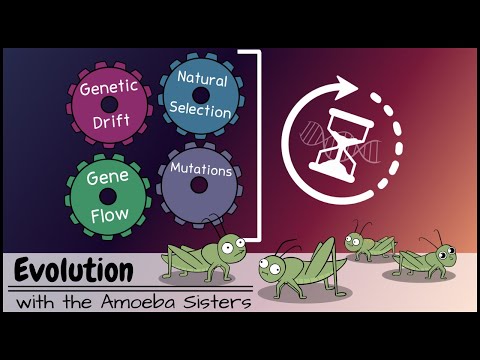
So, picture this: you’re at a family reunion. You spot your cousin, and it’s like looking in a mirror, right? Same nose, same laugh. It’s kinda funny how genes can stitch us together like that.
But here’s the kicker—those genes are not just about who looks like whom; they play a huge role in how life changes over time. Seriously!
Genetic inheritance is like this ancient recipe book passed down from your great-great-grandparents. And while some of us might just get grandma’s famous cookie recipe, others can inherit traits that help them survive in the wild. Wild, huh?
So let’s dig into how these tiny bits of code—not just for looks but for life itself—lead to some seriously awesome evolutionary changes over generations. You with me?
Exploring the Role of Genetic Inheritance in Evolutionary Biology
So, genetic inheritance, huh? It’s a big deal when we talk about evolution! Basically, genetic inheritance is the process through which traits are passed from parents to their offspring. But it’s not just a simple exchange of characteristics; it’s the foundation on which evolution builds its story.
Just imagine your favorite animal, like a fox or a dolphin. The cool things about these critters—like fur color or how they swim—come from their genes. You know, those tiny bits inside cells that carry instructions for everything living things do? When these organisms reproduce, they pass down genes to their young. Sometimes there’s a twist in the tale. These genes can change slightly due to mutations—a little mistake in copying them sometimes happens during cell division.
Now, let’s talk about mutation. It may sound scary, but mutations can lead to new traits! For example, one day a creature might be born with slightly longer legs or brighter colors due to a harmless mutation. If this trait helps it survive better in its environment—let’s say those longer legs help it run faster from predators—it might just have a better shot at making babies. This is where natural selection kicks in.
So here’s the thing: when animals or plants with advantageous traits have more offspring than others without those traits, over time, you’ll see those helpful traits become more common in the population. Pretty neat, right? Darwin had this all figured out way back when he talked about survival of the fittest!
Now let’s piece this all together with some key points:
- Genetic Variation: This refers to differences in DNA among individuals within a species.
- Natural Selection: This is the process where certain traits become more common because they give an advantage.
- Adaptations: These are changes that help organisms thrive in their environment.
- Speciation: Over time, as genetic changes accumulate and populations adapt to different environments, they can evolve into distinct species.
To wrap your head around this concept even better: think about dogs! They all come from wolves but have diverged into different breeds through selective breeding and natural processes that favor certain traits. Some dogs are tiny like Chihuahuas while others are huge like Great Danes—all neat variations rooted in genetic inheritance.
In short—and I mean super short—genetic inheritance is like an artist’s palette for evolution. Each generation mixes colors (traits) and creates something new based on what works best in nature’s gallery of life! Isn’t that kind of amazing?
Exploring the Role of Hereditary Changes in Evolutionary Processes: Insights from Genetics and Evolutionary Biology
So, let’s talk about how hereditary changes play a big role in evolution. When we think of evolution, we often picture long, complicated processes that happen over millions of years. But at its core? It’s all about genetics and how traits are passed down through generations.
Now, genetic inheritance is the way traits are transmitted from parents to their offspring. This happens through things called genes, which are segments of DNA that carry the instructions for everything from eye color to blood type. You follow me? So when a parent reproduces, they pass some of their genetic material to their kid. Sometimes those genes have slight variations called mutations.
Mutations can be super tiny changes in the DNA sequence. Now and then, these alterations can lead to new traits that help an organism survive better in its environment. For instance, think about a group of rabbits living in a snowy area. If one rabbit has a mutation for whiter fur, it might blend into the snow better than its darker-furred buddies. As a result:
- The white-furred rabbit is less likely to be spotted by predators.
- It might live longer and have more babies.
- Before you know it, more bunnies with white fur are hopping around!
This is what we call natural selection. It’s like nature’s way of picking winners based on how well they fit into their surroundings.
Interestingly enough, not all genetic changes come from random mutations; some happen due to environmental pressures or even social behavior within species! For example, Darwin’s finches on the Galápagos Islands showcase this beautifully. Their beaks adapted depending on the types of food available on each island. If one island had lots of tough seeds, birds with stronger beaks thrived while others faded away.
But here’s where it gets cool: sometimes these hereditary changes aren’t just about survival! Take color in flowers for instance—some bees prefer specific colors when looking for nectar. If a flower produces seeds with slightly different colors because of genetic change and attracts more bees? We see an evolutionary shift not just for survival but also for reproduction!
You can also think about how humans have evolved due to our diets—lactase persistence is one great example! Some people can digest lactose well into adulthood mainly due to historical factors like farming practices and milk consumption becoming widespread in certain cultures.
So yeah, basically genetics isn’t just a static list of traits; it’s dynamic! Mutations happen constantly and give rise to variations within populations—all this mixed with natural selection leads organisms down different evolutionary paths.
In summary:
- Genetic inheritance passes traits from parents to offspring.
- Mutations introduce new traits.
- Natural selection favors advantageous traits.
- The environment shapes evolution alongside heredity.
In the grand scheme? Hereditary changes are crucial for making biodiversity thrive on our planet—it keeps life exciting and ever-changing! So next time you’re out enjoying nature or watching animal documentaries—think about those tiny genes doing big things under the surface!
Exploring the Role of Genetic Mutation in Evolution: Insights from Modern Science
Genetic mutation is like the wild card in the game of evolution. Imagine you’re playing a video game, and every now and then, a bug pops up that changes how your character works. That bug can make you stronger, weaker, or even give you totally new abilities. Well, genetic mutations are kind of like those bugs in nature’s game.
When we talk about evolution, it’s essential to know that it doesn’t happen overnight. It’s more like a slow dance over millions of years. And guess what? Genetic mutations are one of the key players in this dance.
Firstly, genetic mutations happen when there are changes in the DNA sequence—think of DNA as the instruction manual for building and running an organism. Sometimes these mutations come from mistakes during cell division or due to environmental factors like radiation or chemicals.
So what role do they play? Here’s where it gets interesting:
- Introducing Variation: Genetic mutations create diversity within a species. Imagine a group of butterflies where some are yellow and others are blue. This color difference comes from mutations that affect how pigments are expressed.
- Natural Selection: Not all mutations lead to cool new traits; some can be harmful or neutral. But if a mutation helps an organism survive better in its environment—like faster running or better camouflage—nature tends to favor those with beneficial traits.
- Speciation: Over time, as different populations undergo their own unique mutations and adapt to varying environments, they can diverge enough to become separate species entirely! For instance, think about Darwin’s finches on the Galápagos Islands—they evolved different beak shapes based on their food sources.
One time I read about scientists studying these finches—there was this crazy drought that changed their food supply dramatically. Those finches with slightly larger beaks could crack open tougher seeds during this tough time and ended up thriving more than others. That’s evolution at work!
But not every mutation is about survival; some can even lead to new features that may not seem practical at first but could have hidden benefits later on. Like, why do some people have extra fingers? Some genetic mutations can cause polydactyly—a condition where someone has more than five fingers on one hand! While it’s rare and might not help much for gripping things better, it shows how diverse life can be.
We also can’t forget about genetic inheritance. When organisms reproduce, they pass on their DNA—including any beneficial mutations—to their offspring. This transferring is crucial because it builds up adaptations over generations.
On another note, let’s talk about technology for a sec: scientists today can actually edit genes! With tools like CRISPR-Cas9 (cool name right?), researchers can target specific parts of DNA and make changes deliberately. This opens up fascinating possibilities for understanding evolution and perhaps even human health.
In wrapping things up (not saying goodbye!), the journey of genetic mutation through evolution is complex yet so awesome to think about. Every mutation tells us something new about life on Earth and how creatures adapt over stretches of time—you know? Just picture how life will keep evolving long after we’re gone!
So, genetic inheritance, huh? It’s one of those topics that seems a bit heavy at first, but when you break it down, it’s pretty cool. Basically, it’s all about how traits are passed down from parents to their offspring and how that shapes the whole species over generations. This is where it gets really fascinating: changes in those genes can lead to evolutionary changes. Like, if a mutation happens—maybe a bird develops a slightly longer beak because of a random genetic tweak—that bird might be better at getting food compared to others.
You know what I’m talking about? Imagine watching a nature documentary where they show how certain animals adapt to their environments. It’s kind of mind-blowing! I once caught this episode about Darwin’s finches on the Galápagos Islands and how their beaks evolved over time based on the types of food available. Some had short, stout beaks for cracking seeds while others had long, slender ones for sipping nectar. Each generation was like a mini science experiment in real-time!
Genetic inheritance is like Mother Nature’s way of mixing up the deck of cards every time new life starts. It’s not just about looks either—these inherited traits can affect survival and reproduction too! So if an organism has favorable traits, it might survive longer or have more babies. Over time, these small changes accumulate and can alter an entire population or even create new species. Pretty wild thought!
And then there are environmental factors that also come into play, right? A change in climate could mean that the long-beaked birds have an advantage today but maybe not tomorrow. Adaptation is like this ongoing dance between genetics and the environment—the ultimate collaboration.
When you think about your own family tree, it’s kind of emotional too—seeing patterns in traits that run through generations: blue eyes here, curly hair there. Those quirks seem so normal to us until we realize they’re part of a much bigger story—our personal line in the grand tale of evolution.
So yeah, genetic inheritance isn’t just science mumbo jumbo; it’s literally shaping life on Earth every day! It reminds us we’re all part of this vibrant tapestry woven through time and space—like one big family reunion where everyone shows up with their unique flair thanks to a little help from mom and dad (and some truly random mutations). Isn’t that something worth pondering?