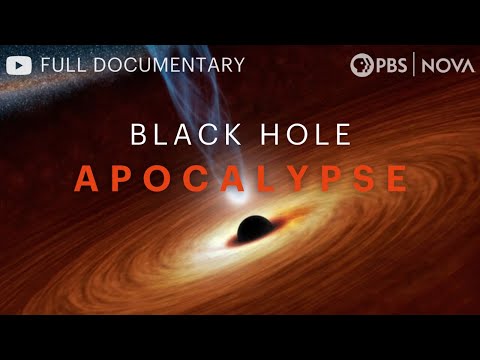
You know, I was just watching some sci-fi movie the other day, and it hit me: black holes are way cooler than we give them credit for. Like, I mean, they’re basically cosmic vacuum cleaners—sucking up everything in their path.
But here’s the kicker: NASA has been diving deep into black hole research, and it’s not just for show. They’re actually uncovering some wild stuff about how these space beasts work. Seriously!
Imagine peeking into one of those mysterious dark spots in the universe. What do they really tell us? And why should we care? Well, that’s what we’re here to unravel! So buckle up as we explore NASA’s fascinating journey into black hole research.
Exploring the Mysteries of the Galaxy: Insights into Cosmic Structures and Stellar Evolution
Exploring the galaxy is, like, one of the most mind-blowing things you can think of. It’s all about understanding cosmic structures and how stars evolve over time. Plus, let’s not forget how researchers at NASA are diving into black hole mysteries. So, buckle up—let’s break it down.
What is a Galaxy?
First off, a galaxy is like a massive city in space. It’s made up of billions of stars, gas, dust, and dark matter. There are different types of galaxies, too! For example:
- Spiral galaxies, like our Milky Way, have beautiful spiral arms.
- Elliptical galaxies are more rounded and can be quite large.
- Irregular galaxies don’t fit neatly into any category; they’re all over the place!
Now, if you’ve ever looked up at the night sky and seen those pinpricks of light twinkling back at you—those are stars. And each star has its own story.
The Lifecycle of Stars
Stars go through life cycles that can span millions to billions of years. They start as clouds of gas and dust called nebulae. Over time, these clouds collapse under their own gravity to form protostars. When the pressure gets high enough in their cores, nuclear fusion kicks off! This process is what makes stars shine.
Think about it: every time you see a star twinkling in the sky, it’s basically throwing a cosmic party! But as with every party, there comes an end. Depending on their size,
- Smaller stars, like our sun, become red giants before shedding their outer layers to form planetary nebulae and leaving behind white dwarfs.
- Larger stars, however, end up exploding in spectacular supernovae and may turn into neutron stars or even black holes!
The Enigmatic Black Holes
Speaking of black holes—wow! These guys are truly mind-bending phenomena. Formed when massive stars collapse under their own gravity after goin’ supernova? They create a region in space where gravity pulls so hard that nothing—not even light—can escape!
NASA has been doing some groundbreaking research on black holes lately. Their missions help us understand how these mysterious entities form and influence their surroundings. For example:
- The Event Horizon Telescope captured an image of the black hole at the center of our galaxy! Can you imagine? Seeing something that was once just theoretical?
- Nasa’s Chandra X-ray Observatory studies high-energy phenomena around black holes to learn more about how they interact with nearby matter.
Each discovery feels like peeling back layers on an onion—you keep finding new things that blow your mind!
The Cosmic Dance
The galactic landscape is also shaped by gravity—the way everything interacts is kind of like a cosmic dance. Galaxies collide over eons; when they do this dance right? Star formation can kick off because gas clouds get compressed during collisions.
When galaxies merge or pull close together? They can even pump fuel into supermassive black holes nestled at their hearts! This fuels powerful jets that shoot out energy across vast distances.
You realize there’s so much happening out there in space—a constant ebb and flow shaping everything you see through a telescope or even with naked eyes!
So next time you’re stargazing or scrolling through those stunning NASA images online, remember: There’s an entire universe filled with scientific wonders waiting to be explored further.
To wrap it up: Our galaxy is full of secrets—ways stars live and die—and black holes pushing our understanding to new limits every day! Isn’t that just exhilarating?
Exploring the Cosmos: NASA’s Groundbreaking Research on Black Holes and Their Mysteries
Space is super mysterious, right? When we chat about black holes, it’s like we’re talking about cosmic vacuum cleaners that gobble up everything around them. NASA has been doing some seriously cool research in this area that’s worth breaking down.
First off, what exactly is a black hole? Well, think of it as a region in space where gravity is so strong that nothing can escape from it—not even light! That’s why they’re called “black.” You can’t see them directly, but you can see how they mess with their surroundings. It’s like the universe’s ultimate hide-and-seek game!
NASA’s missions are all about unraveling these mysteries. Using telescopes like the Event Horizon Telescope, scientists have managed to capture images of black holes. In 2019, they revealed the first-ever picture of a black hole in the galaxy M87. Pretty epic moment in astrophysics! The image showed a shadow surrounded by a glowing ring of hot gas—definite proof that these cosmic beasts exist.
Now let’s talk about some nifty terms. One is singularity. This refers to the point at the center of a black hole where all its mass is concentrated and gravity becomes infinite—mind-bending stuff! But things get even crazier when you think about what happens around these singularities.
NASA has also explored something called event horizons. This is basically the point of no return for anything trying to escape the grasp of a black hole. If you cross that boundary… well, say goodbye because there’s no coming back!
And here’s where it gets really wild: black holes can actually grow! They do this by consuming matter and merging with other black holes. When they combine, they release enormous amounts of energy through gravitational waves—ripples in spacetime. Scientists detected these waves for the first time in 2015 thanks to LIGO (Laser Interferometer Gravitational-Wave Observatory). As if space wasn’t already mind-blowing enough!
But wait, there’s more! NASA’s research dives deep into how black holes influence their galaxies too. They play a crucial role in galaxy formation and evolution. You see, their immense gravitational pull can affect star formation nearby.
So it’s not just about what happens inside a black hole; it’s also about their impact on everything around them! Black holes might seem like lonely entities lost in space, but they’re actually shaping galaxies and influencing cosmic neighborhoods.
To sum it up: NASA’s quest into understanding these perplexing objects is uncovering layers of cosmic truth and awe-inspiring phenomena that challenge our understanding of physics and reality itself. Next time you’re gazing at the stars or daydreaming about what’s out there, remember there’s so much more happening beyond our sight! Pretty cool stuff if you ask me!
Exploring the Depths: NASA’s Groundbreaking Advances in Black Hole Research (2021)
When it comes to black holes, you might think of them as these mysterious, heavy things pulling everything in, but there’s a whole lot more to the story. In 2021, NASA made some serious strides in understanding these cosmic enigmas. Buckle up!
First off, what exactly is a black hole? Imagine a region in space where gravity is so intense that nothing can escape it—not even light! That’s why we can’t see them directly; they’re like hidden monsters lurking in the cosmos.
NASA’s efforts have mainly focused on two big projects: the Event Horizon Telescope (EHT) and the Parker Solar Probe. The EHT was responsible for that iconic first image of a black hole back in 2019. It was like taking a snapshot from across galaxies! By 2021, scientists were refining what they learned to probe deeper into how black holes behave.
Now, let’s talk about gravitational waves. These are ripples in space-time caused by some pretty violent cosmic events—like when two black holes collide. Remember when you dropped that heavy book on your toe? Well, imagine that shockwave but on a galactic scale! NASA has been using data from the Laser Interferometer Gravitational-Wave Observatory (LIGO) and Virgo to detect this kind of stuff.
In 2021, researchers got particularly excited about one event dubbed S190521g, where two black holes merged. This wasn’t just any merger; it was the most massive one ever detected! They found out that the resulting black hole weighed about 150 times more than our sun. Crazy, right?
Another interesting angle is how black holes influence their surroundings. They’re not just sitting there silently; they feed on gas and dust nearby and can even spit out powerful jets of particles at nearly the speed of light! It’s like they’re cosmic vacuum cleaners with superpowers.
Then there’s this concept called Hawking radiation. Ever heard of Stephen Hawking? He proposed that black holes could slowly leak energy over time until they eventually disappear. This idea flips your mind upside down—something that seems indestructible could actually vanish!
So why does all this matter? Well, understanding black holes helps us figure out fundamental questions about our universe: its origins, fate, and even basic physics laws. It’s like peeling an onion—each layer reveals something new!
And here’s where emotions come into play: imagine being part of a team working to understand something as vast as our universe. It’s inspiring! The excitement must feel incredible when piecing together data from all these various sources.
As NASA continues to shine its telescope toward these dark corners of space, who knows what other surprises are waiting? Exploring these depths isn’t just science—it’s humanity’s quest for knowledge!
You know, when I think about black holes, it kinda blows my mind. Like, these massive invisible monsters just lurking in space? That’s seriously intriguing. NASA has been going on this wild journey into understanding them for years now, and it feels like a cosmic detective story.
I remember when I was a kid, staring up at the night sky with my dad. We used to talk about stars, planets, and the mysteries of space. One night he mentioned black holes and how they can pull everything, even light! I couldn’t wrap my young brain around that idea. It was both terrifying and fascinating at the same time—like the universe had its own set of rules that were just beyond what we could see.
Fast forward to today, NASA’s efforts in black hole research are really something special. The way they’ve launched missions and put telescopes in orbit to study these enigmatic entities just shows how far our curiosity can take us. It’s not just about looking through a lens; they’re piecing together theories on how galaxies form and evolve around black holes.
For instance, you’ve got the Event Horizon Telescope project—remember when they actually captured that first image of a black hole? Seeing that fuzzy ring of light was like opening up Pandora’s box for scientists and space enthusiasts alike! It opened all sorts of discussions about what lies beyond our understanding.
And then there’s this concept called gravitational waves—freaking cool stuff! NASA’s been clocking those ripples in spacetime caused by gigantic events like colliding black holes. How amazing is it to think that we’re picking up sounds from the universe? It’s as if we’re listening to its heartbeat!
But here’s what really strikes me: while these discoveries are awe-inspiring scientifically, they also remind us of how little we truly know. Space is full of mysteries waiting to be unraveled! Each study opens doors to thousands more questions, which honestly keeps life exciting; you get where I’m coming from?
In a nutshell, NASA’s adventure into black hole research reflects our shared human desire to explore the unknown. And while I might never be an astronaut or even see a black hole up close (totally bummed about that), knowing there are people out there pushing boundaries makes me feel connected—to science and to each other across this vast universe.