You know that feeling when you’re staring up at the night sky, wondering if there’s life out there? Or maybe you’ve thought about what it would be like to get sucked into a black hole? Well, same!
I remember sitting in my backyard as a kid, completely amazed by the stars. I asked my dad if we could fly to one. He chuckled and said, “You’d need a super spaceship and a lot of luck!”
But seriously, black holes are no joke. They’re these monstrous cosmic vacuums that pull everything in— including light! Sounds kind of terrifying, right?
In this cosmic rollercoaster ride, we’ll unpack some wild mysteries of the universe. From black holes to dark matter and beyond. It’s gonna be a fun exploration of things that boggle the mind. Buckle up!
Exploring the Cosmos: Unraveling Death by Black Hole and Other Mysteries in Unveiled Trailer
When we think about black holes, it’s hard not to get a little bit fascinated and freaked out, right? I mean, these cosmic beasts are like the ultimate mystery of the universe. The term “death by black hole” might sound dramatic, but it’s a real concept in astrophysics that brings together ideas of gravity, space, and time.
So here’s the deal: black holes are regions in space where gravity pulls so much that nothing—not even light—can escape from it. Imagine a vacuum cleaner that sucks up everything in its way, but on an interstellar level! Once something crosses the event horizon, which is basically the point of no return around a black hole, it’s game over. You might as well wave goodbye.
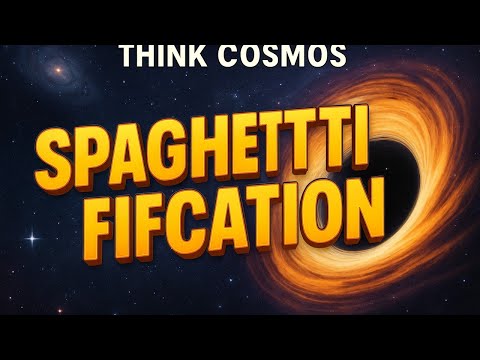
Now to really dig into what “death by black hole” involves. Picture this: if you were to approach a black hole feet first, the gravitational pull would be stronger on your feet than your head. This difference creates what scientists call spaghettification. Sounds silly? It’s not! You’d literally get stretched out like spaghetti as you got closer. Yikes!
But let’s zoom out for a second and think about why we care about these cosmic phenomena at all. Exploring black holes helps us understand fundamental questions about the universe—like how galaxies form and evolve or what happens to matter under extreme conditions.
- Supermassive black holes: Found at the centers of most galaxies (including our Milky Way), these giant pits can have masses millions or even billions of times that of our Sun!
- The theories: Scientists have come up with lots of theories regarding what lies inside a black hole. Some say it could be another universe; others think it could smash all known laws of physics.
- The quest for knowledge: Researchers keep studying these enigmatic entities because they play a crucial role in understanding dark matter and dark energy—those things that seem to make up most of our universe but remain largely mysterious.
The trailer for “Death by Black Hole and Other Cosmic Mysteries Unveiled” likely teases some incredible visuals accompanied by intriguing explanations that bring these concepts alive. Just imagine stunning animations showing how time behaves differently near a black hole or what happens during collisions with neutron stars!
You know, every time we look up at the night sky filled with stars, we’re seeing only a fraction of what’s really there—a cosmos filled with phenomena begging for exploration. Black holes remind us just how wild and unpredictable space can be. So whether you’re totally into science or just curious about what’s up there, these mysteries will always capture your imagination!
In essence, diving into the world of black holes isn’t just about understanding their terrifying grip on matter; it’s also about unraveling who we are in this vast universe! And seriously, isn’t that something worth pondering?
Exploring the Mysteries of Black Holes: Understanding Death by Gravitational Forces – A Comprehensive PDF Guide
Black holes. Just saying the word sparks curiosity, doesn’t it? These cosmic mysteries are like the rock stars of the universe. They’re fascinating, a bit intimidating, and definitely not something to ignore. So, let’s take a closer look at what they are and how they can basically “eat” everything around them.
First off, what even is a black hole? Basically, it’s a region in space where gravity is so strong that nothing—not even light—can escape from it. That’s why they look black against the backdrop of stars. If you were to get too close to one, well, let’s just say things wouldn’t go too well for you.
Death by Gravitational Forces is real when it comes to black holes. How? Picture yourself swimming in an ocean. As you swim closer to a whirlpool, the water pulls you in faster and faster until you can’t escape. This is similar to what happens if you approach a black hole.
When you’re nearing one, you would experience something called “spaghettification.” Sounds funny, right? But it’s actually pretty horrifying! As gravity pulls on your feet more than your head (since you’re getting closer), you’d be stretched out like spaghetti until… well, there wouldn’t be much left of you.
Let me break down some concepts about black holes:
- Event Horizon: This is the “point of no return.” Step beyond this line and it’s game over; there’s no coming back.
- Singularity: This is at the center of a black hole where all its mass is concentrated. It’s where our current understanding of physics kinda breaks down.
- Types of Black Holes: There are three main kinds: stellar (formed by collapsing stars), supermassive (found at galaxy centers), and intermediate (a mysterious type we don’t know much about yet).
- Detection: We can’t see black holes directly because they’re dark! But we can observe their effects on nearby stars or gas clouds.
You know what’s really cool? Scientists think there might be millions of them lurking around in our galaxy alone! And just fascinatingly enough, this isn’t just some wild idea floating around; it’s been backed up by research using advanced telescopes that look for x-rays emitted as matter gets heated up before falling into these cosmic beasts.
But wait! Before you start worrying about falling into one—don’t panic! Black holes are super far away from us right now. The closest known black hole is about 1,000 light-years away; that’s plenty safe!
In essence, while black holes can symbolize death by gravitational forces for anything that gets too close; they also challenge scientists to understand the fundamental laws of nature better. They raise questions that inspire curiosity and drive exploration through space science—like how they formed in the first place or what lies beyond their event horizons.
So yeah, those daunting voids teach us as much about life and existence as they do about death—all wrapped up in a shiny cosmic package full of mysteries waiting for us to unveil!
Exploring Cosmic Mysteries: Death by Black Hole and the Fascinating Quandaries of Modern Astrophysics
It’s pretty mind-boggling to think about how the universe works, right? I mean, black holes are like the ultimate cosmic mystery. They pull everything in with such a gravitational force that not even light can escape! Imagine that for a second. You’re cruising through the universe and suddenly, BAM! You’re swallowed whole by a black hole. That doesn’t sound fun at all!
So, here’s the deal: when stars run out of fuel, they can collapse under their own weight. Depending on their mass, they might turn into neutron stars or—if they’re super massive—black holes. Once that happens, they create a gravitational field so strong that anything crossing their event horizon—think of it as the point of no return—is toast.
Now, let’s break down what happens to someone who gets too close to one of these cosmic beasts. It’s known as **spaghettification**. Sounds silly, huh? But seriously, if you were to fall into a black hole feet first, your feet would feel a much stronger pull than your head because of gravity. That difference in force would stretch you out like spaghetti! Pretty wild image, right?
And there are other crazy things about black holes too! For instance:
- Singularity: At the very center of a black hole lies what we call a singularity—a point where density is infinite and spacetime curves infinitely. No idea what happens there!
- Event Horizon: This is the invisible boundary around black holes. Past this point? Good luck getting out.
- Hawking Radiation: Theoretical physics suggests that black holes can emit radiation due to quantum effects near the event horizon.
You might be wondering why we even care about black holes, right? Well, besides being fascinating cosmic vacuum cleaners (not literally!), studying them helps us understand fundamental aspects of physics and our universe overall.
It’s also really emotional to think about how these mysteries tug at our hearts and minds as humans. As kids, we probably all stared at the night sky in awe and wondered if we were alone or how everything began.
There are so many questions left unanswered: What comes before and after death by black hole? How does one connect with spacetime? These quandaries keep scientists up at night—seriously! And while some mysteries remain shrouded in darkness (pun intended), astrophysics continues to push boundaries.
So next time you look up at those twinkling stars or hear about black holes on a documentary, remember that there’s so much more happening beyond what our eyes can see. It’s like peeling an onion; every layer reveals something new and sometimes makes us shed a few tears over cosmic wonders!
You know, space has this incredible way of both captivating and terrifying us. Seriously, when you start thinking about the mysteries up there—like black holes—you can’t help but feel a mix of awe and fear. I mean, just imagine it: one minute you’re cruising through the cosmos, and the next, you’re doing a slow dance with a black hole. Sounds like something straight out of a sci-fi movie, right?
So here’s the thing with black holes. They’re these massive invisible entities in space that basically just gobble up anything that gets too close. And I don’t mean just your old neighbor’s cat; I’m talking whole stars! There’s something about their sheer power that sends shivers down your spine. I once heard this story of an astronomer who spent years studying them. He said he felt like he was playing chess against a ghost—always thinking about strategies but never really knowing what was in store for him.
And then there are the cosmic mysteries we can barely wrap our heads around—like dark matter or dark energy. Just think: most of the universe is made up of stuff we can’t see or even fully understand! It’s like being in a room filled with people but only knowing your best friend is there. The rest? Total strangers!
I remember reading about scientists who tried to measure these elusive forces. Their excitement reminded me of kids on a treasure hunt, digging through puzzles and clues to find something shiny and new. It’s that spirit of curiosity that makes science feel so alive, you know? But it also kind of makes you feel small in the grand scheme—like we’re just trying to find our way in an enormous cosmic playground.
What really gets me is how death by black hole isn’t just some dramatic end; it’s more symbolic of our understanding—or lack thereof—of the universe. When you get sucked into one, you’re not just disappearing; you’re putting your faith into physics as it stretches and bends around things we can barely fathom.
So yeah, while the thought might keep you up at night, it also reminds us how much more there is to learn and explore beyond our little planet. It’s all part of this wild cosmic journey we’re on together. And honestly? That’s kind of beautiful if you think about it!