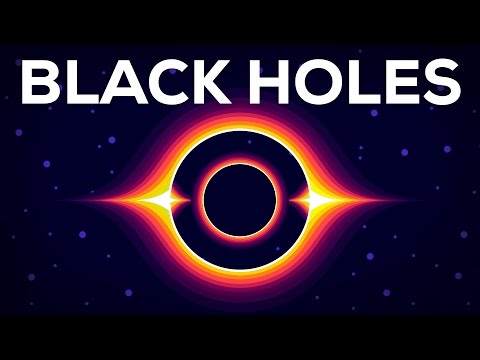
So, picture this: you’re chilling with your friends, right? And someone drops a wild question—“What would happen if you fell into a black hole?” Cue the weird looks. But hey, it’s a legit question!
Now, black holes are these cosmic vacuum cleaners that suck up everything around them. They’re like the ultimate space bullies. Seriously, they don’t mess around! If you ever dreamed of being an astronaut, just remember: some things in the universe are best left untouched.
But before we freak out about getting gobbled up by one of these monsters, let’s dig into what’s really happening when it comes to death by black hole. It’s all about gravity, time, and some seriously bizarre science! So grab a snack and let’s unravel this cosmic mystery together—no spacesuits necessary!
Exploring Stephen Hawking’s Black Hole Theory: Insights into the Nature of the Universe
So, let’s talk about Stephen Hawking and his mind-blowing black hole theory. Honestly, if you think about it, the universe is a wild place, and black holes are like its secretive little corners. They exist where gravity is so strong that nothing can escape them—not even light! Crazy, right?
Hawking revolutionized how we think about black holes with his groundbreaking idea that they aren’t just cosmic vacuum cleaners silently sucking in everything around them. Instead, he proposed that they could actually emit radiation—a concept famously known as Hawking radiation. Picture this: even though they’re like ultimate traps for matter, they can still lose energy and eventually evaporate over incredibly long timescales. It’s like a cosmic game of hide-and-seek!
This whole idea comes from combining aspects of quantum mechanics with general relativity. I mean, these are two massive areas of physics that usually don’t get along too well. Quantum mechanics deals with tiny particles at a very small scale, while general relativity explains gravity on larger scales—like planets and stars. Hawking basically found a bridge between them by suggesting that particles can pop in and out of existence near the event horizon (the boundary around the black hole). When this happens, one particle may escape while its partner falls into the black hole.
- Event Horizon: This is the point of no return around a black hole.
- Singularity: At the very center of a black hole lies this infinitely dense point where physics as we know it breaks down.
- Black Hole Evaporation: Over astronomical timescales, these massive entities can theoretically evaporate due to Hawking radiation.
The thing is, when we think about dying by falling into a black hole—yikes!—it’s called ‘spaghettification.’ Sounds funny but trust me; it’s terrifying! As you approach one, the difference in gravitational pull between your feet and head could stretch you out like spaghetti. Your body would be pulled apart before you even hit the event horizon. Just thinking about it gives me chills!
Hawking’s theories have opened up so many doors for understanding our universe better. Black holes might help us understand things like dark matter or even how galaxies form. Who knew such bizarre objects could be pivotal in unraveling cosmic mysteries? Seriously though—this guy really reshaped our entire view on space!
The legacy of Stephen Hawking continues to inspire countless scientists and curious minds alike. He showed us how important it is to keep asking questions—even if we’re staring into the deepest voids of space.
If you ever sit back and ponder your existence or just stare at stars twinkling in the night sky thinking about all these crazy concepts… just remember: our universe is full of surprises that are yet to be unveiled!
Exploring the End of a Black Hole’s Lifecycle: Scientific Insights and Theories
Alright, so let’s talk about black holes and their lifecycles. It’s a wild ride through some super heavy concepts, but don’t worry! I’ll keep things chill and straightforward.
First off, what is a black hole, anyway? Basically, it’s a region in space where the gravitational pull is so strong that nothing—not even light—can escape from it. Imagine a vacuum cleaner with a turbo setting on steroids!
Now, black holes are born when massive stars collapse under their own gravity at the end of their life. They go out with a bang! No kidding, we call that spectacular event a supernova. That explosion can leave behind something incredible—a black hole.
But what happens next? Well, over time, these cosmic beasts can gobble up nearby matter. Picture this: they’re like cosmic Pac-Men munching on gas and stars. But as they consume more mass, things get interesting!
As black holes grow older, they reach a moment of balance between mass accumulation and energy loss through radiation known as Hawking radiation. This was proposed by physicist Stephen Hawking—what a genius! You see, even though black holes are stealthy predators in the universe, they still emit tiny amounts of radiation.
Now here’s where things get mind-bending. Over astronomical timescales (and I mean really long!), this radiation can cause them to lose mass gradually. So yes, black holes can actually shrivel up and die!
So how exactly do we think this “death” happens? Well,
- Hawking Radiation: As mentioned, this is the slow leak of energy over time.
- Black Hole Evaporation: This gradual loss of mass eventually leads to what we call evaporation.
- Final Stages: The theory suggests that as they lose mass rapidly during their last moments of existence, they might explode in an intense flash of energy!
This endgame scenario is super exciting but still very theoretical. We haven’t witnessed it directly yet because those timelines stretch out far beyond human history—we’re talking billions of years!
And while it sounds grim for those poor black holes facing extinction, don’t forget: they play an essential role in shaping galaxies and the universe itself! Their “death” leads to new formations; think about it like recycling cosmic material.
So if you find yourself gazing at the night sky thinking about the marvels out there—you’re not just looking at pretty twinkling lights. You’re peering into the life cycle of some serious cosmic entities with stories to tell long after they’re gone. That’s pretty cool if you ask me!
Exploring the Fate of Black Holes: Insights from Astrophysics
So, black holes, huh? They’re like the universe’s mystery boxes. You might think of them as these massive voids that just gobble everything up. But there’s more to them than just eating stars and planets. Let’s explore what happens to these cosmic beasts and how they go out with a bang or a whimper.
First off, black holes form when massive stars exhaust their fuel. Picture a star as a giant ball of gas that burns bright for millions of years. When it runs out of fuel, it can no longer support its own weight and collapses under gravity. This collapse can create either a neutron star or, if it’s massive enough, a black hole.
Once formed, black holes can grow by pulling in matter from their surroundings. It’s like having an insatiable vacuum cleaner! They gather dust and gas from nearby stars or other materials floating in space. This process is called accretion, and it creates an area around the black hole called an accretion disk—a swirl of superheated material that gets blasted with energy. Ever seen a glowing pizza spinning? That’s sort of how it looks!
But here comes the fun part—what happens when they die? Well, black holes don’t “die” in the traditional sense but can shrink due to this nifty concept called Hawking radiation. In simple terms, physicist Stephen Hawking proposed that black holes actually emit particles over time due to quantum effects near their event horizon (the point beyond which nothing can escape). If you wait long enough—like billions of years—this could lead to their ultimate evaporation!
Imagine baking your favorite cake but forgetting about it so long that it turns into crumbs. That’s what happens to black holes: slowly losing mass until they disappear completely! It sounds odd, and honestly kind of sad for something so powerful.
Now onto some cool theories about what might happen at the end—there’s speculation about black hole evaporation leading to possible relics or remnants. Wouldn’t it be wild if these remnants contained clues about our universe’s formation? Some scientists even wonder if they could be connections to other dimensions or universes—talk about mind-blowing stuff!
And let’s not forget more explosive endings: when two black holes merge! This creates gravitational waves—ripples in spacetime you can imagine as waves on water after tossing a rock in. Detecting these has opened up new windows into astrophysics!
To sum up:
So yeah, exploring the fate of black holes is pretty mind-bending! From their birth in stellar explosions to their potential for vanishing acts or cosmic collisions—you see how much there is still left to understand? It’s like piecing together an intricate puzzle where each piece reveals another layer of our universe’s secrets.
Alright, let’s talk about black holes. You know, those mysterious cosmic entities that seem to captivate our imagination? They’re like the rock stars of the universe—super massive, enigmatic, and a little bit terrifying. Now, thinking about death by a black hole might sound like something out of a sci-fi movie. But trust me; there’s some real science behind it that’s pretty mind-boggling.
So, first off, what is a black hole? In simple terms, it’s a region in space where gravity is so strong that nothing—not even light—can escape. Imagine sucking all the air out of a balloon until it’s just flat. That’s sort of similar to what happens when a massive star exhausts its fuel and collapses under its own weight.
Now, here’s where things get really wild. If you were to find yourself drifting too close to one of these bad boys—let’s say in some futuristic spaceship—you’d enter what’s known as the “event horizon.” This is basically the point of no return. Once you cross it, it’s like getting sucked into an abyss where everything changes—and not for the better.
Picture this: you’re floating along nice and easy when suddenly you feel this tugging force getting stronger and stronger. It might feel like being on one of those carnival rides where they spin you around until your stomach drops! That force is called tidal force; on one side of your body (the side closer to the black hole), gravity pulls way harder than on the other side (the side further away). You’d be stretched out into something called “spaghettification.” Yup! It sounds silly but visualizing yourself turned into spaghetti isn’t exactly a pleasant image.
And let’s not forget about Hawking radiation—a concept brought up by physicist Stephen Hawking (who was super brilliant). He suggested that black holes can actually emit small amounts of radiation due to quantum effects near their event horizons. So they’re not just these hungry monsters consuming everything around them; they’re also slowly losing mass over time!
I remember once watching this documentary about black holes with my friends—it was dark and suspenseful! We were all laughing nervously at how weirdly fascinating these phenomena are while secretly shuddering at imagining being sucked into one. The thought alone felt surreal yet oddly captivating.
So yes, death by black hole might be scientifically possible but in reality—thankfully—it’s way more complicated than just “suck you in.” It opens up fascinating questions about life, gravity, and our universe itself! Just think—there are still so many mysteries swirling around us in space waiting to be uncovered!