So, you know how sometimes you forget where you parked your car? You walk around like a lost puppy, trying to remember if it was by the coffee shop or near that weird statue?
Well, let me tell you, that’s just a tiny glimpse into what’s happening inside your brain. Seriously! Our brains are these incredible control centers, juggling all kinds of tasks from remembering where we left our keys to figuring out how to dance (or at least trying!).
Imagine if we could actually see this marvelous organ in action—like a behind-the-scenes tour of a rock concert. That’s what visualizing the brain is all about! It’s not just squishy gray matter; it’s full of twists and turns that make us who we are.
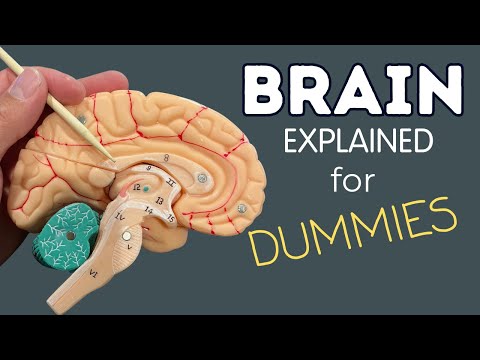
So let’s take a little journey together through an anatomical diagram of key parts of the brain. Get ready to see not just what makes you tick, but also what makes you uniquely… you!
Comprehensive Anatomical Diagram of the Brain: Key Parts Visualized in PDF Format for Scientific Study
The brain is a fascinating organ, isn’t it? It’s like the control center of our whole body. From thinking to moving, it’s all thanks to this complicated yet beautiful structure. If you’re into visual learning, a comprehensive anatomical diagram of the brain can really help. So, let’s break down some key parts and what they do.
The Cerebrum is the largest part of the brain. It’s divided into two hemispheres—the left and right sides. Each side is responsible for different functions. The left side typically handles logic and reasoning, while the right deals with creativity and artistic abilities. You know that moment when you’re solving a puzzle? That’s your cerebrum at work!
The Cerebellum sits at the back of your brain, below the cerebrum. It’s smaller but super important for coordination and balance. Think about riding a bike—it’s your cerebellum that keeps you steady as you pedal along.
Now, let’s talk about the Brainstem. This part connects your brain to your spinal cord and controls basic life functions like breathing, heart rate, and sleeping. Without it, well… we wouldn’t be here! It’s almost like autopilot for your body.
Another critical component is the Limbic System. This area includes structures like the amygdala and hippocampus. The amygdala helps process emotions—you know that rush when you’re scared or excited? The hippocampus plays a role in memory formation; it helps you remember that birthday party from last year!
You might have heard about the Thalamus too—it acts as a relay station for sensory information before it gets processed by other parts of the brain. Imagine it as a traffic cop directing data where it needs to go.
And don’t forget about the Hypothalamus, which regulates things like hunger, thirst, and body temperature. Feeling hungry? That little guy is sending signals to remind you to grab a snack!
So where can you find these diagrams? Often they come in PDF formats for easy viewing or printing—perfect for studying! They usually label these parts clearly so you can visualize how everything connects.
In summary, understanding these key areas gives us insight into how our brains function daily—just think about how many different things are happening up there at any given moment! And if you’re curious to explore more visually stimulating resources on this topic? Just search around online; there are loads of great diagrams out there ready to help!
Understanding Brain Parts and Their Functions: Insights from Neuroscience
So, you’ve probably heard that the brain is super complex, right? It’s like this command center for everything we do. To really get what’s going on in there, though, it’s helpful to break it down into its major parts.
First things first: the cerebrum. This is the largest part of your brain, and it’s divided into two halves—left and right hemispheres. Each side handles different tasks. For example, the left side is often associated with logic and reason. Think math or language skills! Meanwhile, the right side tends to take care of creativity and intuition; you know, like art or music.
Then we have the cerebellum. Located at the back of your brain, it’s all about coordination and balance. If you’ve ever tried riding a bike after not doing it for ages, you know how tricky that can be if your cerebellum isn’t on point! It helps fine-tune our movements so we don’t look like total klutzes while walking or dancing.
Don’t forget about the brainstem! This little guy connects your brain to your spinal cord and controls some pretty automatic functions like breathing and heart rate. It’s like that unsung hero working behind the scenes to keep everything running smoothly while you’re busy thinking about what to have for lunch.
Next up is something called the limbic system. Now this part is super interesting! It plays a big role in emotions and memory. You’ve got structures like the amygdala, which is involved in fear responses—think fight or flight—and the hippocampus that helps with forming new memories. Ever had that moment where a smell takes you back to a specific memory? Yeah? That could be your limbic system at work!
There are also areas dedicated specifically to sensory processing. For instance:
- The occipital lobe: This area at the back processes visual information from your eyes.
- The temporal lobe: Here’s where sound comes in—it helps us hear words or music.
- The parietal lobe: This region integrates sensory info from various parts of your body; think touch!
And here’s something cool: while these areas have specific functions, they don’t work alone. They’re constantly talking to each other! It’s almost like they’re in one big conversation all day long.
So there you go—a quick peek inside this amazing organ! The brain isn’t just about one thing; it’s an intricate network of parts that work together to make us who we are. Whether it’s solving problems or reminiscing about old times, each section has its role—almost like a quirky team working together towards common goals!
Download Free 3D Brain Models for Educational and Scientific Use
So, let’s chat about 3D brain models. Seriously, they’re like a treasure trove for anyone interested in how our brains work. Imagine being able to see the brain’s structure in three dimensions! That’s kinda mind-blowing, right?
Why use 3D brain models? Well, they let you explore the intricate details of brain anatomy that are hard to grasp with just flat diagrams. You get to see where different parts of the brain are located and how they connect with each other. This can be super helpful not only for students but also for researchers and healthcare professionals.
Now, if you’re looking to download free 3D brain models for educational or scientific use, there are plenty of resources out there. Here are a few good options:
- The Allen Institute: They have a range of high-quality 3D brain models available online. These come from real data, which means you’re looking at actual human brain anatomy.
- NeuroMorpho.org: This site offers detailed neuron morphologies in three dimensions. It’s great if you’re more into the cellular level.
- BrainMaps: They provide 3D visualizations and even virtual reality options! It’s cool because you can navigate through the brain’s various structures.
When I first stumbled upon these models, I was blown away! Picture me sitting at my desk with my jaw dropped as I spun a model around on my screen—seeing how everything interconnected felt like diving into another world.
Benefits of using these models? Apart from being visually engaging, they help enhance understanding. Take learning about the cerebral cortex: instead of just memorizing parts and functions from a textbook—how dull—you can rotate it around, zoom in on specific areas like the frontal lobe or occipital lobe, and really grasp how they fit together.
And don’t forget about accessibility! Many of these resources can be accessed by anyone with an internet connection—no need to be enrolled in fancy courses or anything. So whether you’re a curious student or just someone who loves learning new stuff, those models are right there at your fingertips.
In summary, free 3D brain models offer an exciting way to visualize and understand complex anatomy. They enhance education while also piquing curiosity about our most fascinating organ—the brain itself! You just have to explore them; maybe you’ll find something that sparks your interest or even changes your perspective on neuroscience altogether!
You know, when you think about the brain, it’s kind of mind-blowing, right? It’s this squishy blob inside your skull that does so much—like allowing you to think, feel, and even be you. It’s easy to take for granted. I mean, have you ever just paused to consider how this magnificent organ is all organized? Visualizing the brain can really help put things into perspective.
So, let’s say you’re looking at an anatomical diagram of the brain. At first glance, it might just seem like a jumble of parts with fancy names that sound straight out of a sci-fi movie. But each section has its own special job. Take the cerebrum, for example—this is like the big boss up there! It controls movement and speech and helps with problem-solving and emotions. Just imagine trying to explain your favorite movie plot without it! Yeah, good luck with that.
Then there are parts like the cerebellum—shaped sorta like a little mushroom at the back—that helps with coordination and balance. I remember once trying to ride a bike after years away from it; my cerebellum was definitely having a tough time getting me balanced again! Every wobble felt like my brain was yelling “Whoa! What are you doing?”
And don’t forget about the brain stem; it’s a crucial pathway for relaying messages between your body and brain. Imagine it as the highway system—without good roads, everything comes to a halt. If something goes wrong here? Yikes!
Seeing all these different regions laid out in a diagram makes it easier to understand how they work together like an orchestra playing a symphony. Each part has its melody but together they create this beautiful piece of music we call life.
But seriously, what blows my mind even more is how massive our brains are in terms of connections—they say there are trillions of synapses in there lighting up every second! Just picturing all those little sparks flying around fills me with awe.
In short, exploring these diagrams isn’t just academic; it’s about getting to know ourselves on a deeper level. It reminds us that this complex organ makes us who we are—and honestly? That’s pretty remarkable if you ask me! So next time you’re peeking at those diagrams or getting lost in science class, take a moment to appreciate each part working together—like an incredible team making sure everything runs smoothly up top.