You know that feeling when you’re just chilling, and suddenly a math problem smacks you in the face? Yeah, it’s like when you’re halfway through a movie and realize the plot twist was hiding in plain sight.
Well, here’s a fun fact: calculus isn’t just for your brainy friend who loves to solve equations. It’s actually like the magic ingredient behind some of the coolest scientific discoveries. Seriously!
Imagine riding a rollercoaster. Every twist and turn is calculated to give you that thrill without sending you flying off into space. That’s calculus in action!
So, let’s chat about those calculus concepts that shape everything from rocket launches to how diseases spread. Who knew math could be this exciting, right?
Exploring the Integral Connection Between Calculus and Scientific Advancement
Calculus is one of those things that might make your head spin a bit, but trust me, it’s super important. You see, calculus is all about understanding change and motion. It helps us describe everything from how planets move to how diseases spread. When you think about it, so much of science is about change!
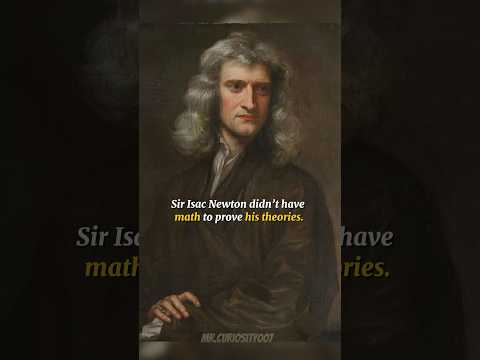
Let’s break this down a little more. Think about Isaac Newton and Gottfried Wilhelm Leibniz, who are like the ultimate calculus rockstars back in the 17th century. They were figuring this stuff out simultaneously, which is kind of wild when you think about it! Their work laid the foundation for what we use today, and without their discoveries, we’d be in a pretty sticky spot.
So here’s the deal with calculus: it’s made up of two main parts—differentiation and integration. Let’s say you’re riding your bike down a hill. Differentiation helps you figure out how fast you’re going at any moment by looking at your speed at that instant, while integration helps you know how far you’ve gone all together when you add up those little bits of distance over time.
- Differentiation: This tells us about rates of change. For example, in physics, if you want to know how quickly something is accelerating or slowing down, differentiation gives you that info.
- Integration: This helps us sum things up over time or space. If you’re calculating the area under a curve—like figuring out total distance traveled on that bike ride—we rely on integration.
Now imagine scientists trying to understand everything from climate change patterns to pharmacokinetics, which studies how drugs move through our bodies after we take them. Don’t get me wrong; those are complicated subjects! But thanks to calculus, researchers can create models that help predict future trends or outcomes based on current data.
When I was in school and struggling with these concepts (gotta be honest here), I felt like I was fighting against an invisible wall every time I encountered a complicated formula or equation. But then I had this awesome teacher who showed me real-world applications: like how engineers use calculus to design safer bridges or even roller coasters! Suddenly it clicked for me—it wasn’t just numbers and letters; it was real-life stuff!
That connection between calculus and scientific advancement can’t be overstated. It’s not just math for math’s sake; it’s foundational for technology too! Every time you send an email or download an app, there’s likely some calculus behind the algorithms making everything run smoothly.
So the next time you’re scratching your head over derivatives or integrals (believe me, we’ve all been there), just remember they’re keys to unlocking so many scientific doors—doors that lead us to new discoveries and better understanding of our universe! It’s amazing what can happen when you put numbers into motion.
Exploring the Mathematical Perfection of 2025: Insights from Science
Exploring numbers is a wild ride, right? So, let’s take a closer look at the number **2025**. It’s pretty fascinating how math can fit perfectly into our scientific world. Just like how nature seems to follow certain patterns, math has some neat tricks up its sleeve too.
First off, in terms of **mathematical properties**, 2025 holds a special place. You see, it’s actually a perfect square! That means if you multiply 45 by itself (yup, 45 x 45), you get **2025**. Perfect squares like this are super important in calculus and other branches of mathematics because they help us understand things like area and volume.
Another cool thing about **2025** is its connection to the concept of functions. Functions are just like machines that take an input and give you an output based on some rules. When scientists graph functions, they often rely on important calculations around points; this is where the beauty of calculus steps in. Think about it—calculating changes and finding slopes makes studying anything from the growth of populations to speed changes in physics possible!
And then there’s calculus itself—like the backbone of so much scientific discovery! Calculus helps us deal with change—how fast things change or how things grow over time through derivatives and integrals. The nifty thing? When we analyze data or model situations using calculus, we literally see connections jumping out at us!
Let’s not forget techniques like limits and continuity that are fundamental to understanding complex systems. For instance:
- Limits help scientists understand what happens as something approaches a specific value.
- Continuity ensures that functions behave predictably without jumping around unexpectedly.
Imagine being out on a hike and tracking how high you’ve gone versus how far—you know? You can use that data with calculus to predict future climbs or estimate distances you can cover before reaching the top.
It reminds me of when my friend tried to reach the summit of this mountain but kept getting sidetracked by breathtaking views along the way! The distance calculations we made involving slope adjustments were pretty much straight from our high school math class. But hey, without those calculations using basic principles derived from calculus concepts, we might have ended up lost—or worse!
So when you think about it, numbers like **2025** aren’t just digits; they represent deeper connections in our understanding of science through mathematical principles. They shape our discoveries in ways that resonate across various fields—from biology to astronomy!
In short, exploring numbers and their mathematical perfection helps us unlock insights that push science forward every day! And if you dig deeper into these calculations and theories? Well then, who knows what remarkable discoveries await!
Exploring the Applications of Calculus Across Various Scientific Fields
Calculus might seem like just a bunch of fancy numbers and symbols at first glance, but it’s actually a powerful tool that helps scientists in various fields. You know how sometimes you’re just sitting, and you suddenly realize how much math is around you? Yeah, calculus is part of that everyday magic.
One of the main pillars of calculus is differentiation. This concept helps scientists understand how things change over time. For instance, in **physics**, when talking about motion, you can use derivatives to figure out an object’s velocity or acceleration. If you’re tracking a car on a racetrack, calculus lets you see how fast it’s speeding up or slowing down at any moment.
Then we have **integration**, the counterpart to differentiation. It’s all about accumulation—like figuring out the area under a curve or adding up tiny pieces to understand the whole picture. For example, in **biology**, this comes into play with population models. Scientists use integrals to estimate how a population grows over time based on birth rates and death rates.
You might also find calculus popping up in **chemistry**. When chemists study reactions, they want to know how quickly substances are changing into products—here’s where rate laws come in! By applying calculus, they can predict the concentration of reactants and products at any given moment during a reaction.
And let’s not forget about **engineering**! Engineers rely on calculus for designing structures, optimizing systems, and more. So if you’ve ever admired a bridge or skyscraper, there’s some serious calculus behind it. It helps them calculate forces and ensure safety while minimizing materials used.
But here’s something cool: even fields like **economics** use calculus! Economists might model markets or analyze consumer behavior using derivatives to find maximum profit points or minimize costs. It’s kind of wild to think that math connects everything from nature’s growth patterns to market trends.
In medicine too, calculus plays an unexpected role! Think about medical imaging techniques like MRI scans; they often involve complex algorithms based on calculus concepts for reconstructing images from raw data.
So yeah, the applications of calculus are like far-reaching tentacles gripping many scientific areas—each one demonstrating how essential it is for understanding our universe. It’s pretty mind-blowing when you consider that behind every scientific discovery lies this elegant mathematical framework weaving through everything we see and experience around us!
Calculus, huh? It sounds all fancy and complicated, but honestly, it’s like the secret sauce behind so many discoveries that shape our understanding of the world. So, let’s break it down a bit because it’s really not as intimidating as it seems!
Picture this: you’re at the beach. The waves are crashing, and you’re just chilling with your toes in the sand. Now imagine trying to describe how those waves move. This is where calculus struts in like a superhero! It helps scientists understand not just how things move but how they change over time—think speed or acceleration.
Remember the first time you rode a bike? At first, you were wobbly and unsure. But then you got the hang of it and started zooming around. That path from shaky to speedy is kind of like what calculus does for scientists as they uncover new ideas. It helps them figure out rates of change—like how fast that bike goes when you’re pedaling hard versus when you’re cruising downhill.
Now, take Isaac Newton and Gottfried Wilhelm Leibniz—the guys who practically invented calculus while racing against time (and each other) in the 17th century. They realized that understanding motion meant diving into these concepts of limits and derivatives. It was wild back then! They didn’t have all the tech we do now, yet their discoveries laid down some serious groundwork for physics, engineering—you name it.
And think about it: without calculus, we wouldn’t have made leaps in all kinds of fields like biology or economics. Just picture epidemiologists using calculus to model disease spread or engineers designing complex structures while keeping safety margins in check—all thanks to these math concepts.
Here’s a funny personal tidbit: I once tried explaining calculus to my younger sibling while sitting on our porch one summer afternoon. I drew little graphs in the dirt with a stick—totally classic sibling bonding moment! I mean, we didn’t solve world hunger or anything that day, but man, seeing those lightbulb moments pop up as they connected dots was priceless.
So yeah, even though calculus might sound daunting at first glance—like staring at a complex puzzle with no picture on the box—it’s actually this powerful tool we use to decode our universe. It’s shaping scientific discovery one derivative at a time! Remember that next time you’re crunching numbers or maybe even just watching those waves roll in.