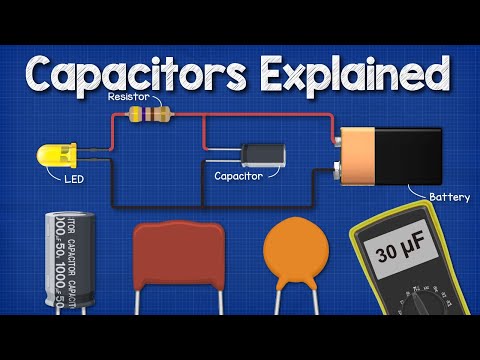
So, picture this: you’re at your buddy’s house, right? You’re jamming out to some tunes on that old stereo that suddenly starts crackling like it’s a campfire. Frustrating, huh? Well, guess what? A little piece called a capacitor could totally save the day!
Now, you might be thinking, “What in the world is a capacitor?” Seriously, though, they’re like the unsung heroes in many of our gadgets. From your phone to those fancy smart fridges, they play a key role in making everything tick.
In this chat about CBB61 capacitors specifically, we’re diving into their quirky little world. So grab your favorite snack and let’s unravel how these tiny components are holding up the high-tech marvels we rely on every single day!
Understanding the Role of Capacitors in Electronics: Functions and Applications in Science
Understanding capacitors can be pretty fascinating, especially when you realize how much they impact our everyday tech. So, let’s break it down a bit. Basically, a **capacitor** is like a tiny battery that stores bits of electrical energy for later use. This makes it super important in various electronic devices.
How Capacitors Work
At their core, capacitors consist of two conductive plates separated by an insulating material called a dielectric. When you connect them to a power source, electrons move onto one plate, creating a negative charge while the other plate becomes positively charged. This setup allows the capacitor to store electrical energy until it’s needed.
The fascinating part? Capacitors release that stored energy quickly when required. Think about your camera flash—when you take a photo in low light, the capacitor discharges its stored energy in a flash of light. Pretty cool, right?
Functions of Capacitors
Now let’s dig into some functions of capacitors:
- Energy Storage: As I mentioned before, capacitors store and release energy as needed.
- Smoothing Out Voltage Fluctuations: In power supply circuits, they help stabilize voltage levels by absorbing spikes and dips.
- Filtering Signals: In audio equipment, capacitors filter out unwanted frequencies to deliver clearer sound—think about how sweet your favorite song sounds!
- Tuning Circuits: They work alongside inductors in radio receivers to select specific frequencies—basically helping you catch your favorite radio station without all the static.
The CBB61 Capacitor
One specific type is the **CBB61 capacitor**, which is often used in fan motors and lighting applications. These capacitors are designed for high-performance tasks and can withstand various environments pretty well.
For example, if you’ve ever had an electric motor go bad on you because of heat or overuse, chances are the capacitor was struggling too! The CBB61 helps keep things running smoothly without overheating.
Applications in Science
So where do we see these little marvels hanging out? Oh man, they’re everywhere!
- Consumer Electronics: Phones and laptops utilize them for efficient power management.
- Industrial Equipment: Capacitors help machines operate with precision; think conveyor belts or robotic arms.
- Aerospace Technologies: They play roles in critical systems where reliability is key—like navigation or communication systems in planes.
It’s kind of mind-blowing how crucial these components are when you think about all the technology around us!
Anecdote Time!
I remember once helping my buddy fix his old amplifier. It wasn’t working right—sound was crackling like popcorn popping! After some head-scratching and tinkering (and maybe some snack breaks), we found that one of the capacitors had blown out! Replacing it turned everything back to normal—you could practically hear angels singing again!
So there you have it: capacitors play essential roles across different electronics—from storing energy to filtering signals. Whether it’s making sure your lights brighten up your room or powering complex industrial machines seamlessly, these tiny components really pack a punch!
Exploring CBB61 Capacitors: Understanding Polarity in Electrical Science
So, let’s talk about something that seems a bit niche but is actually super interesting: **CBB61 capacitors**. These little devices play a big role in the world of electronics. They’re commonly used in applications like motors, fans, and lighting circuits. What’s cool about them is their ability to handle alternating current (AC), which is how most of our household electricity flows.
First things first: what are these capacitors? CBB61 capacitors are specifically made from polypropylene film. This material gives them a lot of their good properties, like high insulation resistance and low self-heating. That means they can run without getting too hot or losing efficiency over time.
Now, you might be wondering about **polarity**. This is a really important concept when dealing with capacitors, especially if you’re working with types that have it. But here’s the kicker: CBB61 capacitors are actually **non-polarized**! Unlike electrolytic capacitors that have to be connected in a certain way to avoid damage, CBB61s can handle AC without any issues on how they’re hooked up.
Why does this matter? Well, in AC circuits, the direction of current changes periodically. Since CBB61s don’t have polarity restrictions, they can be installed in any orientation without causing problems—super convenient!
Another point worth mentioning is their **voltage rating**. When you’re using these capacitors, it’s crucial to choose one with a voltage rating that fits your project. If you go too low for your application needs? You could end up with failures or even dangerous situations.
Let’s break down some helpful features:
- Capacitance Values: These usually range between 1nF to several microfarads (μF), making them quite versatile.
- Temperature Range: CBB61s can work well in environments that may get a bit hot or cold—sometimes from -40°C to +85°C.
- Lifespan: Generally longer than many other capacitor types due to their robust design.
And speaking of designs—ever seen those circular or rectangular shapes? That’s how you can identify them easily among other components on the board! Just by looking at them, you get an idea they’re built for tough jobs.
So imagine this: Picture yourself troubleshooting an old fan at home. You open it up and spot the capacitor—it looks just like one of those small boxes with two leads sticking out. If it were a polarized type and you hooked it up wrong? You’d cause some serious issues! But because it’s a CBB61—you just connect it as you wish and get back to enjoying that cool breeze!
In summary, CBB61 capacitors are handy gadgets in electronics thanks to their non-polarized nature and solid performance across various conditions. Understanding their role helps not just when designing but also when repairing stuff around the house or diving deep into electrical projects. They might be small but play an essential part behind the scenes of modern technology!
Understanding the Key Differences Between CBB60 and CBB61 Capacitors in Electrical Science
Sure, let’s tackle this topic on CBB60 and CBB61 capacitors. These little guys play a big role in electrical science, especially in modern electronics. So buckle up!
CBB capacitors are typically used in AC applications, and they come in various types. The **CBB60** and **CBB61** are two common ones but serve slightly different purposes.
CBB60 Capacitors are mostly known for their ability to handle higher voltages. They’re generally used in applications like motors, fans, and lighting systems. Basically, if you need something that can sustain a bit of stress while smoothing out power supply fluctuations, CBB60 might be your best buddy.
CBB61 Capacitors, on the other hand, tend to have a better performance when it comes to filtering out noise. They’re commonly found in switching power supplies or any circuit that requires stable operation with minimal interference. You want your signals clean? That’s where these beauties shine.
What’s interesting is the construction difference. Both types use polypropylene film as their dielectric material, which gives them good performance characteristics. But while CBB60 capacitors often have metalized layers that enhance their strength under strain, CBB61 capacitors focus more on maintaining capacitance stability under varying loads.
When we talk about capacitance values, they usually range from microfarads (μF) down to picofarads (pF) for both types. But you’ll typically find CBB61 capacitors rated for lower capacitance compared to CBB60s, which might range higher due to their different uses.
Another key difference comes down to safety standards. Many times you’ll see markings like “X” or “Y” class ratings on these caps. The X ratings generally signify that the capacitor can handle over-voltages without breaking down catastrophically—especially important in certain household appliances using CBB60 types.
Now consider an anecdote: a friend once told me how her homemade wind turbine kept tripping off because she used the wrong type of capacitor! Turns out she used a CBB61 where a CBB60 would’ve smoothed out the power enough not to cause issues during heavy winds! So yeah, picking the right one does matter!
In summary:
- CBB60: Great for high-voltage applications.
- CBB61: Better at filtering noise.
- Construction: Both use polypropylene but with different design focuses.
- Capacitance: Typically higher values for CBB60.
- Safety ratings: X class for safer over-voltage handling in household equipment.
So there you go! Understanding these differences can really help you choose the right capacitor based on what you’re working on or building. Who knew such tiny components could have such an impact?
So, let’s chat about these little things called CBB61 capacitors. They might seem like just tiny pieces of plastic in a circuit board, but trust me, they pack quite a punch in the world of modern electronics.
You know those times when your phone charger seems to take forever to juice up your device? Well, some of that frustration can be laid at the feet of capacitors. So, CBB61 capacitors are actually designed for specific purposes, mostly in AC applications. They’re often found in motors and fans, helping smooth out the electrical flow so everything runs nice and steady.
I remember when I took apart an old fan from my grandparents’ house to see how it worked; it was like opening a treasure chest! Inside were all these little components, and I had no idea what most of them were doing. But there they were—CBB61 capacitors playing their part to keep that fan whirring away quietly on hot summer days.
What’s cool about these caps is how they help with efficiency. By storing electrical energy and then releasing it when needed, they help reduce energy waste. It’s kind of like a water tower filling up and then releasing water as needed; you don’t want a sudden flood or drought—you want it even! This also means devices can be smaller since they optimize space by doing a lot with just a tiny part.
But let’s not forget the technical side—these capacitors have a dielectric made from polyester film that can withstand some serious voltage levels without blowing up or shorting out (thank goodness!). They’re built tough and designed for long-lasting performance in all sorts of environments.
All in all, while you might not think about CBB61 capacitors while scrolling through your phone or blasting music on Bluetooth speakers, just know they’re behind the scenes making everything work smoothly. It’s funny how such small components can make such a big difference!