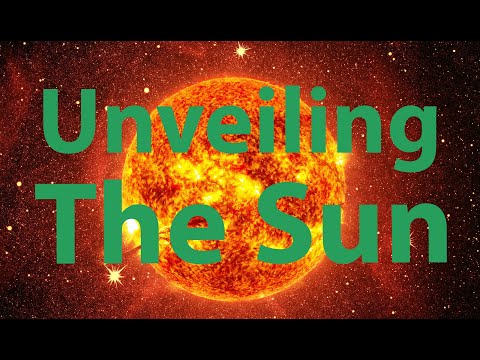
You know what’s crazy? The Sun is like this giant ball of fire, chilling in space, just doing its thing for about 4.6 billion years. Yeah, that’s right—billion with a “B”!
I mean, think about it. It’s the reason we have long summer days and cozy evenings. Ever had a day at the beach where you just soak up the sunshine? It feels good, right?
But hold on; there’s way more to it than we realize! This fiery beast influences everything in our solar system—from planets to tiny asteroids.
So let’s hang out for a bit and explore how this massive star shapes our lives and its many quirks. You’re gonna love what we find out!
Exploring the 7 Wonders of the Solar System: A Scientific Perspective from 2010
Sure, let’s get into it! The solar system is like this epic neighborhood of planets and other cool stuff, all hanging out around our big star, the Sun. When you think about the wonders up there, it’s not just about the planets. The Sun holds a special place in this cosmic lineup. So, here’s a look at some of the wonders that were known back in 2010 and why they’re so fascinating.
The Sun: The Ultimate Powerhouse
The Sun is seriously amazing. It’s like the heart of our solar system, pumping energy into everything around it. About 4.6 billion years old, this giant ball of gas powers life on Earth through a process called nuclear fusion. In simple terms, it’s smashing hydrogen atoms together to create helium and releasing an incredible amount of energy in the process.
Mercury: The Extreme Survivor
First stop is Mercury, the closest planet to the Sun. It has no atmosphere to speak of, so temperatures swing wildly from super hot during the day to freezing cold at night! This planet looks like it’s had one too many rough nights out—cratered and battered but full of surprises.
Venus: Earth’s Twin Gone Rogue
Next up is Venus, often called Earth’s twin because they’re similar in size and composition. But hey, don’t be fooled! Venus has a thick atmosphere filled with carbon dioxide and sulfuric acid clouds that trap heat—it’s hotter than Mercury! Think about it—if you ever wanted to experience an oven-like environment without preheating… just hop over to Venus!
Earth: Our Cozy Home
Then there’s Earth—our beautiful blue planet! It’s not just about being picturesque; it has all the right ingredients for life: water, air, stable temperatures… not bad for a rock floating in space! Plus, we have diverse ecosystems that host countless organisms. It’s kind of like living in a giant experiment.
Mars: The Red Planet Adventure
Moving on to Mars; oh man, it captures our imagination! It’s red because of iron oxide (or rust) on its surface. Back in 2010, scientists were super interested in Mars for signs of past water and potential life. There are even giant volcanoes and canyons—some think it’s basically a playground for future explorers!
Jupiter: King of the Giants
Now Jupiter is like that massive guy at a party—you can’t miss him! It’s the largest planet with an intense storm system called the Great Red Spot that rages on for centuries! And did you know? Jupiter has moons galore—over 70! Some scientists even think one of them, Europa, might have an ocean beneath its icy surface suitable for life.
Saturn: The Beauty with Rings
Saturn isn’t just a pretty face; those rings are made up of ice particles mixed with dust and rock. They’re stunning but also tell us stories about how planets formed billions of years ago. Saturn also has numerous moons with fascinating features—like Titan with its rivers made not from water but liquid methane!
The Ice Giants: Uranus and Neptune
Finally got Uranus and Neptune completing our tour as ice giants—these two siblings are mostly made up of water, ammonia & methane ice! Uranus rolls on its side while orbiting; how eccentric is that? Meanwhile Neptune boasts strong winds—up to 1,200 miles per hour—which makes it one wild place.
So yeah—all these wonders tell us something special about our solar system—and especially about our relationship with the Sun. Through studying these celestial bodies since 2010 (and even more now), we learn more about where we fit into this vast universe we’re part of—it’s all connected somehow… Isn’t that mind-blowing?
Exploring the Core of the Sun: Understanding Solar Structure and Dynamics
The Sun is, you know, this gigantic ball of hot plasma sitting at the center of our solar system. It’s like the heart that keeps everything running, and without it, life as we know it just wouldn’t exist. Understanding how it works is pretty fascinating. So let’s explore its core and all those wild dynamics that come with it!
First off, the core of the Sun is where all the magic happens. It’s super hot—around 15 million degrees Celsius! Can you even imagine? This extreme heat allows nuclear fusion to take place. Think of fusion as a cosmic cooking session where hydrogen nuclei smash together under intense pressure and heat to form helium. And guess what? This process releases a massive amount of energy in the form of light and heat.
Moving outward from the core, we hit what’s called the radiative zone. Here, energy produced in the core slowly makes its way to the surface. It’s like a long game of hot potato that can take millions of years! The photons bounce around like crazy before they finally make their escape.
Next up is the convective zone. This layer behaves more like your boiling pot of water on the stove. Hot plasma rises to the surface while cooler plasma sinks back down, creating convection currents. You might think this sounds familiar because it’s similar to how wind patterns work on Earth!
Now let’s talk about what happens on the surface—the photosphere. This layer is what we actually see when we look up at our sunny friend in the sky. It’s about 5500 degrees Celsius and can have some really interesting features like sunspots—dark spots caused by magnetic activity that are cooler than their surroundings.
Above this is something called the chromosphere, which means “color sphere” in Greek—it has this reddish glow during solar eclipses! Higher still lies the corona, which extends far into space and can reach temperatures over a million degrees Celsius, which still puzzles scientists because it ‘should’ be cooler than layers below it.
Now you might wonder how all these layers interact with each other? Well, picture an intricate dance where magnetic fields play a huge role. They twist and turn due to movements within these layers, creating solar flares or coronal mass ejections that can shoot charged particles toward Earth! Sometimes those end up causing stunning auroras but can also mess with our technology.
So basically, if you get lost thinking about stars or spaceships or whatever else out there in space, remember: our Sun isn’t just bright; it’s complex too! Every section plays its part to keep things balanced here on Earth while providing warmth and light needed for life.
In short, diving into solar structure shows us not only how unique our star is but also how interconnected everything really is within space dynamics. Who knew there could be so much going on up there? Pretty cool stuff if you ask me!
Exploring the Sun: The Heart of Our Solar System and Its Wonders – A Comprehensive Guide in PDF Format
So, let’s talk about the Sun. It’s pretty much the big guy in our solar system, right? You can think of it as the heart that pumps energy to everything around it. Without the Sun, life as we know it wouldn’t even be a thing!
The Sun is actually a gigantic ball of hot gas. When you look at it, you might think you’re seeing yellow or white, but it’s hotter than anything we have on Earth—around 15 million degrees Celsius at its core! That’s intense, right? And here’s something cool: this heat is generated through nuclear fusion. Basically, hydrogen atoms are smashed together to form helium, releasing a massive amount of energy.
Now let’s break down some fascinating facts about our fiery friend:
- Size Matters: The Sun is so gigantic that about 1.3 million Earths could fit inside! Just imagine how small we are in comparison.
- Light Speed: It takes sunlight about 8 minutes and 20 seconds to reach us. So when you feel that warmth on your face, remember that it traveled over 93 million miles!
- Solar Flares: These bursts of energy from the Sun can be quite dramatic. They release huge amounts of radiation and can interfere with our satellites and even power grids.
- The Solar Wind: This isn’t just any breeze—it’s a stream of charged particles blowing from the Sun out into space. Sometimes, when these particles hit Earth’s atmosphere, they create those gorgeous northern lights (auroras).
- Life Giver: Plants use sunlight to make food through photosynthesis; without this process, there’d be no plants—no oxygen for us!
It’s kind of mind-blowing when you really think about it. Last summer, I was lucky enough to catch a glimpse of an eclipse with my family. We all wore those funky glasses and couldn’t help but gasp at how beautiful—and weird—it was to see the Moon cover the Sun for a moment. It reminded me how connected we all are through this giant ball of energy.
Now let’s touch on why studying the Sun matters so much. Scientists keep a close eye on its activity because what happens up there can impact our technology down here. For instance, during strong solar storms, communication signals can get messed up or satellites could potentially fry.
And then there’s climate change—the Sun’s natural cycles play a role too! While it’s not the main driver of recent changes in our climate, understanding solar variations helps us grasp Earth’s weather patterns better.
So yes! The Sun is more than just something that shines in your face during summer picnics; it’s an incredible powerhouse affecting life on Earth in many ways. If you’re curious about more details or specific scientific methods they’re using to study it—like solar observatories or spacecraft—that’s another whole adventure waiting there!
All in all, whether you’re lounging outside soaking up some rays or just gazing up into the untamed universe at night wishing upon stars (or planets!), remember: it’s all connected back to our mighty Sun and its wonders!
The Sun is kind of a big deal, right? Like, without it, we’d all be in total darkness—literally. Its warm glow not only lights up our days but also makes life here on Earth possible. There’s just something special about looking up at that giant ball of gas in the sky, don’t you think?
I remember one summer day when I was a kid, my friends and I decided to lay on the grass for hours, soaking up the sun. We made up stories about what might happen if it ever just… went away. We’d fantasize about swimming through space and trying to find another sun. Silly thoughts? Maybe! But that’s how powerful the Sun feels—it sparks our imagination.
So what is it about this fiery giant that makes it so essential? Well, for starters, it’s a massive nuclear fusion reactor. Sounds complicated? It really isn’t! Basically, deep inside the Sun, hydrogen atoms smash together to form helium, creating an epic amount of energy in the process. This energy travels outwards and eventually reaches us here on Earth as sunlight. It’s like getting a warm hug from 93 million miles away!
Not only does this light keep us warm and grow our food—it also influences weather patterns and climates all over the globe. Can you imagine if one day we woke up and there was no more sunshine? Not even a little bit? Seems pretty scary.
Then there are solar flares and coronal mass ejections—yikes! Those aren’t just random bursts; they can disrupt satellites or even cause power outages here on Earth. While they’re fascinating to watch from a distance (thank you science for those amazing pictures!), they remind us of how powerful our Sun really is.
And speaking of power, let’s not forget its role in creating those stunning sunsets or sunrises that can take your breath away. The way colors splash across the sky—pink, orange, purple—it’s pretty magical if you ask me!
In reality, it’s not just a star; it’s literally at the heart of our solar system where all planets—including our beautiful blue Earth—revolve around it like dancers in a cosmic ballet. Each day we wake up to its presence is nothing short of awe-inspiring.
So next time you’re outside under that blazing sun—or perhaps just enjoying its rays streaming through your window—take a moment to appreciate this magnificent ball of fire that keeps everything going around here. It connects us all in so many ways… whether we’re out playing in its warmth or simply gazing at its beauty from afar!